Cockpit
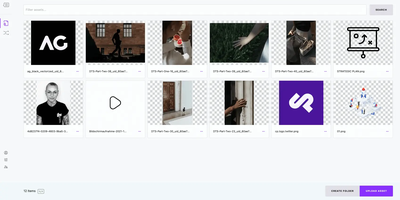
Built by an agency in 2011 and refined by real client work since, Cockpit is a headless CMS whose pragmatism is earned. It's a pure content backend: model your data, let editors manage it, and fetch it over REST or GraphQL from any frontend - React, Vue, Flutter, a static site generator, or an IoT dashboard. Content modeling covers three shapes: Collections for repeatable items (posts, products, events), Singletons for one-off content (settings, about pages), and Trees for hierarchies (navigation, categories), all assembled from 20+ field types including relationships. The API layer is unusually capable: MongoDB-style query filtering, field selection to trim payloads, automatic image optimization through the assets API, and built-in caching. Localization is first-class with per-field multi-language content and fallback support; user management includes roles, granular permissions, two-factor authentication, and API tokens; and webhooks push changes into external workflows. Agencies get multi-tenant Spaces - several sites or clients from one installation. The operational footprint is refreshingly small: PHP plus either SQLite or MongoDB, no build steps, no toolchain, extensible through hooks, events, and addons (pages/SEO, forms, full-text search, layout components). Where enterprise headless platforms bill per seat and per locale, Cockpit is MIT-licensed and simply yours.
Audiobookshelf
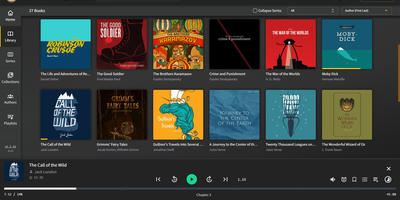
Get ready to transform your digital bookshelf with Audiobookshelf, the self-hosted maestro of audiobooks and podcasts! Imagine a world where your audio tales and talk shows are not just thrown into a digital pile, but are sorted with the finesse of a librarian who's had one too many espressos. Audiobookshelf thrives on a neat directory diet, feasting on the juicy details of folder names to serve up author bios, series sagas, tantalizing titles, publication dates, and more, right to your ears. It's like having a personal DJ for your books, spinning metadata tags into a symphony of organized bliss. And for the tech-savvy, it's as customizable as your grandma's secret cookie recipe, with all the Docker container spices you love. Hosted on RepoCloud, where your wallet can take a breather from those high-flying cloud hosting fees, Audiobookshelf is the VIP lounge for your audiobooks and podcasts, all on your own server with the sleek Easypanel as your bouncer. Queue up, tune in, and get lost in your perfectly curated audio universe with Audiobookshelf!
Ploi Roadmap
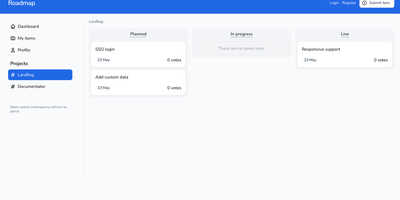
Embark on a journey of organizational enlightenment with Roadmap, the open-source sherpa for your roadmapping escapades. Picture a wonderland where your roadmapping canvas is as customizable as your coffee order – extra foam, no lid, with a dash of user mentions and upvote sprinkles to sweeten the deal. Imagine a world where slugs aren't just garden critters but auto-magical breadcrumbs leading to your project's success. Behold the Filament admin panel, a command center so sleek, it makes mission control look like a game of Pong. And let's not forget the role system – as easy as pie with a slice for the admin, a dollop for the employee, and a crumb for the user. Want to waltz into your roadmap with the grace of a single sign-on? OAuth 2's got your back, with a red carpet rollout featuring your brand's signature color. And for the GitHub gladiators, wield the power to tether repositories to projects and juggle issues without breaking a sweat, all from the throne of your admin panel. Built with the muscle of PHP and the backbone of a database, Roadmap is your ticket to a less costly, more cloud-nine experience on RepoCloud. So why settle for the cloud when you can have the entire sky?
Heimdall
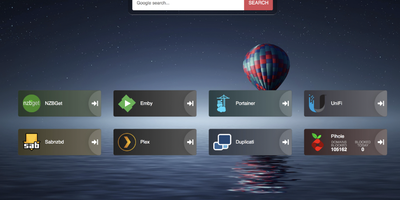
Links stop drowning in browser bookmarks once Heimdall - the application dashboard from the LinuxServer.io team - gives every web app and service you run a single, organized front door. Items come in three tiers. Generic items link to anything on the web with a name, color, and optional icon. Foundation apps are recognized as you type, auto-filling the application's icon and tile color so a full homelab dashboard assembles in minutes. Enhanced apps go further: supply API credentials and the tile shows live data - queue size and download speed for SABnzbd and NZBGet, plus integrations for Sonarr, Radarr, Plex, Jellyfin, Pi-hole, Portainer, Transmission, and many more. There are no iframes and no apps-within-apps; tiles are honest links with real-time stats layered on. Tiles arrange by drag and drop, backgrounds are customizable, an optional search bar (Google, Bing, or DuckDuckGo) makes it work as a browser start page, and optional multi-user authentication keeps dashboards personal. Built on Laravel with SQLite file-based storage - no external database - it stays light, responsive on mobile, and simple to back up. A natural first deployment: the page that ties every other self-hosted service together.
OneDev
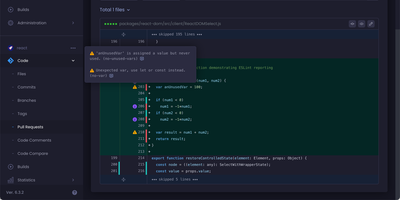
Get ready to turbocharge your project management and code wrangling with OneDev! Imagine a digital Swiss Army knife for your development adventures, packed with all the tools you need to juggle pull requests, keep a hawk-eye on issues, and orchestrate your builds like a maestro. OneDev is your trusty sidekick in the quest to conquer code chaos, offering a sleek dashboard where you can masterfully manage multiple projects, each with its own universe of files, commits, and mystical branches and tags. Merge with might, discard with delight, and track every triumph and tribulation of your open and closed issues. And when it comes to builds, OneDev is like having a crystal ball that shows you a panorama of success across your projects. Host it on RepoCloud, and you'll be the envy of the coding realm with a hosting bill that's as lightweight as your newfound agility. So, gear up, get on RepoCloud, and let OneDev transform your productivity into the stuff of legends!
DomainMod
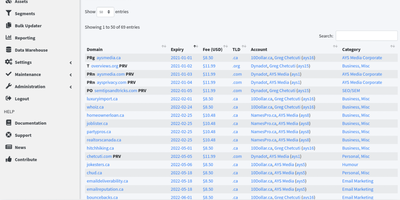
Get ready to wrangle your web wonders with DomainMOD, the open-source superhero for domain management! Imagine a digital Swiss Army knife that helps you keep tabs on your domains, SSL certificates, and all those internet treasures in one nifty spot. With DomainMOD, you can update a whole herd of domains faster than a speeding bullet, thanks to the Bulk Domain Updater. And for the data-hungry, the Data Warehouse feature is like a candy store, letting you import and analyze data from your WHM web servers. It's as mobile-friendly as your favorite superhero sidekick, so you can manage your digital empire from the palm of your hand. Plus, DomainMOD is like a privacy fortress, guarding your precious data from prying eyes. Host it on RepoCloud, and you'll save a bat-load of cash compared to those other cloud hosts. It's time to take control of your internet assets with style and a smile!
Kutt
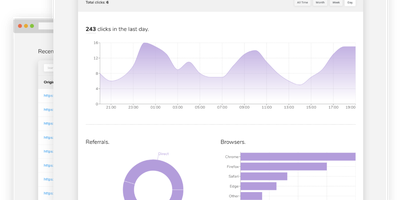
Built for self-hosting from the ground up, Kutt is a modern, MIT-licensed URL shortener: zero-configuration setup, no build step, and SQLite, PostgreSQL, or MySQL with optional Redis caching. Links carry real management features - custom slugs from a configurable alphabet (confusable characters like 0/O and l/1 omitted by default), password protection, descriptions, expiration times, and the ability to edit a destination URL without changing the short link already in circulation. Custom domains make branded short links first-class: add as many as you like and serve each under your own name instead of a third-party's. Private, per-link statistics track clicks, browsers, operating systems, and countries without logging visitor IPs or sensitive data. An admin page manages users and links instance-wide, and two environment flags (DISALLOW_REGISTRATION, DISALLOW_ANONYMOUS_LINKS) lock the instance down for private use; OpenID Connect login integrates with an existing identity provider. Automation runs through a documented REST API - create, list, delete, and pull stats - plus Chrome and Firefox extensions and ShareX compatibility for shortening from anywhere. Built with Node.js and React, deployed in one Docker container, it replaces Bitly with something you own: your domain, your analytics, and links that never die with a vendor.
Umami
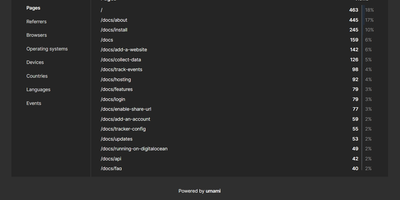
No cookies, no fingerprinting, no cross-site tracking, no personal data collection - Umami's privacy contract is the foundation of the open-source web analytics platform. IP addresses are hashed rather than stored, which makes it GDPR, CCPA, and PECR compliant by default - the consent banner can come off the site entirely. The tracking script is under 2 KB, roughly 20x smaller than Google Analytics, so measurement stops being a page-weight tax. The dashboard covers the core metrics - pageviews, visitors, bounce rate, visit duration, referrers, browsers, devices, and countries - with any date range and filtering by country or device. Beyond pageviews, custom events track clicks, form submissions, and signups via a data attribute or one JavaScript call, and advanced reports add funnels, user journeys, retention and cohort analysis, goals, and automatic UTM campaign tracking. Anonymous session views show individual visitor activity without identifying anyone. Teams share websites with role-based access, one instance manages unlimited sites, and a full REST API exposes every metric programmatically. MIT-licensed and self-hosted on PostgreSQL or MySQL via Docker, your analytics data never leaves your infrastructure.
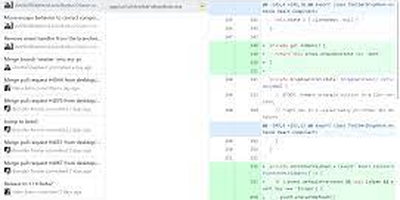
Github Desktop
Say goodbye to command-line jitters and hello to Github Desktop, the open-source superhero that transforms your GitHub chaos into a cakewalk! Crafted with the magic of Electron and sprinkled with TypeScript and React fairy dust, this desktop darling offers a cozy nook for all your repository razzle-dazzle. Fancy a one-stop shop for code concocting and update tracking? Look no further! Zip through your GitHub galaxy from the comfort of your desktop at warp speed, docking at either http://yourhost:3000/ or https://yourhost:3001/. And for the tech astronauts out there, this starship is Docker-ready and supports a constellation of architectures. Just remember to feed it the right environment variables and run configurations, or it might get a bit cranky. Host it on RepoCloud, where the cost is as tiny as an atom in the vast universe of hosting expenses!
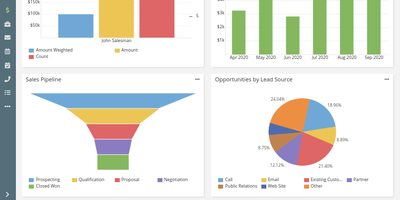
EspoCRM
Teams tired of paying Salesforce or HubSpot per seat run EspoCRM: an AGPL-licensed PHP application with a fast single-page frontend over a REST API, covering sales, support, and marketing in one uncluttered interface. The sales core is complete - leads, contacts, accounts, opportunities with customizable pipeline stages, kanban views, calendars, meetings, and calls. Email is deeply integrated rather than bolted on: IMAP sync links messages to CRM records automatically, and mass email campaigns run with reusable templates, tracking, and Web-to-Lead forms feeding the funnel. Support teams get case management and a customer portal where clients track their own tickets and access a knowledge base. The real differentiator is the Entity Manager: create custom entities, fields, relationships, and layouts from the admin UI without code, with dynamic logic showing or hiding fields conditionally - EspoCRM is as much a business-application platform as a CRM. Formula scripting handles calculated fields and record automation in the free core; the optional Advanced Pack adds visual BPM process design and workflow rules. Role-based permissions with team and territory scoping, full-text search, reports, and a straightforward REST API for n8n or custom integrations round it out. Runs on PHP 8.3+ with MySQL, MariaDB, or PostgreSQL - unlimited users, zero per-seat fees.
Strapi
Get ready to break up with your high-maintenance CMS and swipe right on Strapi! This open-source heartthrob is the headless CMS Casanova, charming developers with its 100% JavaScript DNA. Strapi is like that best friend who brings out your creative side, letting you mingle with your beloved tools and frameworks without any third-wheel awkwardness. It's like a content management speed date – you'll go from lonely backend single to ready-to-mingle in mere minutes. Customize those content APIs like you're on a reality makeover show and strut your stuff across any digital catwalk, be it REST or GraphQL. And when it's time to settle down, you can cozy up with Strapi Cloud or play the field across various cloud platforms. With Strapi, you're the director of your own content love story, crafting and managing digital experiences that make your heart skip a beat, all without the drama of traditional CMS plot twists.
Chromium
Surf's up on the web with the Chromium browser, now in a swanky Docker container! This isn't your grandma's browser; it's a sleek, secure, and speedier way to ride the digital waves. With support for the brawniest of processors (x86-64 and arm64), you can deploy this bad boy on RepoCloud and watch it fly faster than a seagull after a french fry. Fancy a secure connection? HTTP and HTTPS are both on the menu. Tweak the sails with environment variables and run configurations to make your browsing as smooth as a sea breeze. And for the power users, hoist your flags high with Chromium CLI options that'll make your containerized browser salute you. Whether you're looking to accelerate with GPU or nestle into a Docker in Docker setup, this Chromium is ready to set sail on the vast ocean of modern websites, all while keeping your wallet as full as a pirate's treasure chest thanks to RepoCloud's lower hosting costs. Ahoy, mateys, let's browse!
Joplin
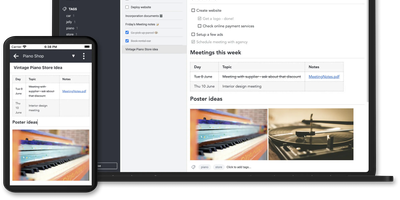
Notes on Windows, macOS, Linux, Android, iOS, and the terminal, synced through your own server: Joplin pairs its open-source clients with Joplin Server, the official self-hosted backend that replaces Dropbox, OneDrive, or Nextcloud as the synchronization target. Notes are Markdown with inline attachments (images, PDFs, audio), organized into hierarchical notebooks and sub-notebooks with cross-cutting tags, alongside to-do lists with reminders and alarms. End-to-end encryption is the headline feature: enabled in the clients, it encrypts sync payloads on-device before upload, so the server stores blobs it cannot read - genuine protection even if the host is compromised. The desktop app offers both Rich Text and Markdown editors, extended by a plugin ecosystem, custom themes, and an Extension API for writing your own scripts; a Web Clipper for Chrome and Firefox captures full pages or screenshots straight into notebooks. Joplin Server ships as a Docker image with SQLite for evaluation and PostgreSQL for production, offers a filesystem storage driver for large content, and includes multi-user support and note sharing - all free under AGPL-3.0 when self-hosted. Notes stay in an open format, so the exit path always exists.

Tandoor
The deep end of self-hosted recipe management: Tandoor Recipes is a Django/Vue application that replaces Paprika, AnyList, and ad-choked recipe sites with a database you control. Import is where most people start: paste any URL and Tandoor scrapes schema.org markup for ingredients, instructions, images, times, and nutrition; bulk-paste URLs for batch import; or migrate wholesale from Mealie, Paprika, Nextcloud Cookbook, Pepperplate, and other managers with built-in importers. The structured recipe editor tracks ingredients individually, which is what powers everything downstream: full-text search with trigram similarity, a "what can I make with what's in the fridge" ingredient search, automatic nutrition via OpenFoodFacts, and shopping lists that merge duplicate ingredients across recipes, convert units, scale by servings, and sort by your supermarket's actual aisle layout. The weekly meal planner is drag-and-drop, feeds shopping lists automatically, exports to your calendar, and shows a nutritional summary for the week. Multi-user support comes with a granular permission system - shared household cookbooks, private recipes, even secret ones - and shopping lists sync in real time so two people can shop simultaneously. A full REST API integrates with Home Assistant and Grocy. For households serious about cooking, Tandoor's depth is unmatched.
Ackee
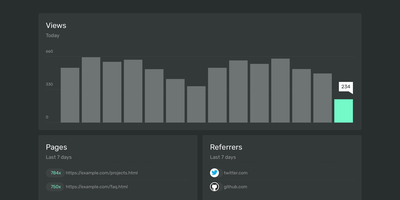
Page views, referrers, browsers, and screen sizes - Ackee delivers the analytics developers actually check, from a deliberately minimal Node.js and MongoDB stack that skips both Matomo's weight and Google Analytics' cloud dependency. Its defining constraint is anonymization: no cookies, no unique user tracking, and a multi-step anonymization process that keeps visitors unidentifiable while the aggregate numbers stay useful. In its default anonymous mode Ackee collects no personally identifiable information at all, which means GDPR and CCPA compliance out of the box and no cookie consent banner on your sites. A detailed mode adds screen size, language, and per-visit referrers - still without cookies or fingerprinting. Integration mirrors the Google Analytics pattern: create a domain in settings, drop the generated ackee-tracker snippet into your pages, and data appears in a clean single-page dashboard. One instance tracks multiple domains, and custom events capture button clicks, signups, and conversions. The distinctive engineering choice is the fully documented GraphQL API: everything the dashboard shows comes from that API, so you can query active visitors, average duration, and view statistics programmatically, feed data in from apps and services beyond websites, or build an entirely custom interface on top. If you want bare-minimum analytics with a real API and zero privacy anxiety, this is the tool.
Planka
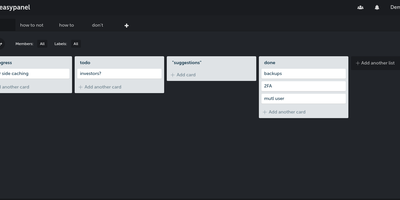
Trello's board model on your own server: Planka is an open-source Kanban project management tool. Boards organize into projects with lists, cards, labels, due dates, checklists, file attachments, and per-card stopwatch time tracking, all managed through drag-and-drop. Updates propagate over WebSockets, so a teammate moving a card or adding a comment appears instantly for everyone without a refresh - a genuine differentiator among self-hosted boards. Card descriptions use a full Markdown editor, custom fields adapt cards to your workflow, and views switch between Kanban, grid, and list layouts. Authentication supports OpenID Connect single sign-on with Google, Azure AD, Okta, or any OIDC provider - a feature Trello reserves for enterprise plans - and notifications reach 100+ channels including Slack, Discord, Telegram, and SMTP via Apprise. A REST API with 50+ webhook events supports custom integrations, and one-click board import eases migration. Built with React and Node.js on PostgreSQL, translated into 35+ languages, deployed via Docker.
Kavita
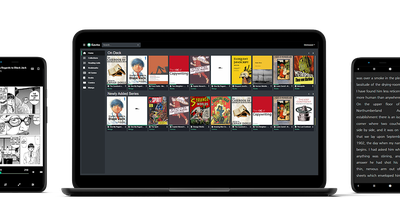
Manga, comics, ebooks, and light novels get a streaming-service-style home in Kavita - a fast, cross-platform reading server for the DRM-free collection you share with family and friends. It natively serves CBZ, CBR, CB7, ZIP/RAR/7z archives, raw images, EPUB, and PDF, with hand-crafted web readers per format: webtoon scrolling, single and dual-page spreads with advanced caching for the comic reader, and a book reader with adjustable fonts, spacing, margins, color themes, and column modes. Reading progress tracks per user, so everyone resumes exactly where they stopped on any device. Metadata parses from filenames, ComicInfo.xml, and EPUB fields, feeding index-backed search, smart filters, collections, reading lists with CBL import, and Want to Read queues. Role-based user management covers age restrictions, per-library access, and OIDC authentication. An OPDS feed connects third-party clients - Panels on iOS, Librera on Android, KOReader on e-ink devices - and a comprehensive REST API supports custom integrations. EPUB annotation and highlight support, custom theming, and full localization round it out. Built with .NET and Angular, it handles 50,000+ file libraries without strain; optional Kavita+ adds AniList scrobbling, recommendations, and external metadata.

Hiccup
"Get to your most important links, FAST" - Hiccup's README states its whole mission in that one line, and the static start page delivers it. It is a client-side React single-page app - no backend, no database, no accounts - driven entirely by a config.json that defines featured link cards, categorized sections, and search providers. The search bar is the power feature: it queries your own links by name, URL, and tag while simultaneously offering external providers like Google, DuckDuckGo, and Amazon (plus custom URL-template providers you define), with arrow-key navigation and Enter to launch, so muscle memory replaces mousing. Editing happens in the browser - drag and drop links and background images, tweak cards in edit mode - with changes persisting to localStorage; a built-in config manager exports the JSON for hosting, and remote profile loading pulls a shared config across every browser and device you use. Multiple profiles keep home-server, work, and dev-tool link sets separate. PWA support installs it on a phone home screen, caching strategies keep it fast offline, read-only mode suits kiosk displays, and Cmd/Ctrl+/ reveals the full hotkey reference. Serve it from any static host and point your new tab at it.