Langflow
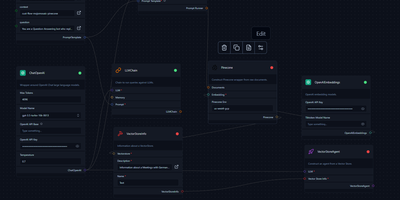
Get ready to unleash your inner language wizard with Langflow, the spellbinding app that turns the complex art of LangChain pipeline creation into a magical drag-and-drop extravaganza! Picture yourself crafting linguistic concoctions with the ease of a seasoned sorcerer, connecting mystical components like LLMs, prompt serializers, agents, and chains with a mere flick of your mouse. Tweak the secret ingredients (a.k.a. prompt parameters), bind together chains and agents in an enchanting dance, and peer into the crystal ball to witness an agent's thought process. When your potion is perfected, abracadabra! Export your masterpiece as a JSON file, ready to charm the socks off LangChain. And for the grand finale, with a wave of your wand (and a single command), you can deploy your creation to Jina AI Cloud faster than you can say 'Presto chango!' Thanks to RepoCloud's hosting, you'll save a dragon's hoard of gold compared to other cloud hosts. Langflow is your trusty sidekick in the quest to build and deploy LangChain pipelines with the ease of a fairy tale ending.

NodeBB
Forum software rebuilt on the modern web stack: NodeBB runs the classic bulletin-board format - categories, threads, local accounts - in real time, on Node.js over MongoDB, Redis, or PostgreSQL. WebSockets stream new posts into open topics as they're written and deliver instant notifications for follows, likes, and subscriptions; built-in chat supports side-by-side private conversations. The headline of recent versions is core ActivityPub federation: your forum can follow, share, and converse with other NodeBB instances, Mastodon, Lemmy, and anything else that speaks the protocol, turning an isolated community into a fediverse node. Everything beyond the common core is a plugin - more than 500 plugins and themes install in one click from the admin panel, covering SSO providers, search backends like Elasticsearch and Solr, galleries, calendars, and more. The theming engine extends base templates with SCSS/CSS on Bootstrap 5, plus a drag-and-drop widget system and custom HTML/CSS/JS injection. Operators get a real-time analytics dashboard, human-readable SEO-friendly URLs with semantic markup, multilingual UI, and full read and write REST APIs for integration. Mobile-first rendering means the same install works everywhere. For communities that outgrew phpBB but don't want Discourse's weight, NodeBB is the natural middle.
Filebrowser
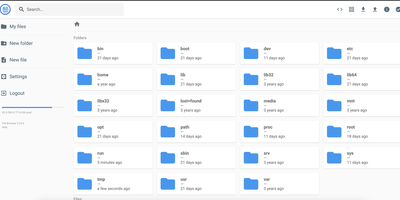
Embark on a digital safari with File Browser, the Swiss Army knife of file management! This nifty app transforms your directory into a command center where files quiver in anticipation of your next move. Ready to upload, obliterate, peek, rename, or tweak your digital darlings? File Browser is your trusty sidekick. It's like having a team of mini-me's, each with their own digital playground, perfect for juggling files in a bustling multi-user circus. Customize your digital escapade with a smorgasbord of options: switch up user check-ins, command your server with pre/post event shell spells, or slap on your brand's superhero cape. Flying solo or in a squadron, File Browser is your go-to for a file-taming fiesta, all while saving your coins with RepoCloud's wallet-friendly hosting. Who knew file management could be this exhilarating?
Pidgin
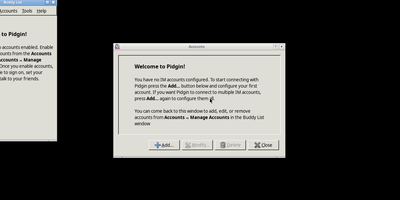
Get ready to juggle your social life like a circus pro with Pidgin, the chat app that's like a Swiss Army knife for your digital conversations! Imagine being the puppet master of your chat universe, where you can simultaneously whisper sweet nothings into XMPP and gossip in an IRC channel without breaking a sweat. Pidgin is your VIP pass to the who's who of chat networks, including the cool kids like Discord and Slack, the old guard like ICQ, and even the elusive Skype and Telegram. It's like having a backstage pass to every concert in town! With a treasure trove of default and third-party plugins, Pidgin is like that friend who always brings the best snacks to the party. And with Firefox on board, you'll be solving captchas like a riddle master before you even enter the chat room. Just hop onto http://yourhost:3000/ or for the security enthusiasts, https://yourhost:3001/, and let the chatstravaganza begin! Hosted on RepoCloud, you'll be chatting more and paying less, because who says you can't have your cake and eat it too? So, let's get the digital party started with Pidgin, where every chat network is just a click away!
Home Assistant
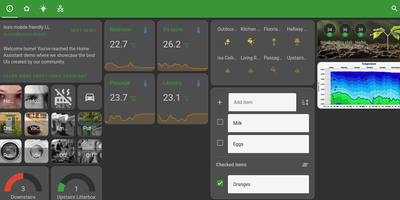
Get ready to be the maestro of your own smart home symphony with Home Assistant! This open-source virtuoso of home automation is all about keeping things local (like your favorite coffee shop) and guarding your privacy like a digital fortress. Imagine orchestrating everything from your energy-sipping solar panels to your chatty voice assistants, all with the finesse of a custom-tailored suit. And for the security enthusiasts, it's got multi-factor authentication that's tougher to crack than a walnut in a vice. Best of all, it cozies up perfectly with a Raspberry Pi or any local server, making it the go-to conductor for your home's technological orchestra. With RepoCloud hosting, you'll be waving your baton at a fraction of the cost, without missing a beat in performance. Encore!
phpMyAdmin
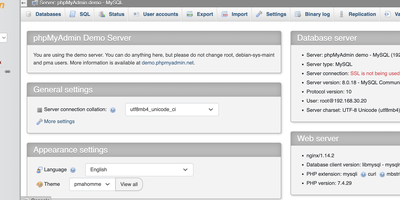
Since 1998, phpMyAdmin has been the standard web interface for MySQL and MariaDB - the tool millions of developers, DBAs, and hosting companies reach for when a database needs inspecting, fixing, or migrating. Written in PHP, it covers effectively the entire administration surface: create, browse, alter, and drop databases, tables, views, columns, and indexes; insert and edit rows through a tabular editor; manage user accounts and granular privileges; and maintain stored procedures, triggers, and events - all without touching a command line. The SQL editor executes arbitrary queries with syntax highlighting, autocompletion, history, and bookmarkable statements, including batch queries. Import/export is a migration workhorse: read SQL, CSV, XML, and OpenDocument spreadsheets in; write out to SQL dumps, CSV, JSON, XML, PDF, Word, LaTeX, and more - the fastest path for moving a WordPress database or handing a schema to a colleague. The Designer view renders your schema as an interactive ER diagram with drag-and-drop relationship editing, and data transformations display BLOBs as images or download links inline. Server maintenance views surface configuration suggestions. Multi-server support, dark mode, and translations into 72 languages round out a tool that earns its ubiquity. GPL-licensed.

Mastodon
Embark on a social media odyssey with Mastodon, where you're the captain of your own digital destiny! Wave goodbye to pesky algorithms and intrusive ads, and say hello to a home feed that's as personalized as your coffee order. Whether you're sharing the latest earworm, your cinematic masterpiece, a gallery of your cat's antics, or stirring the pot with a spicy poll, Mastodon lets your creativity run wild. This decentralized, open-source gem is like a social media potluck – each server brings its own flavor, but together, they create a feast of global connections. Mastodon champions your digital autonomy, shunning ad overlords and profile pimps. It's built on the sturdy foundations of open web protocols, so it plays nice with any other platform that speaks ActivityPub. With Mastodon hosted on RepoCloud, you're not just building a social network; you're crafting a social sanctuary that mirrors your unique vibe, all while saving your wallet from the cloud hosting giants. Get ready to moderate, curate, and celebrate your online world with Mastodon on RepoCloud!
Sshwifty
Get ready to teleport your terminal experience straight into your browser with Sshwifty, the web-based wizard that conjures up SSH and Telnet connections with just a click! Wave goodbye to clunky clients and say hello to smooth access from any web-savvy device. Park this magical creature on your own digital lawn (a.k.a. your computer or server) and watch it transform into the Gandalf of gateways, offering a customizable portal to your digital dominions. With Sshwifty, you can summon a fleet of servers, craft presets for your favorite digital destinations, and even cast a security spell to limit travel to known realms only. Plus, with TLS enchantments and Socks5 proxy pathways, your connections are not just swift, they're Fort Knox-secure. Whether you're diving into distant data centers or just hopping over to your home hub, Sshwifty is your trusty sidekick in the quest for seamless, sorcery-level server management. And with RepoCloud's wallet-friendly hosting, you'll have more gold in your pouch for other quests. Abracadabra, your terminal is now omnipresent!
Cryptpad
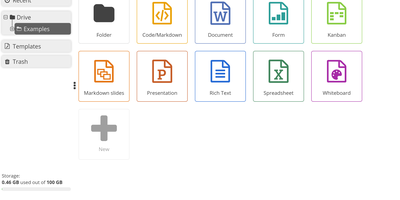
Get ready to collaborate like a super-spy with CryptPad, the open-source office suite that's as secure as a vault in Fort Knox! Wave goodbye to prying eyes because with end-to-end encryption, your secrets are safer than a squirrel's nut stash. Dive into a smorgasbord of applications and cook up projects with your pals or professional partners in real-time. Planning an epic adventure or plotting world domination in a client meeting? CryptPad's got you covered. And the best part? You can jump straight into the action without the hassle of sign-ups or downloads. It's not just an editor; it's your encrypted command center for all things teamwork. Host it on RepoCloud, and you'll be saving more than just your data – you'll be saving dough, too!

Ploi Roadmap
Embark on a journey of organizational enlightenment with Roadmap, the open-source sherpa for your roadmapping escapades. Picture a wonderland where your roadmapping canvas is as customizable as your coffee order – extra foam, no lid, with a dash of user mentions and upvote sprinkles to sweeten the deal. Imagine a world where slugs aren't just garden critters but auto-magical breadcrumbs leading to your project's success. Behold the Filament admin panel, a command center so sleek, it makes mission control look like a game of Pong. And let's not forget the role system – as easy as pie with a slice for the admin, a dollop for the employee, and a crumb for the user. Want to waltz into your roadmap with the grace of a single sign-on? OAuth 2's got your back, with a red carpet rollout featuring your brand's signature color. And for the GitHub gladiators, wield the power to tether repositories to projects and juggle issues without breaking a sweat, all from the throne of your admin panel. Built with the muscle of PHP and the backbone of a database, Roadmap is your ticket to a less costly, more cloud-nine experience on RepoCloud. So why settle for the cloud when you can have the entire sky?

Trilium Notes
For people whose notes number in the tens of thousands, Trilium Notes is the hierarchical note-taking application built specifically for large personal knowledge bases - actively maintained as TriliumNext. Notes arrange into arbitrarily deep trees where every note is both content and container, and cloning lets a single note live in multiple places at once - bash notes belong under both Linux and Scripting, and Trilium refuses to make you choose. A WYSIWYG editor handles rich text, tables, math, and syntax-highlighted code blocks with Markdown-style shortcuts, while dedicated note types cover Excalidraw sketches, mind maps, geo maps with GPX tracks, relation maps that visualize connections between notes, and tables with typed columns. The attribute system is the power layer: labels attach queryable metadata (#year=1999, #author), relations create named links between notes, and both inherit down the tree - feeding full-text search, saved queries, and scripting. Scripting is Trilium's deepest differentiator: JavaScript code notes run on events like note changes or hourly schedules, build custom widgets, and add server-side logic, turning the knowledge base into a programmable platform. Protected notes encrypt sensitive content, note hoisting focuses on subtrees, and the self-hosted server syncs desktop clients across devices.

Coolify
Any SSH-accessible Linux box - VPS, bare metal, Raspberry Pi, EC2 - becomes a Heroku-like deployment environment under Coolify, an open-source, self-hostable platform-as-a-service. Connect a GitHub, GitLab, Bitbucket, or Gitea repository and every push builds and deploys automatically via Nixpacks, a Dockerfile, or Docker Compose, with Traefik reverse proxying, automatic Let's Encrypt certificates, and per-branch preview deployments with their own URLs. Databases - PostgreSQL, MySQL, MariaDB, MongoDB, Redis - provision in a few clicks, and a catalog of 280+ one-click service templates covers WordPress, n8n, Grafana, MinIO, Plausible, and more, replacing an afternoon of Compose YAML with a two-minute operation. One dashboard manages multiple servers, with Docker Swarm available for clustering. Backups go to any S3-compatible storage with one-click restore, a browser terminal gives real-time server access, and a full API supports CI/CD integration. All configuration lives on your own servers, so resources keep running even without Coolify. Apache 2.0 licensed.
Dashdot
description_humorous
Blender
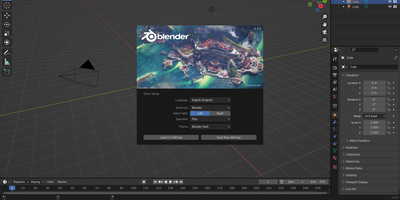
Whip up a 3D masterpiece, animate your own indie flick, or craft virtual worlds that defy reality with Blender – the all-in-one, open-source 3D graphics wizard! This app is like a Swiss Army knife for your digital artistry needs, from 3D modeling to rendering faster than you can say 'Pixar'. Hosted on RepoCloud, it's like having a personal art studio in the cloud, minus the splattered paint. With a user-friendly desktop GUI, you'll feel like a digital Picasso in no time. Blender is souped-up with hardware acceleration, making your desktop experience smoother than a well-oiled robot. While it doesn't roll out the red carpet for GPU rendering straight away, it's still a party on multiple architectures. Just a heads-up for the Arm aficionados: it's best to avoid /dev/dri for now – Blender's a bit picky with the OpenGL ES version there. But hey, that's just a small bump on the road to 3D glory!

Flarum
Dive into the future of chit-chat with our snazzy forum app! It's not just easy on the eyes with its chic UI, but it's also a breeze to customize and as light as a feather, making sure your thumb-swiping game is strong on any gadget. We've got the security tighter than a drum, so you can gab away without a worry. And talk about a babel fish – this baby speaks 41 flavors of human, so it's like the United Nations of forums. Whether you're a telecom titan, a globe-trotting storyteller, or the maestro of memes, our app is your soapbox. Host it on RepoCloud, where the price is as tiny as the footprint, and join the forum frenzy that's sweeping the netizens off their feet!

Ampache
Get ready to amp up your audio experience with Ampache! Imagine a jukebox that never closes, right in your browser. This nifty web-based app is your personal DJ, spinning tracks and videos on demand, wherever you may roam. Picture this: your entire music library, now obediently waiting for your click, ready to serenade you through the simplest of web interfaces. Fancy a bit of musical matchmaking? Ampache's got you covered, syncing up local and remote catalogs to craft a harmonious blend that's music to your ears. And when it comes to streaming, Ampache is like that friend who knows all your favorite songs, streaming them to your chosen player, or even serenading you directly on the web page with a snazzy HTML5 player. This open-source maestro is all about freedom and flexibility, playing nice with almost any device that can hum along to the internet. So, whether you're on your phone, tablet, or kicking back in front of the TV, Ampache is your go-to for a symphony of streaming. And the best part? Hosting it on RepoCloud won't hit a sour note with your wallet. It's like having a backstage pass to your music collection without the VIP price tag!
SimpleTorrent
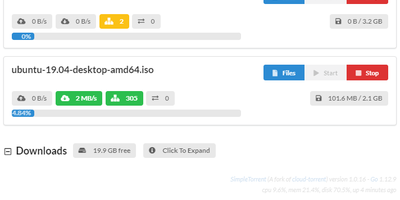
Get ready to turbocharge your torrenting experience with SimpleTorrent, the self-hosted torrent maestro that lets you kick back while your torrents do the hustle. Crafted with the magic of Go (golang), this nifty app transforms your server into a torrent-fetching powerhouse, snagging files and lining them up for your streaming pleasure or HTTP retrieval. Fancy a bit of control? You got it! Pick and choose individual files, command an external app to celebrate task completion, and enforce a seeding etiquette to say 'stop' when you've shared enough. But wait, there's more! Throttle those speeds to avoid hogging the bandwidth and dive into the nitty-gritty of transfer stats with a web UI that's slicker than a greased otter. Real-time updates? Check. Mobile-friendly? You bet. A content server that's faster than a caffeinated cheetah? Absolutely. And with IPv6 readiness, a fresh torrent engine from anacrolix/torrent, and extra goodies like a torrent watcher, K8s/docker health-checks, bonus trackers, and a magnet protocol handler, SimpleTorrent hosted on RepoCloud is like having your very own torrent butler – all at a price that won't plunder your coin purse!
Actual Budget
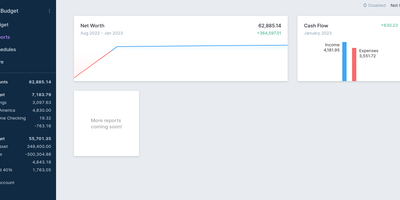
Every unit of income gets a job in Actual Budget - a local-first personal finance app built on envelope (zero-sum) budgeting, where you can only budget cash you actually have, which keeps the plan honest by construction. The data model is a SQLite file that lives on your device and works fully offline; the self-hosted Node.js sync server adds background multi-device synchronization using CRDT-based distributed-systems machinery, browser and mobile access as an installable web app, and automated backups. Optional end-to-end encryption makes the synced data unreadable even to the server hosting it. Transactions enter three ways: manual entry, file import (CSV, QIF, OFX, QFX, CAMT.053), or automatic bank syncing through GoCardless for EU/UK banks and SimpleFIN for US/Canada. Built-in YNAB4 and nYNAB importers migrate complete budget histories, and reports, schedules for recurring transactions, and rule-based transaction cleanup handle the day-to-day. A fully featured local API lets developers script custom importers and automation against their own data. 100% free, open source, and 26k stars strong.