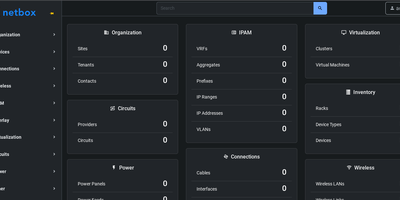
Netbox
Get ready to crown NetBox as the reigning monarch of your network kingdom! This all-encompassing wizardry tool is your go-to grimoire for every byte and bolt in your digital dominion. From the mystical lands of power circuits to the vast expanse of virtual vistas, NetBox conjures up a crystal-clear map of your network's noble lineage, including IP addresses, VLANs, and the secret tunnels of cabling. It's like having a network nanny, but instead of babysitting, it's automating and monitoring your network's every move, ensuring your configurations are as sharp as a knight's sword. With NetBox, you'll be the Merlin of DCIM, wielding visibility and control over your enterprise realm with the ease of a magic wand. And when it comes to IP Address Management, think of it as your enchanted spell book, safeguarding your IP treasures from the dragons of data entry blunders. Customizable to the core, NetBox is ready to integrate and expand, fitting into your kingdom like the perfect piece in a game of thrones. Host it on RepoCloud, and you'll save enough gold to fill a dungeon, all while keeping the open-source spirit alive and kicking!
Miniflux
One statically-compiled Go binary over PostgreSQL, no ORM, no framework, static assets embedded in the executable: Miniflux is the minimalist, opinionated feed reader. The opinions are the feature: page layout, fonts, and colors are tuned for reading, and everything else is treated as noise. It consumes Atom, RSS, and JSON Feed formats with OPML import/export, organizes articles with categories and bookmarks, fetches original full-text content for summary-only feeds, and provides Postgres-powered full-text search. Privacy work happens automatically: pixel trackers are stripped, tracking parameters removed from URLs, a media proxy blocks third-party tracking, referrers are never forwarded, and there is zero telemetry. Navigation is keyboard-first - j/k through items, o to open, f to star - with touch gestures on mobile. Podcast, video, and music enclosures are supported, and YouTube videos play inline. Over 25 integrations save articles onward to Wallabag, Readwise Reader, Pinboard, Linkding, Instapaper, Notion, Telegram, Matrix, Ntfy, and more, plus webhooks and a REST API with Go and Python clients; the Google Reader API endpoint supports existing mobile reader apps. Authentication spans local passwords, passkeys (WebAuthn), Google OAuth2, OpenID Connect, and reverse-proxy headers. It is Apache 2.0 licensed, translated into 20 languages, and updates feeds on an internal scheduler.
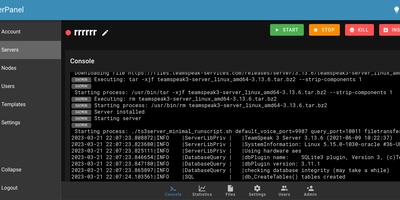
Pufferpanel
description_humorous
Wekan
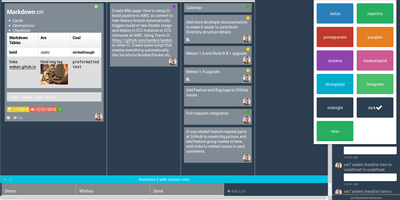
Embark on a task-taming adventure with WeKan, the open-source superhero of Kanban apps! Picture this: a digital playground where your projects transform into vibrant boards, each a realm of 'To Do', 'Doing', and 'Done' columns. Populate these realms with task cards—mighty little champions complete with titles, epic descriptions, and countdowns to their due dates. WeKan's lists are like the stages of a quest, guiding you through the workflow with the ease of a wizard's spell. Customize your quest log with a kaleidoscope of colors and fields to capture the lore of each task. Each card is a quest in itself, a scroll of information that moves with you from one stage to the next. And fear not, for WeKan is a fortress of privacy, with self-hosting shields, access control spells, and an open-source code grimoire for the ultimate security enchantment. Hosted on RepoCloud, your data stays as safe as treasure in a dragon's lair, but without the fiery breath and at a cost that would make even a dwarf smile. So why wait? Let WeKan be your guide in the quest for peak productivity!
Dozzle
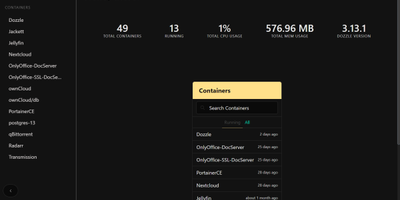
Introducing Dozzle: the featherweight champion of the Docker log viewing world, now streaming live on RepoCloud! Imagine a world where logs roll out the red carpet in real-time, and Dozzle is your all-access pass. It's like having a backstage pass to your Docker containers' most intimate thoughts, without the hassle of hitting refresh. This little gem is as resource-conscious as a monk, sipping on CPU and memory so lightly, you'll forget it's even there. Want to play the field with multiple remote hosts? Dozzle's got you covered with a nifty drop-down menu that's smoother than a buttered slide. And for the log-loving detectives, Dozzle's fuzzy search and regex prowess turn log sleuthing into child's play. Split screens? Check. Live performance stats? Double-check. And because we're all about that 'cloak and dagger' life, Dozzle comes with username and password protection to keep your log peeping secure. All this, hosted on RepoCloud, where the cost is as tiny as Dozzle's digital footprint. Get ready to monitor like a boss!

Wakapi
Its author, a student and WakaTime fan, didn't want to pay $9/month for data about his own keystrokes - so Wakapi was born, a self-hosted, WakaTime-compatible backend for coding statistics. The compatibility is the killer design decision: the official WakaTime plugins for VS Code, JetBrains IDEs, Vim, and dozens of other editors work unmodified - just point the plugin's API URL at your Wakapi instance with your personal key, and heartbeats flow to your server instead of a third party's. Duration inference matches WakaTime's own algorithm, with a configurable timeout (10 minutes by default). From that stream Wakapi builds statistics and plots across projects, languages, editors, hosts, and operating systems, plus the fun extras: public leaderboards (optionally login-gated, with configurable aggregation windows), badges for GitHub readmes, and weekly email reports. A REST API serves your data programmatically, Prometheus export feeds your existing Grafana, and a WakaTime relay mode can mirror heartbeats to both services during migration - with one-click import of historical WakaTime data. Written in Go, it is lightning fast and light enough for the smallest instance, storing to SQLite, PostgreSQL, or MySQL, with configurable data retention for GDPR peace of mind. Deliberately smaller than WakaTime, deliberately yours.

Jellyseerr
Browse trending titles, search anything, request it in two clicks: Jellyseerr gives Jellyfin, Emby, and Plex users a beautiful storefront for the media library. Born as the Overseerr fork that added Jellyfin and Emby support (the projects have since unified as Seerr), it handles the full request lifecycle - users authenticate with their existing media-server accounts, pick individual seasons or movies in a clean interface, and admins approve or decline from a simple queue, including on mobile. Approved requests flow straight to Sonarr and Radarr, which handle acquisition automatically, with support for separate 4K server instances. Regular library scans keep availability accurate, so users see instantly what already exists instead of requesting duplicates. A granular permission system controls who can request what - auto-approval for trusted users, quotas and limits elsewhere - and override rules adjust request routing by user, tag, or other conditions. Watchlist and blocklist functions curate discovery, notifications reach email, Discord, Telegram, Slack, Pushover, and Pushbullet, and both PostgreSQL and SQLite are supported. Localized into many languages, it turns "can you add this movie?" texts into a self-service system that runs itself.

Barrage
Get ready to unleash a torrent of fun with Barrage, the sleek and chic Deluge WebUI app that's as mobile as you are! This app is like the Swiss Army knife for your torrents, with a design so responsive it'll make your smartphone blush. Whether you're lounging on the beach or commuting on the bus, Barrage lets you add torrents faster than you can say 'magnet link'. Fancy a bit of sorting and filtering action? You got it! Want to play the puppet master with your upload and download speeds? All the power is at your fingertips. And when it comes to prioritizing files or tweaking torrent settings, Barrage is as accommodating as RepoCloud's hosting prices. Deploy it with Docker and watch your torrent troubles sail away into the sunset. It's the smarter, cost-effective way to manage your torrents on the go, courtesy of RepoCloud's hosting magic!

AllTube
Get ready to turbocharge your video snagging experience with AllTube Download, the swiss army knife for video aficionados! Imagine a world where YouTube videos bow down to your command, and with a few clicks, they're chilling on your server, waiting for your next binge-watching session. AllTube Download is the maestro that orchestrates this magic, offering a snazzy HTML GUI that makes the mighty youtube-dl command-line tool as friendly as a kitten. Customize it to your heart's content, and for the tech-savvy, there's a nifty JSON API that spills the beans on video deets in neat, digestible data nuggets. Hosting it on RepoCloud? That's like putting rocket boosters on a bicycle – faster, smoother, and way more fun, not to mention kinder to your wallet than those high-flying cloud hosts. So, if you're in the business of hoarding videos like a digital dragon, AllTube Download on RepoCloud is your treasure trove!
Shynet
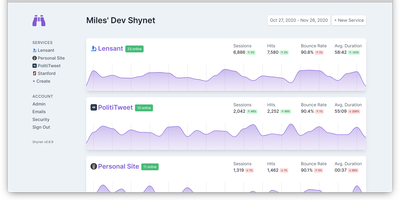
Get ready to send those old-school analytics tools packing, because Shynet is here to revolutionize your data game! This open-source analytics maestro is like a privacy-loving ninja, delivering the lowdown on your website's traffic without creeping on individual users' digital footprints. Shynet's all about the big picture, serving up aggregated insights and trendsetting data that help you get chummy with your website's user dynamics. With features that are hotter than a server room in July, including real-time stats, session recon, and a nifty primary key integration, Shynet's got your back whether you're tracking clicks or counting conversions. And for those of you riding the single-page app wave, fear not! Shynet's got the chops to keep up with your page-hopping users, ensuring your data's as accurate as a Swiss watch. Fancy managing a digital empire? Shynet lets you set up multiple services, each with its own secret agent-style tracking script. Plus, with an API slicker than a greased otter, you can tap into your dashboard's brain from anywhere, anytime. So whether you're a mom-and-pop shop with big dreams, a code whisperer, or a data detective, Shynet's your go-to for making smart, informed website decisions. And hosting it on RepoCloud? That's like having your own digital butler, serving up top-notch hosting without burning a hole in your wallet. So why wait? Give your website the analytics hero it deserves, and let Shynet and RepoCloud be your dynamic duo!

LibreOffice
Unleash the might of your creative genius and productivity prowess with LibreOffice, the open-source office suite that's so much more than a mere heir to OpenOffice.org. With a user interface cleaner than a monk's eating habits and a toolbox more feature-stuffed than a Thanksgiving turkey, you'll be crafting documents, spreadsheets, and presentations that dazzle and delight. Glide over to http://yourhost:3000/ or secure your seatbelt for the https journey to https://yourhost:3001/ and experience the digital equivalent of a high-definition, no-pixel-left-behind image streamed right to your web browser at speeds that would make a cheetah envious. And because it's built to play nice with a smorgasbord of architectures, you can fire it up on virtually any device. Host it on RepoCloud, where the cost is as tiny as the footprint of a digital ant, and you've got yourself the Swiss Army knife of office suites for all your document wrangling needs.

Owncast
Twitch and YouTube Live, replaced by infrastructure you control: Owncast is a self-hosted live streaming and chat server. Point OBS, Streamlabs, or any RTMP-capable broadcaster at the server's ingest port, and Owncast transcodes the feed with FFmpeg into HLS with multiple quality variants, playing it in a built-in web page with a real-time chat beside it. Chat supports anonymous participation, custom emotes, and moderation tools - message removal, user bans and suspensions - with optional authentication via IndieAuth or a Fediverse account. ActivityPub integration puts the stream on the Fediverse: viewers on Mastodon and compatible services can follow a channel and get notified the moment it goes live. Video delivery can come straight off the server or offload HLS segments to S3-compatible object storage so a modest VPS handles thousands of concurrent viewers while only managing ingest and chat. The backend is a single Go binary with a React frontend - no accounts platform, no database server, no dependency stack - and the player embeds in any website. MIT-licensed, with roughly 9k GitHub stars, zero platform fees, and no algorithm or takedown policy between you and your audience.

AnonUpload
Introducing AnonUpload: the ninja of file-sharing apps that lets you sneakily share files without leaving a digital footprint. No databases, no nosy tracking – just pure, unadulterated privacy. This PHP-powered maestro of anonymity is like a chameleon, blending seamlessly into any server environment – Nginx, Apache, Lightspeed, you name it. With a veritable smorgasbord of file types on the menu – from your garden-variety jpegs and gifs to the more exotic mp3s and mp4s – AnonUpload is the Swiss Army knife in your digital toolkit. And size? Pfft, it laughs in the face of size! Whether you're uploading a hefty 10GB treasure trove or a tiny text file, it's all gravy. Plus, with a built-in 'anticipation enhancer' (some might call it a download timer), it adds a sprinkle of excitement to the downloading process. Host it on RepoCloud, and you'll be the file-sharing wizard with more tricks up your sleeve than a cost-conscious cloud host at a magic convention!
MeTube
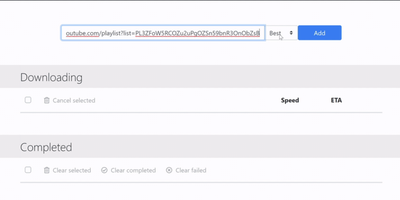
Introducing MeTube: the browser's new best friend for video aficionados who prefer a click to a command line! Imagine a world where the mystical powers of youtube-dl are harnessed in a sleek, web-based chariot, ready to whisk away your favorite videos from YouTube and a cornucopia of other video realms, all with the ease of a single click. Fancy downloading the whole 'Cooking with a Twist' playlist for your next culinary adventure? MeTube's got your back, with playlist powers that let you snag series faster than you can say 'Bon Appétit!' Customize your video vaulting experience with a smorgasbord of settings, from picking the perfect pantry (directory) for your files to separating the wheat (audio) from the chaff (video), and even tailoring the tapestry of your filenames. And when the lights go down, MeTube's dark mode turns your video quest into a cozy, eye-friendly escapade. All this, wrapped up in a Docker container so portable, you can deploy it faster than you can spell 'containerization'. And let's not forget, hosting on RepoCloud means you're saving more dough than a budget bakery, all while supporting the open-source soiree. Get ready to click, download, and dazzle with MeTube on RepoCloud!
Supertokens Core
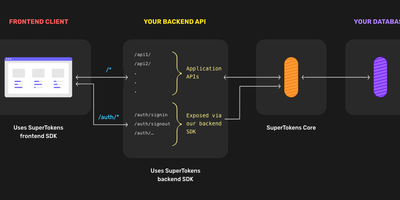
Authentication that lives inside your application rather than behind a redirect to an external identity provider - SuperTokens takes a fundamentally different architecture from Auth0 and AWS Cognito. Three tiers make that work - frontend SDKs (React, Angular, Vue, vanilla JS, React Native) render overridable login UI and manage tokens; backend SDKs (Node.js, Python, Go) expose auth endpoints on your own API domain; and SuperTokens Core, the piece you host here, is the stateless HTTP service handling core auth logic, password hashing, token signing, and database operations against PostgreSQL. The recipe system keeps features decoupled: use email/password, social login, passwordless (magic links, OTP), phone-password, multi-factor authentication (TOTP, WebAuthn), user roles, and microservice auth - individually or combined; you can even use SuperTokens purely for session management alongside another login provider. Sessions are where it shines: rotating refresh tokens with theft detection, automatic access-token refresh, CSRF protection, and secure cookie handling out of the box - the details that become vulnerabilities when hand-rolled. Verification happens locally in your backend via cached JWT signing keys, so the Core stays off the hot path. Self-hosted means no user limits, free forever, with all user data in your database. Apache-licensed.

WPS Office
description_humorous
Weaviate
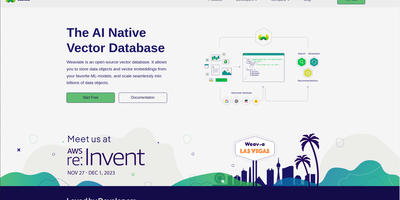
Embark on a semantic adventure with Weaviate, the open-source vector database that's like a GPS for your data! Imagine a world where your data points are like stars in the cosmos, and Weaviate is your trusty telescope, helping you navigate the galaxy of information based on the 'semantic vibes' they emit. With the ability to stand alone or play nice with a smorgasbord of vectorizing modules, this database is your ticket to a lightning-fast vector similarity search that zips through raw vectors or data objects with the speed of a comet, even when you throw in a few filters. It's like having a search party that combines the Sherlock Holmes of keyword sleuthing with the psychic predictions of vector search techniques for mind-blowingly accurate results. Want to play quiz master with your data? Pair it with any generative model and host a Q&A session right in your dataset! Hosting Weaviate on RepoCloud is like getting first-class seats for your apps on a spaceship, at economy prices. Buckle up for a next-gen vector database experience that will power your apps to infinity and beyond!
Coral
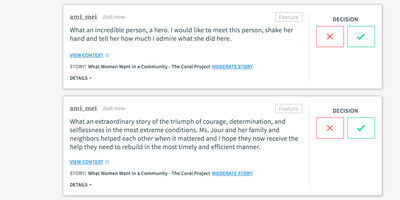
Comment sections at the Washington Post, the Wall Street Journal, and newsrooms across 30 countries run on Coral (also known as Talk) - the platform built by journalists' technologists, started under the Mozilla Foundation and now stewarded by Vox Media as an Apache-2.0 project serving 23 languages. Its founding premise is that online comments are broken and moderation is the fix. Moderators get a full queue system - reported comments, system-held pending comments, and configurable pre-moderation - backed by AI toxicity scoring that warns commenters before posting and holds high-scoring comments for review, Akismet spam detection, banned and suspect word lists, and automatic repeat-offender handling that pre-moderates users whose rejection rate crosses a threshold. Readers get features designed for healthier conversation: journalist badges in threads, muting of annoying voices, notifications, instant new-comment alerts, and timeouts rather than just bans. For publishers the economics are the point - no ads, no trackers, no hidden pixels anywhere in the code, full ownership of audience data, and GDPR compliance beyond requirements. Integration is one embedded script; SSO connects existing registration, and a GraphQL API supports customization and extension.