
Documize
Enterprise documentation discipline without enterprise infrastructure: Documize Community is the Confluence alternative built on exactly that trade. The entire platform - Go backend, Ember.js frontend - compiles to a single executable binary for Linux, Windows, and macOS with zero runtime dependencies: no Elasticsearch, no Redis, no JVM. Point it at PostgreSQL, MySQL, MariaDB, Percona, or Microsoft SQL Server (rare in open source, decisive in Microsoft shops), and schema migrations run on launch with native full-text search on whichever engine you chose. Content organization rejects nested-folder sprawl for Spaces, categories, and labels, and the section-based composable editor mixes rich text, Markdown, code blocks, PDFs, diagrams, and embedded Jira or Trello content in one document, with reusable blocks and templates so teams start from standards rather than blank pages. It deliberately unifies internal team docs and customer-facing documentation in one system with granular space-, document-, and action-level permissions deciding who sees what. Where wikis stop, Documize continues: content approval workflows (draft, review, approve, publish), version management, lifecycle control, feedback capture, PDF export, analytics showing what gets read and ignored, activity streams, and audit logs. Keycloak, LDAP, and SSO integrate for enterprise auth. AGPL-licensed.
Weblate
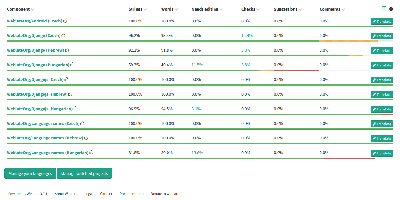
Over 2,500 open-source projects and companies in more than 165 countries localize with Weblate - the libre continuous localization platform and the standard self-hosted answer to Crowdin and Lokalise. Its defining trait is that translations live in the same version control as your code: Weblate talks directly to Git and Mercurial, pulls new source strings automatically via webhooks, and pushes finished translations back either as direct commits or as pull/merge requests on GitHub, GitLab, Gitea, Bitbucket, Azure DevOps, Gerrit, or Pagure. Every translator is properly credited in the commit history. For translators, it is a full computer-aided translation tool: translation memory, glossaries, customizable quality checks that catch placeholder and formatting mistakes, propagation of identical strings across components, and automatic suggestions from machine translation services - DeepL, Amazon Translate, LibreTranslate, and others, with per-service priorities and support for custom Python engines. It handles the format zoo (gettext PO, JSON, YAML, Android XML, iOS strings, and dozens more) and supports crowdsourced workflows with granular access control, workspaces, two-factor authentication, and reviewer approval steps. A REST API, CLI client, and add-on system automate everything else. Built on Python/Django, GPL-licensed, with no per-string or per-seat pricing when self-hosted.
Papercups
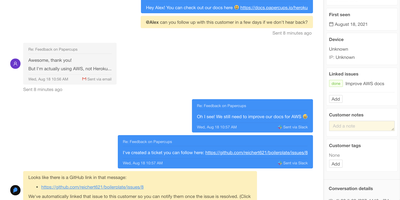
Companies with privacy and security concerns about piping customer conversations through Intercom or Zendesk run Papercups - open-source live customer chat. The stack is a deliberate strength: an Elixir/Phoenix API over PostgreSQL, with real-time messaging powered by Phoenix Channels and Presence - the same BEAM foundation trusted by Discord and PagerDuty for fault-tolerant, low-latency messaging. Customers see a customizable chat widget that embeds in any site as an HTML snippet, a React component, or even inside React Native apps, with configurable colors, greetings, and away messages. Your team sees a dashboard for managing conversations - close, assign, and prioritize - with Markdown and emoji in replies. The killer workflow is the reply-channel integration: connect Slack or Mattermost and every customer conversation becomes a synced thread your team answers without leaving the tool they already live in, with two-way message syncing handled by webhooks. Email and SMS channels extend intake beyond the widget, an analytics dashboard tracks communication patterns, and the Storytime feature adds real-time screen sharing to watch users navigate while you help them. A documented API supports fully custom chat UIs in Svelte, Flutter, or Vue. MIT-licensed and GDPR-conscious - customer data stays in your PostgreSQL.
Passbolt
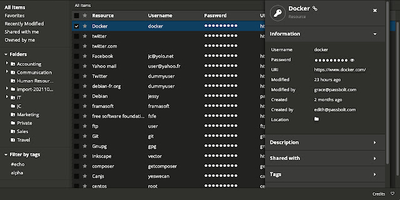
Security-conscious IT departments pick Passbolt for its cryptography: every user holds an OpenPGP key pair, and shared credentials are encrypted individually to each recipient's public key - real end-to-end encryption, not a vault password handed around. All crypto runs client-side in the mandatory browser extension (distributed and signed through the Chrome and Firefox stores, deliberately separating the crypto code from the server that stores ciphertext); private keys and passphrases never touch your instance, and the server admin cannot read a single secret. Authentication uses the challenge-based GpgAuth protocol, secrets are digitally signed to verify sender integrity, and metadata encryption extends protection to resource names and URLs. Day to day it behaves like a polished commercial manager: auto-fill and auto-save in forms, strong password generation, anti-phishing protection, TOTP storage, folder hierarchies shared per-user or per-group with fine-grained permissions and instant cryptographic revocation. Native iOS, Android, and desktop apps ship alongside a JSON API, CLI, and SDKs for CI/CD secret retrieval and rotation. The PHP server runs on MariaDB and is AGPL-licensed open source - including the paid tiers' codebase - with published security audits.
Hasty Paste
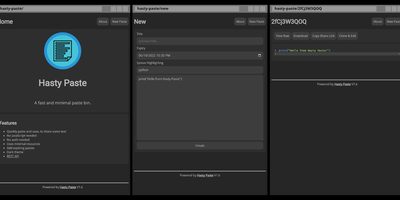
Paste some text, hit save, share the link - Hasty Paste is a fast, minimal pastebin written in Python on the async Quart framework, named, by its author's own admission, "because you use it so fast without a care in the world." No accounts, no authentication, no friction - built for the everyday case of handing a debug log, config snippet, or stack trace to someone in tech support or a chat channel. Pastes get randomly generated IDs, with an optional "long" ID mode that makes brute-force URL guessing impractical, and expiry times ensure throwaway content actually gets thrown away. Optional Pygments syntax highlighting makes code readable, a dark theme spares your eyes, and the whole interface works without JavaScript - it renders in terminal browsers and under the strictest script blockers. Storage is a custom flat-file system (no database), caching runs internally or through Redis for busier instances, and a REST API plus the companion "Hastily Paste It" CLI script enable piping command output straight into a paste from the terminal. The Alpine-based Docker image is tiny, resource usage is minimal, and the license is AGPL.
Fider
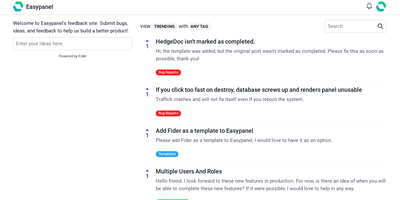
Get ready to tap into the pulse of your customer base with Fider, the idea wrangler extraordinaire! This app is like a digital town hall where your users can shout out their brilliant ideas, give a thumbs-up to their favorites, and engage in riveting discussions about their most-wanted features. Fider is the ultimate feedback funnel, keeping you in the know with the who's who of suggestions – whether they're hot off the press, in the works, or given the polite 'thanks, but no thanks.' With a sign-in faster than a superhero's costume change, your visitors can jump right into the action. Dress Fider up to match your brand's snazzy style, or go incognito with a private site for your eyes only. Speaking the language of the people (multiple languages, to be exact), Fider breaks down barriers like a linguistic ninja. Tagging? Check. Markdown flair? Double-check. A public API that plays nice with other systems? You betcha. And for the tech-savvy, there's even a Webhook handshake for seamless integrations. Hosted on RepoCloud, where the cost is as friendly as your neighborhood barista, Fider turns feedback chaos into a harmonious chorus of actionable insights. So why wait? Let Fider and RepoCloud be the dynamic duo your audience has been waiting for!

Wizarr
Getting non-technical friends and family onto a media server is its most tedious chore - Wizarr solves it. Instead of manually creating accounts, dictating server addresses, and explaining which app to install, you send one invite link. When the recipient clicks it, Wizarr creates their account on your server automatically - Plex, Jellyfin, Emby, Audiobookshelf, Komga, Kavita, and Romm are all supported - then walks them through a mobile-first, app-like onboarding wizard: download the right client, sign in, and learn how to request movies through your Overseerr or Ombi instance, with an optional Discord server invite along the way. Invitations are genuinely manageable: set expiration dates, usage limits, passphrases, library-scoped access tiers, and time-limited memberships that end access automatically. The wizard itself is fully customizable - Markdown-based steps managed from the admin UI, organized into pre-invite and post-invite phases (terms of service before joining, app setup after), reorderable bundles assignable to specific invitation types, and combined flows for invites spanning multiple servers. Multi-server and multi-admin support manages several backends from one dashboard, SSO support is plug-and-play, and a REST API with OpenAPI/Swagger documentation covers automation. A Flask/HTMX app in a single Docker container.
Shaarli
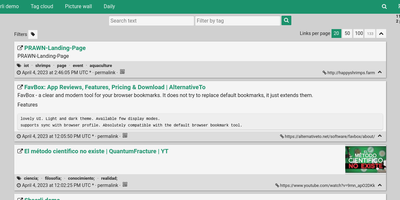
Personal, minimalist, database-free bookmarking - Shaarli is a philosophy as much as an app. Everything lives in a single compressed datastore file inside data/: no MySQL, no PostgreSQL, backup by copying one directory. That write-once/read-many file is usually served straight from OS disk caches, which is why a decade-old Shaarli instance with tens of thousands of links still responds instantly. Designed deliberately single-user, it saves URL, title, unlimited-length description, and tags (with autocomplete, renaming, and merging), marks entries public or private, and automatically strips utm_source and fb tracking parameters from saved URLs. That description field is why the community uses Shaarli as far more than bookmarks: a microblog, read-it-later queue, code-snippet base, pastebin, and shared clipboard between machines. Sharing is one click via bookmarklet or Android apps; consumption is per-tag RSS/Atom feeds plus a daily digest feed; search is full-text with tag filtering. A REST API opens it to any client, a plugin and theme system extends the PHP core (Markdown rendering, thumbnails), and import/export uses browser-standard Netscape HTML - your data enters and leaves freely. LDAP login is supported, no telemetry is sent anywhere, and the UI degrades gracefully without JavaScript. The anti-cloud Delicious.
Mealie
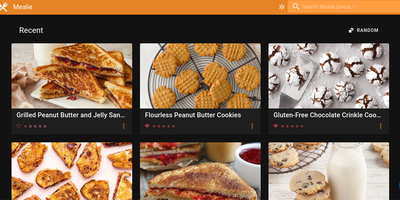
A recipe manager that feels like a consumer product rather than a homelab experiment: Mealie pairs a FastAPI backend with a reactive Vue frontend for the most polished self-hosted meal planning around. The killer feature is the recipe scraper: paste a URL from hundreds of supported cooking sites and Mealie imports the ingredients, steps, times, and photos automatically. Structured HTML/JSON paste, a Markdown-capable manual editor, and imports from other recipe apps (like Tandoor) cover everything else. Meal planning uses a drag-and-drop calendar with breakfast, lunch, dinner, and snack slots, plus rule-based random recipe insertion - constrain the pool by tags or categories per meal type or weekday. Shopping lists link recipes so all ingredients land in one place, organized into supermarket sections, and update in real time for everyone in the household. The multi-tenancy model is genuinely thought through: isolated Groups can host multiple tenants, and Households within a group share recipes and organizers while keeping meal plans and shopping lists private. Cookbooks group recipes by your own criteria, a cooking mode stays readable on a phone propped against the backsplash, and 35+ language translations ship built-in. A fully documented REST API and scheduled webhooks (e.g., today's meal plan to Home Assistant) make it automatable, with SQLite or PostgreSQL storage and automatic backups.
Rotki
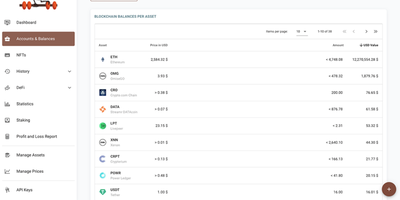
Crypto portfolio tracking that inverts the SaaS model: rotki runs on your own machine, needs no email or account for the free tier, and keeps every wallet address, balance, transaction, and tax event in a local SQLCipher database encrypted with 256-bit AES. By default nothing passes through rotki-operated servers - a design choice that matters when cloud portfolio trackers concentrate exactly the identity-linked holdings data attackers want. Centralized exchanges (Kraken, Binance, Coinbase, Bitstamp, and more) connect through read-only API keys that can see but never withdraw; blockchain accounts cover Ethereum and its L2s, Bitcoin, Solana, Polkadot, and Kusama, with ENS resolution and your choice of RPC endpoint or your own node. rotki decodes on-chain transactions into readable events across major DeFi protocols - Aave, Uniswap, Compound, Curve, Lido - and generates profit-and- loss reports for tax season with customizable accounting settings, including FIFO, LIFO, and HIFO cost-basis methods, plus CSV imports for defunct exchanges. Optional premium sync is zero-knowledge, encrypting the database on-device before upload. AGPLv3-licensed and multiplatform, with a Docker package for server deployment.

Matrix Synapse
Step into the Matrix, where the future of chatter is not just bulletproof, but decentralised to boot! This app is your golden ticket to gabbing with pals, kin, digital tribes, and office allies in a virtual space that's as snug as a bug in a rug. Wave goodbye to the digital overlords and hello to a world where you're the architect of your own cyber sanctuary. Fancy yourself a bit of a builder? Go wild creating snazzy, sophisticated chat apps atop the mighty Matrix. Part of a bustling bazaar of clients, servers, and robotic minions (we mean bots), this open-source extravaganza is snugly housed on RepoCloud, where your wallet won't weep over hosting fees. So, whether you're itching to gab, code, or conquer the universe of decentralised discourse, Matrix is your trusty sidekick in the quest for communication liberation!

Flowise
Drag nodes onto a canvas and ship an LLM app: Flowise is an open-source visual builder for AI agents and LLM applications, written in Node.js on LangChain.js and licensed Apache-2.0. You assemble flows by dragging nodes onto a canvas: models, prompts, memory, vector stores, retrievers, and tools, then wire them together and test in the built-in chat panel. Three builder types cover increasing complexity: Assistant for simple RAG chat over uploaded files, Chatflow for single-agent systems with techniques like rerankers and Graph RAG, and Agentflow for multi-agent orchestration with branching, looping, shared flow state, and human-in-the-loop checkpoints. Over 100 integrations connect data sources, vector databases, and both proprietary and open-source models, plus MCP client and server nodes for standard tool interop. Finished flows are exposed as REST APIs, embedded chat widgets, or via JS and Python SDKs - each flow gets an endpoint the moment it is saved, removing the deployment gap between a working prototype and something your application can call. Execution logs, visual step debugging, and external log streaming trace behavior, while input moderation and rate limiting act as guardrails; RBAC, SSO, and workspaces cover team deployments. Self-hosting keeps prompts, encrypted credentials, and conversation data on your own instance, which matters when flows handle internal documents or customer data - and wiring a model, prompt, memory, and vector store on the canvas replaces the boilerplate a hand-coded LangChain project would need.
PowerDNS-Admin
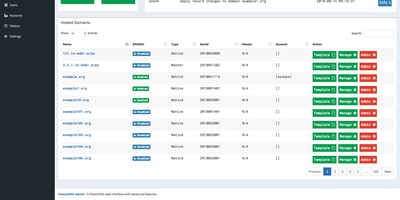
Raw zone files and API calls become something a whole team can operate safely once PowerDNS-Admin puts its web interface in front of a PowerDNS authoritative server. It's a Python/Flask application covering full forward and reverse zone management, with the touches that matter in daily DNS work: zone templates for stamping out consistent new domains, easy IPv6 PTR record editing (reverse zones by hand are misery), full IDN/Punycode support for internationalized domains, and DynDNS 2 protocol support so routers and scripts can update records the way they would against a commercial dynamic-DNS service. Access control is enterprise-grade: local users, LDAP against OpenLDAP or Active Directory, SAML, and OAuth via Google, GitHub, Azure, or OpenID Connect, hardened with TOTP two-factor authentication. Role-based permissions extend to zone-specific access control - hand a developer their project's zone without exposing the rest of your namespace - and activity logging records who changed which record when, the audit trail bare PowerDNS never gives you. The dashboard monitors PDNS service configuration and statistics, and its own API exposes zone and record management for automation on top of the UI. Runs against MySQL/MariaDB or PostgreSQL, talking to PowerDNS through its REST API. MIT-licensed.

Meilisearch
Get ready to turbocharge your digital haystack with Meilisearch Cloud, the open-source search engine that's more electrifying than a double espresso shot for your search bar! Imagine a world where your users can find the needle in the haystack before you can say 'Meili-whoa!' – that's the sub-50-millisecond promise of this search sorcerer. Wave goodbye to the days of head-scratching configurations; Meilisearch is like that friend who just gets you, offering smart, zero-config search setups. It's the Swiss Army knife of full-text search engines, slicing through every use case with the precision of a gourmet chef. Whether your users are typing in English, Esperanto, or Elvish, Meilisearch is the polyglot pal you never knew you needed, automatically tuning into any language. Fancy yourself a bit of a search maestro? Go ahead, orchestrate your own ranking symphony with custom relevancy rules. And because we're all about keeping secrets, Meilisearch comes with API keys and tenant tokens to keep your searches as secure as a vault. Want to go the extra mile? Unleash the power of geo searches and let your users find treasures nearby. With Meilisearch Cloud hosted on RepoCloud, you're not just saving coins compared to those spendy cloud hosts; you're also joining a band of open-source rockstars. So, strap in and prepare to deliver a search experience that's as customizable as a build-a-bear workshop, all with just a few lines of code!
Tolgee
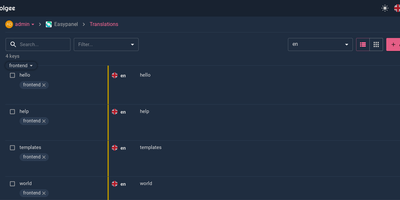
Hold Alt/Option, click any string in your running app, and edit the translation in place: Tolgee is an open-source localization platform built the way developers wish translation worked - changes save straight to the platform with no hunting through JSON or PO files. In-context editing works even in production via the Tolgee Tools browser extension, which injects credentials without touching source code, so a client or colleague with zero coding skills can translate the product inside the product. The SDKs (React, Angular, Vue, Svelte, plus iOS and Android) extract context from each UI element and capture one-click screenshots, giving both human translators and machines the surrounding meaning that raw string files lose. Autonomous translation uses that context: new keys are instantly filled from translation memory or machine translation (DeepL, Google Translate, AWS Translate), with optional human review afterward - shipping no longer waits on a translation agency. A CLI handles import/export, a REST API covers automation, a Figma plugin bridges design, and an MCP server lets AI coding assistants search keys, create translations, and trigger machine translation without leaving the editor. Self-hosting this Crowdin/Phrase/Lokalise alternative keeps every string, screenshot, and API key on your infrastructure.

Mailhog
Unleash the power of MailHog, the developer's digital sniffer dog for emails! Picture this: you're tweaking your app's email-sending prowess, and you need to see those emails without spamming real inboxes. Enter MailHog, the SMTP sidekick that corrals your emails into a neat web corral where you can admire your handiwork. Fancy sending them out into the wild? MailHog's got a button for that, releasing them to their SMTP destiny. Peek at your emails online or snatch them up with the JSON API. It's got all the tricks: SMTP AUTH, PIPELINING, and real-time updates that'll make your tail wag. And for those who like a bit of mischief, there's a Chaos Monkey ready to throw a wrench in the works, because who doesn't love a good email escapade? Keep your emails under lock and key with HTTP basic authentication, all while enjoying the breezy life with MailHog's no-installation, grab-and-go vibe. Host it on RepoCloud, and you'll be howling at the moon with joy at the lower costs and the sheer convenience. It's open-source email testing with a playful bite!
Duplicati
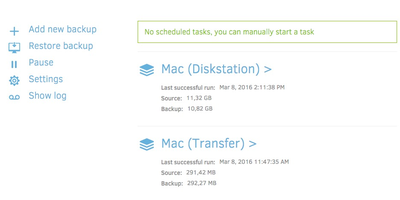
Encrypted, incremental, compressed backups on storage you already have - Amazon S3, Backblaze B2, Google Drive, Azure, OneDrive, Dropbox, MEGA, Storj, WebDAV, SFTP, FTP, SMB, or a plain local disk - is what the MIT-licensed Duplicati has quietly done for years. Its security model is Trust No One: every block is encrypted with AES-256 (or a local GPG instance) before leaving the machine, and the passphrase never travels, so the storage provider holds only ciphertext. The block-based storage engine gives the best of both backup worlds: after one initial full backup, only changed data blocks upload - modify a tiny part of a huge file and only that part transfers - yet every backup version restores like a full backup in a single operation, with no incremental chains to replay. Deduplication and compression keep remote storage growth slow even across years of versions. A web interface manages everything: the built-in scheduler keeps backups current automatically, flexible filters select folders, file types, or custom patterns, retention policies prune old versions, and an integrated updater flags new releases. On compatible object-lock backends, immutable (WORM) storage protects backup data from ransomware that reaches the credentials. Runs on Windows, macOS, and Linux, free even for commercial use.

Easyshortener
Get ready to shrink those lengthy URLs down to fun-size with Easyshortener, the link-shortening maestro that's as easy on the eyes as it is on your digital security! Wave goodbye to the days of sprawling links with this multi-user marvel, where each user can tame their own wild web addresses from the comfort of a sleek administration panel. It's like having a Swiss Army knife for your links, but without the risk of nicking your fingers. And for those who like their online life as secure as Fort Knox, Easyshortener comes strapped with two-factor authentication – it's like a bouncer for your bits and bytes. Deploying this little gem is a breeze with Docker, so you can launch it into the web-o-sphere with the grace of a containerized cannonball. Plus, with registration and redirect tracking, you'll be the Sherlock Holmes of link management, and the option to enforce HTTPS is like putting your links in an armored van. Host it on RepoCloud, and you'll be the link-shortening hero you never knew you needed, at a price that keeps your wallet just as happy as your links!