ToolJet
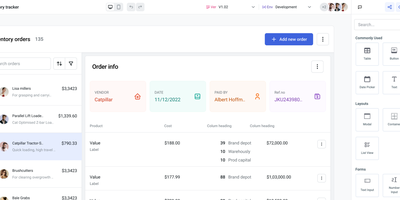
Retool's job, self-hosted: ToolJet is an open-source low-code platform for building internal tools, dashboards, and admin panels. Apps are assembled in a drag-and-drop visual builder with 60+ responsive components, including tables, charts, forms, and lists, and connected to 80+ data sources: PostgreSQL, MySQL, MongoDB, REST and GraphQL APIs, cloud storage, and common SaaS tools. When visual configuration is not enough, you can run JavaScript or Python inline for queries and transformations. A built-in no-code database (ToolJet Database) covers apps that need their own tables without provisioning an external database, Workflows add node-based automation for background jobs with dedicated worker containers and a Redis-backed queue, and multi-page apps with multiplayer editing, inline comments, and mentions support team development. Security is designed for internal data: credentials are AES-256-GCM encrypted, data flows proxy-only through your server so database contents never reach a third-party cloud, and granular per-app access control plus SSO gate each tool. Where Retool-style platforms bill per builder and sometimes per end user, the self-hosted Community Edition serves unlimited builders and users at hosting cost, and full source availability means the platform itself can be forked, audited, and extended. The stack is Node.js and React on PostgreSQL, deployed via Docker.
Ghost File Sharing
Get ready to turbocharge your coding escapades with our app that's like a GPS for GitHub! Navigate the bustling streets of code, projects, and fellow code-connoisseurs with ease. It's like having a productivity potion at your fingertips. Subscribe to our newsletter and be the cool kid on the block with the latest product scoops and corporate chronicles. Plus, our app is Fort Knox for your code, ensuring your digital masterpieces are safe as houses. Ideal for the solo programming ninja or the enterprise brigade, our app is your golden ticket to the open-source wonderland, all while saving your coins with RepoCloud's wallet-friendly hosting!
Syncthing
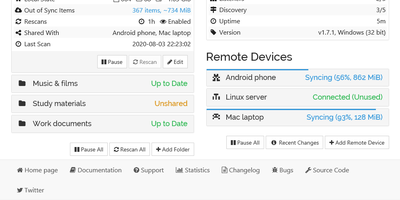
Get ready to sync like a boss with Syncthing, the ninja of file synchronization! Imagine your files doing the conga line across all your devices – that's Syncthing for you, keeping everything in step without missing a beat. It's like having a super-secret handshake that only your devices know, ensuring no nosy neighbors (a.k.a. central servers) can peek into your data. With encryption that would make a spy jealous, and a no-entry list for uninvited devices, your digital life is Fort Knox-ed. And the best part? It's like a chameleon, blending seamlessly with Mac, Windows, Linux, and more. No tech degree needed – just open your browser and take control. With Syncthing hosted on RepoCloud, you'll be syncing on cloud nine, minus the sky-high costs. So go ahead, multiply those folders like rabbits – Syncthing's got your back, across the LAN party or the wild web!
Miniflux
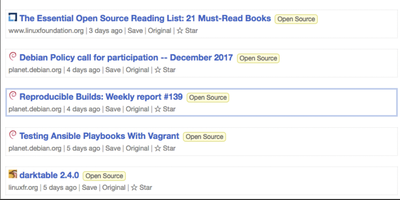
One statically-compiled Go binary over PostgreSQL, no ORM, no framework, static assets embedded in the executable: Miniflux is the minimalist, opinionated feed reader. The opinions are the feature: page layout, fonts, and colors are tuned for reading, and everything else is treated as noise. It consumes Atom, RSS, and JSON Feed formats with OPML import/export, organizes articles with categories and bookmarks, fetches original full-text content for summary-only feeds, and provides Postgres-powered full-text search. Privacy work happens automatically: pixel trackers are stripped, tracking parameters removed from URLs, a media proxy blocks third-party tracking, referrers are never forwarded, and there is zero telemetry. Navigation is keyboard-first - j/k through items, o to open, f to star - with touch gestures on mobile. Podcast, video, and music enclosures are supported, and YouTube videos play inline. Over 25 integrations save articles onward to Wallabag, Readwise Reader, Pinboard, Linkding, Instapaper, Notion, Telegram, Matrix, Ntfy, and more, plus webhooks and a REST API with Go and Python clients; the Google Reader API endpoint supports existing mobile reader apps. Authentication spans local passwords, passkeys (WebAuthn), Google OAuth2, OpenID Connect, and reverse-proxy headers. It is Apache 2.0 licensed, translated into 20 languages, and updates feeds on an internal scheduler.
Octobox
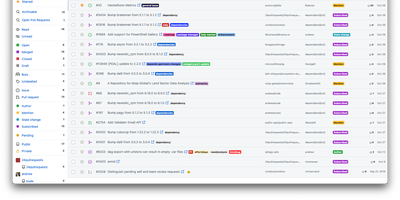
What Gmail did for email, Octobox does for GitHub notifications: an ephemeral, unmanageable stream becomes an inbox you can actually triage. GitHub marks notifications read the moment you glance at them and lets old ones vanish days later; heavy maintainers end up building elaborate Gmail filter systems just to cope. Octobox - a Ruby on Rails app over PostgreSQL - syncs your notifications into a persistent inbox with an explicit archived state: mark a thread done, and if the issue or PR sees new activity, it pops back automatically, so nothing silently falls through. Triage is keyboard-driven with Gmail-style shortcuts (j/k to navigate, e to archive, m to mute, s to star), and multi-select clears noisy repositories in bulk. Filtering is where it earns its keep: slice by repository, organization, type, action, state, reason, CI status, labels, author, assignee, or bot origin, combine prefix search filters, and pin favorite searches to the sidebar. The optional GitHub App enriches entries with live PR/CI status and labels so you can decide without clicking through. Auto-archive rules clear merged PRs and closed issues; muting and snoozing silence the rest. A REST API supports integrations. Self-hosting keeps your notification metadata - a map of everything you work on - on your own server.
Wekan
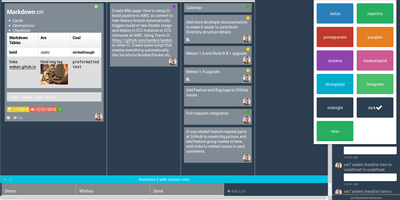
Embark on a task-taming adventure with WeKan, the open-source superhero of Kanban apps! Picture this: a digital playground where your projects transform into vibrant boards, each a realm of 'To Do', 'Doing', and 'Done' columns. Populate these realms with task cards—mighty little champions complete with titles, epic descriptions, and countdowns to their due dates. WeKan's lists are like the stages of a quest, guiding you through the workflow with the ease of a wizard's spell. Customize your quest log with a kaleidoscope of colors and fields to capture the lore of each task. Each card is a quest in itself, a scroll of information that moves with you from one stage to the next. And fear not, for WeKan is a fortress of privacy, with self-hosting shields, access control spells, and an open-source code grimoire for the ultimate security enchantment. Hosted on RepoCloud, your data stays as safe as treasure in a dragon's lair, but without the fiery breath and at a cost that would make even a dwarf smile. So why wait? Let WeKan be your guide in the quest for peak productivity!
Jellyseerr
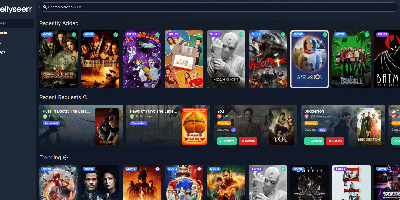
Browse trending titles, search anything, request it in two clicks: Jellyseerr gives Jellyfin, Emby, and Plex users a beautiful storefront for the media library. Born as the Overseerr fork that added Jellyfin and Emby support (the projects have since unified as Seerr), it handles the full request lifecycle - users authenticate with their existing media-server accounts, pick individual seasons or movies in a clean interface, and admins approve or decline from a simple queue, including on mobile. Approved requests flow straight to Sonarr and Radarr, which handle acquisition automatically, with support for separate 4K server instances. Regular library scans keep availability accurate, so users see instantly what already exists instead of requesting duplicates. A granular permission system controls who can request what - auto-approval for trusted users, quotas and limits elsewhere - and override rules adjust request routing by user, tag, or other conditions. Watchlist and blocklist functions curate discovery, notifications reach email, Discord, Telegram, Slack, Pushover, and Pushbullet, and both PostgreSQL and SQLite are supported. Localized into many languages, it turns "can you add this movie?" texts into a self-service system that runs itself.
Dozzle
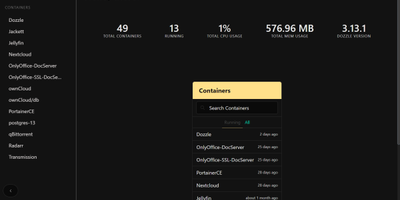
Introducing Dozzle: the featherweight champion of the Docker log viewing world, now streaming live on RepoCloud! Imagine a world where logs roll out the red carpet in real-time, and Dozzle is your all-access pass. It's like having a backstage pass to your Docker containers' most intimate thoughts, without the hassle of hitting refresh. This little gem is as resource-conscious as a monk, sipping on CPU and memory so lightly, you'll forget it's even there. Want to play the field with multiple remote hosts? Dozzle's got you covered with a nifty drop-down menu that's smoother than a buttered slide. And for the log-loving detectives, Dozzle's fuzzy search and regex prowess turn log sleuthing into child's play. Split screens? Check. Live performance stats? Double-check. And because we're all about that 'cloak and dagger' life, Dozzle comes with username and password protection to keep your log peeping secure. All this, hosted on RepoCloud, where the cost is as tiny as Dozzle's digital footprint. Get ready to monitor like a boss!
Dokuwiki
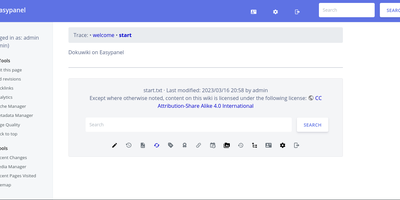
Unleash the power of collective knowledge with DokuWiki, the open-source wiki wizard that's as easy to use as a peanut butter sandwich (minus the sticky fingers). No database? No problem! DokuWiki's got you covered with its sleek syntax that's as clean as your grandpa's Sunday hat. It's the apple of the eye for admins everywhere, thanks to its no-sweat maintenance, backup simplicity, and plug-and-play integration. Lockdown your secrets or share your smarts with DokuWiki's built-in Fort Knox-like access controls and authentication magic. Whether you're building a digital library of Alexandria or just jotting down your world-changing ideas, DokuWiki's plugin treasure trove transforms it from a mere wiki into your digital Swiss Army knife. Collaborate like a band of merry scribes, with swift updates and a historical archive of every brainwave and typo. Ideal for everything from a corporate brain bank to your personal idea dump, a how-to guide, a team's digital war room, or even an intranet that doesn't make you yawn. And with RepoCloud hosting, you'll be saving more dough than a budget bakery, all while customizing your DokuWiki experience from newbie-friendly tweaks to crafting your own digital extensions. So why wait? Make DokuWiki your go-to for shared wisdom without the heavyweight price tag!
Wakapi
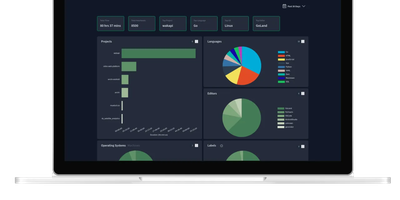
Its author, a student and WakaTime fan, didn't want to pay $9/month for data about his own keystrokes - so Wakapi was born, a self-hosted, WakaTime-compatible backend for coding statistics. The compatibility is the killer design decision: the official WakaTime plugins for VS Code, JetBrains IDEs, Vim, and dozens of other editors work unmodified - just point the plugin's API URL at your Wakapi instance with your personal key, and heartbeats flow to your server instead of a third party's. Duration inference matches WakaTime's own algorithm, with a configurable timeout (10 minutes by default). From that stream Wakapi builds statistics and plots across projects, languages, editors, hosts, and operating systems, plus the fun extras: public leaderboards (optionally login-gated, with configurable aggregation windows), badges for GitHub readmes, and weekly email reports. A REST API serves your data programmatically, Prometheus export feeds your existing Grafana, and a WakaTime relay mode can mirror heartbeats to both services during migration - with one-click import of historical WakaTime data. Written in Go, it is lightning fast and light enough for the smallest instance, storing to SQLite, PostgreSQL, or MySQL, with configurable data retention for GDPR peace of mind. Deliberately smaller than WakaTime, deliberately yours.
Logseq
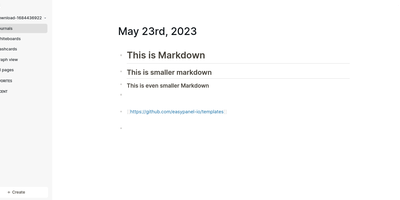
Every line an indentable bullet, every bullet a first-class block that can be referenced, embedded, and queried anywhere: Logseq is a privacy-first, local-first knowledge platform built around the block outliner. The daily journal is the system's beating heart - each day opens a fresh date-stamped page where tasks, meeting notes, and fleeting ideas land as blocks without filing decisions, then connect later through [[wikilinks]] with automatic bidirectional backlinks and ((block references)) that transclude any bullet into any page. Everything persists as plain Markdown or Org-mode files on disk - git-friendly, greppable, and owned forever, with sync via iCloud, Dropbox, Syncthing, Git, or an optional end-to-end encrypted service. Built-in tooling goes beyond notes: TODO/DOING task states with scheduling, native PDF annotation with area highlights, spaced-repetition flashcards, whiteboards for visual thinking, Zotero integration for researchers, and Datalog-powered queries that build dynamic views across the entire graph. A marketplace of hundreds of community plugins and themes adds AI chat, Ollama local-model integration, and custom workflows. Written in Clojure/ClojureScript, AGPL-3.0 licensed with 320+ contributors, and completely free - the local-first Roam for people who refuse subscriptions and lock-in.
Docker Registry
Ahoy, container enthusiasts! Set sail with Docker Registry 2.0, the swashbuckling storage sidekick for your Docker images. This app isn't just an implementation of the Docker Registry HTTP API V2; it's a compatibility wizard, joining forces with Docker versions 1.6 and up. Looking to hoist your registry solution to new heights or just want a cozy spot for your private collection? Docker Registry 2.0 has got your back, offering a fortress of security and a playground of scalability. It's the unsung hero behind the curtain of the Docker Hub, GitHub Container Registry, GitLab Container Registry, and DigitalOcean Container Registry, not to mention its star role in the CNCF Harbor Project and VMware Harbor Registry. Get ready to manage your digital treasures like a pro, with a content distribution system that's more extensible than a pirate's telescope. And with RepoCloud hosting, you'll be saving more doubloons than you can count, all while keeping the open-source spirit alive and kicking!
Portainer
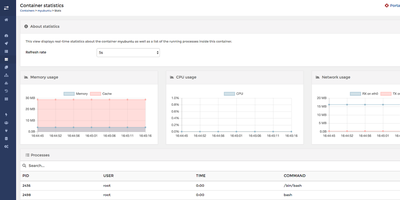
Get ready to harness the power of containers like you're a superhero with Portainer, the sidekick for over a million tech enthusiasts and container wranglers! This platform is like a Swiss Army knife for your container needs, making the daunting world of Kubernetes, Docker, and Swarm as easy as pie—even if you're not a certified Kubernetes chef. With Portainer, you can deploy, configure, and secure your container capers on any terrain, be it data centers, clouds, the mysterious network edge, or even IIOT devices. It's like having a container wizard at your fingertips, slashing deployment times and letting even the greenest of teams manage their container quests with confidence. Wave goodbye to container chaos and say hello to smooth sailing with Portainer's multi-cluster, multi-cloud, and multi-device management magic. And the cherry on top? Hosting it on RepoCloud won't break the bank, leaving you with more loot to spend on your tech adventures!

imgproxy
Say goodbye to the digital weight gain of your website with imgproxy, the image-shrinking superhero! This app is like a personal trainer for your pixels, ensuring your site stays nimble and quick on its virtual feet. By dynamically resizing and processing images as they're requested, imgproxy is the Marie Kondo of the digital image world, tidying up your storage space and slashing those hefty SaaS fees. Fancy a little nip and tuck for your photos? imgproxy has a tool belt brimming with features like cropping, contrast adjustments, and even pixelization for that retro gamer vibe. It's like having a Swiss Army knife for your images! And for the security-conscious, imgproxy is your loyal guard dog, keeping those pesky image processing attack vectors at bay. Whether you're cloud-bound or cluster-hugging, just whisper sweet parameters into your request URL and voilà – imgproxy fetches your images faster than you can say 'libvips'. And for the power users, imgproxy Pro plans are like VIP backstage passes, giving you more features, more capacity, and an entourage of support. All this, hosted on RepoCloud, where the cost is as tiny as your newly optimized images. Get ready to serve up svelte, speedy visuals without breaking the bank!
Substreamer
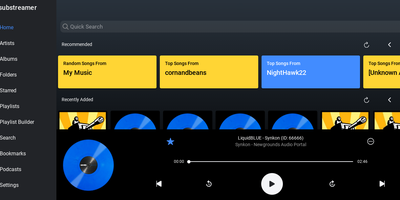
A free, polished web client for Subsonic-compatible music servers: Substreamer is the browser-based frontend you point at your existing streaming backend to play your own library from anywhere. It speaks the Subsonic API (v1.13 and higher), which makes it compatible with the whole ecosystem that has grown around that protocol: the original Subsonic server, its forks Airsonic and Madsonic, and modern implementations like Navidrome and Ampache. That decoupling is the point - your music files, transcoding, and library indexing live on whichever server you prefer, while Substreamer provides the listening experience: browse by artist, album, and genre, build and manage playlists, search your collection, and stream on demand. This RepoCloud deployment runs the containerized web edition, so the same interface is available from any browser without installing a native app, and it pairs with the Substreamer mobile apps that made the client popular. For anyone assembling a self-hosted Spotify replacement - typically Navidrome for the backend plus a good client - Substreamer fills the client half with a clean, familiar player UI. Because it is a stateless client, the container is lightweight and low-maintenance: connect it to your server's URL and credentials, and your entire collection is streaming in minutes, with no subscription and no catalog that can disappear.
Wg-easy
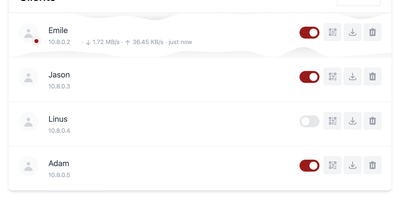
Get ready to wave goodbye to the command-line blues with WireGuard Easy! This snazzy app is your one-stop-shop for setting up and managing your very own WireGuard VPN like a pro, all from the comfort of a slick web interface. Fancy a bit of drag-and-drop? You got it! Want to peek at your client's QR code or snag their config file without breaking a sweat? Consider it done! And for the stats lovers, we've got charts that'll make your heart sing with real-time connection deets, complete with Tx/Rx serenades. Just make sure your Linux host is WireGuard-ready and Docker-friendly, and you're all set to join the easy-peasy VPN league. Host it on RepoCloud, and you'll be the MVP of VPNs without spending a fortune. It's like having a VPN wizard in your pocket – minus the pointy hat and the wand!
Wiki.js
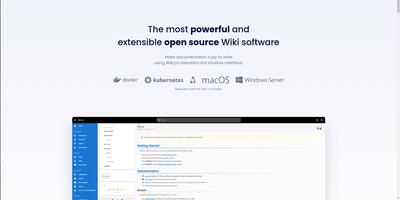
Team and product documentation on a fast Vue frontend with PostgreSQL storage: Wiki.js is a Node.js wiki engine. Its distinguishing trait is per-page editor choice: authors pick Markdown with live preview, a WYSIWYG visual builder for non-technical writers, or raw HTML, page by page. Native Git synchronization commits every page change to GitHub, GitLab, Bitbucket, Azure DevOps, or any Git remote - bi-directionally, so edits made in the repository flow back into the wiki - giving documentation version-controlled backup for free. Authentication coverage is among the broadest of any self-hosted wiki: local accounts with self-registration, social login via Google, GitHub, Discord, and Slack, and enterprise SSO through LDAP/Active Directory, SAML, CAS, Auth0, Okta, Azure AD, Keycloak, and generic OAuth2/OIDC, with optional MFA. Built-in full-text search runs on PostgreSQL with zero setup, and external engines like Algolia or Solr can substitute. Page history with visual version comparison, granular group-based permissions per path, nested navigation menus, 50+ integration modules, and full localization round it out. AGPLv3-licensed with a 28k-star community.
CubeJS
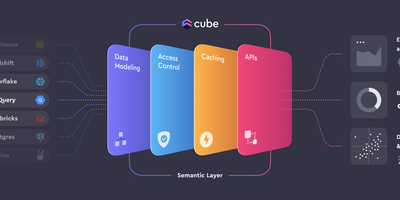
Between your databases and everything that consumes data - BI tools, embedded analytics, AI agents - sits Cube (formerly Cube.js), an open-source semantic layer. Metrics, dimensions, joins, and access rules are defined once as code in YAML, JavaScript, or Python, forming a governed data model that every downstream consumer shares, so "revenue" means the same thing in every dashboard. Caching is two-level: an in-memory cache absorbs bursts of identical queries, and declared pre-aggregations - rollup tables built in the warehouse or in Cube Store, Cube's distributed columnar engine, and refreshed in the background - deliver sub-second latency while cutting warehouse compute costs. The query planner routes each request to cache, rollup, or source automatically. Consumers connect through a Postgres-compatible SQL API (any tool that speaks Postgres works), plus REST, GraphQL, and a Meta API for model introspection. Row-level security and multi-tenancy are enforced in the layer itself, upstream of every client. Sources include Snowflake, BigQuery, Databricks, Postgres, MySQL, Presto, and Athena. Headless by design - bring your own UI.