Restreamer
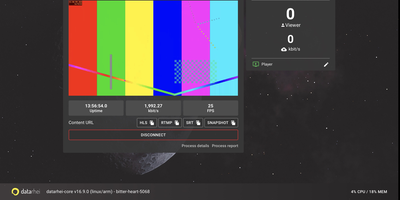
Point OBS or a hardware encoder at Restreamer's built-in RTMP or SRT ingest and it serves your website while rebroadcasting to YouTube Live, Twitch, Facebook, Vimeo, TikTok, LinkedIn, PeerTube, and anything else that accepts RTMP, SRT, or HLS - a complete self-hosted live-streaming server from datarhei. That multistreaming normally costs a monthly Restream.io subscription; here it's one FFmpeg process per destination on your own hardware. The web UI is genuinely approachable, with a wizard that walks beginners through camera setup, while professionals get the full surface: multiple audio/video inputs (USB, RTSP network cameras, virtual devices), codec and processing settings, separate audio muxing, and hardware acceleration via Nvidia CUDA, Intel VAAPI, or Raspberry Pi. Serving your own audience is first-class - a built-in Video.js player embeds in your site, a ready-made publication website streams without any embedding work, HLS chunk sizes are tunable, and automatic Let's Encrypt handles HTTPS. Viewer and bandwidth monitoring with limits keeps traffic costs predictable, and it's GDPR-friendly: no third-party provider, no audience data stored. A fully Swagger-documented REST API drives automation. SRT support keeps latency under a second.
Calcom
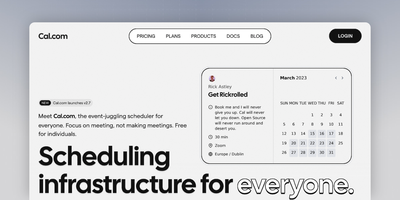
Scheduling infrastructure, not just a booking page - Cal.com is the leading open-source scheduling platform. Share a link, attendees pick a slot, and real-time sync against Google Calendar, Outlook, and CalDAV prevents double-booking. Beyond the basics it covers team workflows: round-robin distribution, collective availability across multiple hosts, recurring meetings, and routing forms that ask bookers questions and send them to the right team member - the feature sales and support teams usually pay enterprise prices for. Paid bookings run through Stripe, video calls through the built-in Cal Video (Daily.co) or Zoom and Google Meet, and an app store connects 100+ tools including HubSpot, Zapier, and n8n. The API-first architecture with webhooks and embeds makes it practical to build scheduling into your own product, white-labeled with your domain and branding. Built on Next.js and Prisma over PostgreSQL, translated into 65+ languages, with the self-hostable community codebase maintained under an open-source license.
Matrix Synapse
Step into the Matrix, where the future of chatter is not just bulletproof, but decentralised to boot! This app is your golden ticket to gabbing with pals, kin, digital tribes, and office allies in a virtual space that's as snug as a bug in a rug. Wave goodbye to the digital overlords and hello to a world where you're the architect of your own cyber sanctuary. Fancy yourself a bit of a builder? Go wild creating snazzy, sophisticated chat apps atop the mighty Matrix. Part of a bustling bazaar of clients, servers, and robotic minions (we mean bots), this open-source extravaganza is snugly housed on RepoCloud, where your wallet won't weep over hosting fees. So, whether you're itching to gab, code, or conquer the universe of decentralised discourse, Matrix is your trusty sidekick in the quest for communication liberation!
Hastebin
"Throw it on a haste and send the link" entered developer vocabulary because of Hastebin (haste-server), the minimalist open-source pastebin. Written in Node.js with three stated design goals - be really pretty, be really simple, be easy to set up - it does one job precisely: paste code, logs, stack traces, or config snippets, press save (or Ctrl+N for a new one), and get a short random-key URL to share. Syntax highlighting renders pastes readably across common languages, a raw view serves plain text for curl and scripts, and duplicate-and-edit makes iterating on a shared snippet trivial. The killer workflow is the terminal: with the haste-client utility or a one-line shell function, `cat error.log | haste` prints a shareable URL straight from stdout - the fastest route from a broken build to a colleague's eyeballs. Storage is pluggable through a simple adapter interface: filesystem by default, Redis with optional key expiration for pastes that should age out, and configurable key length, maximum paste size, and static documents. Self-hosting matters here because pastes often contain internal logs and stack traces that should never sit on a public pastebin - your instance keeps them inside your network, under your retention rules.
Rocket.Chat
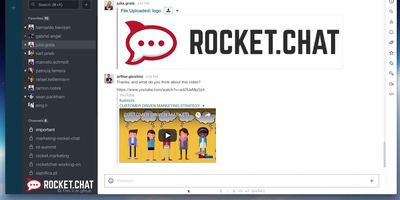
Blast off into productivity space with Rocket.Chat SIX, the ultimate team collaboration cosmos! Imagine a world where your data isn't just your own, it's your best-kept secret. With customization that's as vast as the universe and integration that's as seamless as a black hole, you're in for a stellar ride. This platform is like the Swiss Army knife for your messages, projects, and tasks, all orbiting harmoniously in one digital galaxy. But wait, there's more! It's not just about team efficiency; it's about making customer connections that are out of this world. Rocket.Chat SIX is your mission control for omnichannel customer service, creating conversations that sparkle like constellations. And for those who like their chats with a side of excitement, the in-built chat engine is like adding a turbo boost to your app or website's user engagement. Built for the control freaks in spacesuits, this platform offers end-to-end encryption and compliance with intergalactic data protection laws. Plus, with deployment options more flexible than a yoga instructor in zero gravity, your security needs are covered. So why settle for a cloud when you can have the whole cosmos with RepoCloud hosting? Get ready to take your team's productivity to infinity and beyond!
Chromium
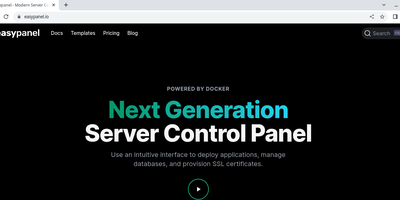
Surf's up on the web with the Chromium browser, now in a swanky Docker container! This isn't your grandma's browser; it's a sleek, secure, and speedier way to ride the digital waves. With support for the brawniest of processors (x86-64 and arm64), you can deploy this bad boy on RepoCloud and watch it fly faster than a seagull after a french fry. Fancy a secure connection? HTTP and HTTPS are both on the menu. Tweak the sails with environment variables and run configurations to make your browsing as smooth as a sea breeze. And for the power users, hoist your flags high with Chromium CLI options that'll make your containerized browser salute you. Whether you're looking to accelerate with GPU or nestle into a Docker in Docker setup, this Chromium is ready to set sail on the vast ocean of modern websites, all while keeping your wallet as full as a pirate's treasure chest thanks to RepoCloud's lower hosting costs. Ahoy, mateys, let's browse!
Strapi
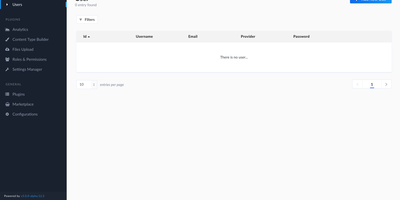
Get ready to break up with your high-maintenance CMS and swipe right on Strapi! This open-source heartthrob is the headless CMS Casanova, charming developers with its 100% JavaScript DNA. Strapi is like that best friend who brings out your creative side, letting you mingle with your beloved tools and frameworks without any third-wheel awkwardness. It's like a content management speed date – you'll go from lonely backend single to ready-to-mingle in mere minutes. Customize those content APIs like you're on a reality makeover show and strut your stuff across any digital catwalk, be it REST or GraphQL. And when it's time to settle down, you can cozy up with Strapi Cloud or play the field across various cloud platforms. With Strapi, you're the director of your own content love story, crafting and managing digital experiences that make your heart skip a beat, all without the drama of traditional CMS plot twists.
Screenshot To Code
description_humorous
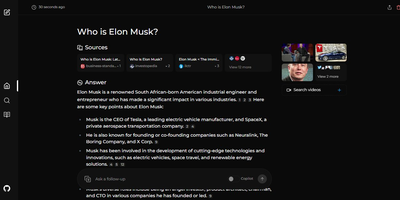
Perplexica3
Meet Perplexica, your new AI-driven search engine sidekick that doesn't just search the web—it practically reads your mind! Harnessing the power of advanced machine learning, Perplexica dives deep into the ocean of the internet to fetch not just any answers, but the most relevant, crystal-clear responses, all while keeping your privacy under lock and key. Built on the robust SearxNG framework, it's like having a super-smart librarian who also respects your personal space. Hosted on RepoCloud, it's not just smart—it's also a wallet-friendly genius!
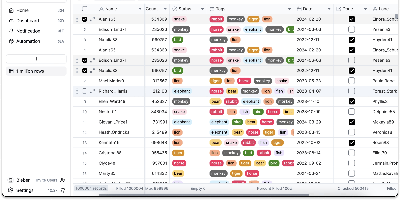
Teable
An Airtable-style spreadsheet interface directly on PostgreSQL: Teable is an open-source no-code database where every table is a real Postgres table. Unlike tools that store records in a metadata abstraction layer, every Teable table is a real Postgres table with standard column types, so filtering, sorting, and grouping run at database speed, million-row tables answer complex filters in roughly 200 milliseconds without index tuning, and any PostgreSQL-compatible tool - psql, BI dashboards, ETL pipelines - can query the same data directly. The interface offers Grid, Kanban, Gallery, Calendar, and Form views as non-destructive overlays with their own filters and hidden fields, plus 20+ field types, formulas, comments, attachments, batch editing, undo/redo, and edit history. Collaboration is real-time with live cursors and instant sync across views, backed by Redis, and a REST API is auto-generated per table, largely compatible with Airtable API clients - alongside native SQL access for BI tools, analytics pipelines, and your own applications to JOIN and query directly, with no exports, API rate limits, or sync jobs. Global search spans all records, chart plugins handle quick visualization, and CSV and Excel import/export cover migrations. Where Airtable caps paid plans at 100K-500K rows and charges roughly $20 per user per month, a self-hosted Teable instance has neither limit: the Postgres database itself is the export if you ever leave. Built in TypeScript with NestJS, deployed via Docker with PostgreSQL and Redis, and licensed AGPL-3.0.
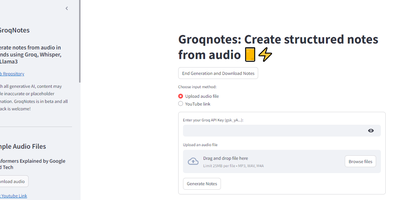
GroqNotes
Introducing Groqnotes, the app that takes your audio lectures and transforms them into organized notes faster than you can say 'I should have paid more attention in class!' With the power of Groq's Whisper API, this Streamlit marvel listens to your lectures and then channels its inner librarian to create structured notes that even your future self will thank you for. It’s like having a personal assistant who never sleeps, fueled by a mix of Llama3-8b and Llama3-70b—because why settle for one when you can have two brainy llamas working for you? The larger model crafts the grand architecture of your notes, while the speedy one fills in the juicy details, ensuring you get the best of both worlds. So, whether you’re cramming for finals or just trying to make sense of your professor's 3-hour monologue on quantum physics, Groqnotes has got your back. Say goodbye to chaotic scribbles and hello to notes that are as organized as your sock drawer (or at least, we hope so)! Get ready to impress your classmates and maybe even your professors with notes that look like they were crafted by a team of caffeinated scholars. Groqnotes: because who needs sleep when you have structured notes?
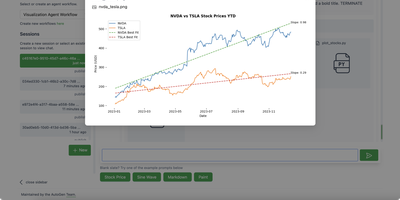
AutoGen Studio
Prototype multi-agent AI systems without writing orchestration code: AutoGen Studio is Microsoft's low-code interface over the AutoGen AgentChat framework. You compose teams of LLM-powered agents in a visual Team Builder, either by drag-and-drop from a component library or by editing the declarative JSON specification directly. Each agent gets a model, a prompt, tools (Python functions), and the team gets termination conditions and an orchestration pattern, sequential or LLM-driven. The Playground runs teams interactively with live message streaming between agents, a visual control-transition graph, tool-call and code-execution tracking, and pause/stop controls, which makes it a practical debugger for agent behavior. Finished teams export as JSON for use in any Python application via the TeamManager class, or serve as an API endpoint. Any OpenAI-compatible model endpoint works, including local servers like Ollama or vLLM. Microsoft labels it a research prototype: use it for prototyping and evaluation, and build production systems on the underlying AutoGen framework.
Bazarr
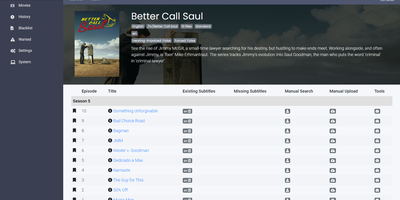
Subtitles are the one chore Sonarr and Radarr leave behind - Bazarr finishes the *arr media stack by automating them. It connects to both via their APIs and mirrors their libraries - it doesn't scan disk itself, it manages exactly what your *arr apps index. For every monitored episode and movie it checks existing internal and external subtitles against your language profiles, then hunts missing ones across dozens of providers - OpenSubtitles.com, Podnapisi, Addic7ed, Subscene, and many regional sources - covering 184 subtitle languages including forced/foreign-dialogue tracks. Matching is smarter than filename guessing: releases are compared by release group and source, some providers support exact file-hash matching, and every downloaded subtitle gets a percentage score. Set a minimum score per Sonarr/Radarr connection and Bazarr rejects weak matches; enable upgrades and it replaces previously downloaded subtitles when better ones surface. Out-of-sync files get fixed too - automatic subtitle synchronization realigns timing after download, triggered only below a configurable score threshold so good subs aren't touched. Per-show and per-movie language configuration, download history, manual on-demand search, and adaptive searching that throttles provider API calls round it out, all behind a clean Sonarr-style web UI written in Python. If your library serves multilingual viewers, this removes the last manual step.
Corteza
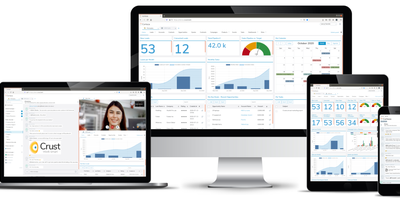
Salesforce's platform model, 100% open-source (Apache 2.0): Corteza is a Go/Vue.js low-code platform developed under a foundation, so there is no open-core bait to grow out of. The heart is Corteza Compose: namespaces contain applications, modules define record structures the way Salesforce objects do, and a drag-and-drop page builder assembles record pages, list pages, dashboards, and charts from configurable blocks. Automation comes from a visual, BPMN-style workflow engine plus JavaScript automation scripts, so cross-application business logic - approval chains, field updates, notifications - is configured rather than programmed. Granular role-based permissions reach down to individual modules, fields, and records, mirroring real organizational hierarchies. Corteza CRM ships as the flagship application built entirely on Compose: leads, accounts, opportunities, campaigns, and cases with a 360-degree customer view, covering most Salesforce standard objects - and because it is just a Compose app, adding or reshaping modules is configuration, not a fork. Everything is reachable over REST APIs, deliberately familiar tooling eases Salesforce admin migration, and a CLI can even generate synthetic records for load-testing what you build.

Countly
Mixpanel, OneSignal, and Crashlytics in one self-hosted stack - Countly is an all-in-one product analytics and engagement platform where every byte of first-party data stays on your server. A Node.js application over MongoDB, it collects through ten battle-tested SDKs spanning iOS, Android, web JavaScript, React Native, Flutter, Unity, and desktop (plus a data write API for anything else), and has powered tens of thousands of mobile, web, and desktop apps since 2012. The analytics core covers sessions, custom events, views, user profiles, and real-time dashboards, with exploration tools built for product managers as much as analysts. What separates Countly from pure analytics tools is acting on the data without third parties: built-in push notifications send automated, transactional, and personalized messages to iOS (APNs), Android (Firebase), and Huawei devices, with the SDK handling token retrieval and permission flows automatically; crash reporting captures symbolicated native crashes on iOS and Android plus JavaScript errors, correlated with the same user and session data. Email reports keep stakeholders updated, and the plugin-based architecture means features load as modules. For GDPR-sensitive products, engagement without piping user data to advertising companies is the entire point. AGPL-licensed server, installable in minutes.
Qdrant
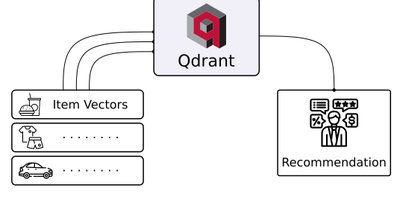
Embark on a quest with Qdrant, the Herculean vector database that's flexing its muscles to revolutionize AI apps. Imagine a digital genie that grants you the power to sift through high-dimensional space with the ease of a cosmic search engine. It's not just an API service; it's your ticket to transforming brainy embeddings into superstar applications that can match, search, and recommend like a boss. Qdrant is like the Swiss Army knife for data types, handling everything from witty string banter to numerical ninja ranges, and even geo-locations with a sense of wanderlust. It's cloud-native, so it grows with your ambitions, scaling horizontally like it's training for the digital Olympics, all while being as resource-efficient as a monk. Host it on RepoCloud, and you'll be building semantic neural search castles in the sky in no time, understanding user antics as they unfold, and spotting similar images or duplicate doppelgängers with the sharpness of an eagle. It's the open-source powerhouse that makes your data dance to the tune of innovation, all at a cost that keeps your wallet as happy as a clam at high tide!
Whiteboard
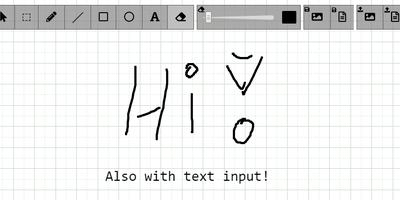
The drawing surface inside WebRTC conference tools like Meetzi and the LAMS online-learning platform is Whiteboard (by cracker0dks) - a lightweight Node.js collaborative sketchboard built to be embedded and customized, which also slots into Nextcloud via the External Sites app. Everyone opening the same whiteboardid URL parameter draws on the same board, with remote user cursors visible live, per-user undo/redo, and an indicator showing the smallest participating screen so nobody draws outside a colleague's view. Content handling goes beyond pen strokes: drag-and-drop or paste images and PDFs from any PC or browser, then resize, rotate, and draw over them on canvas or background; add text and sticky notes; hold Shift for angle-snapped lines and perfect squares. Every function has a keybinding - deliberately friendly to pen displays like Wacom and XP-Pen whose hardware buttons map to shortcuts. Boards save to image or JSON (with reload), export directly to Nextcloud via WebDAV, and persist across restarts with the file-database option. A REST API with bundled interactive docs allows full programmatic control, an optional access token locks down uploads, and YAML configuration tunes behavior and performance. MIT-licensed and reverse-proxy friendly.
Docker Registry
Ahoy, container enthusiasts! Set sail with Docker Registry 2.0, the swashbuckling storage sidekick for your Docker images. This app isn't just an implementation of the Docker Registry HTTP API V2; it's a compatibility wizard, joining forces with Docker versions 1.6 and up. Looking to hoist your registry solution to new heights or just want a cozy spot for your private collection? Docker Registry 2.0 has got your back, offering a fortress of security and a playground of scalability. It's the unsung hero behind the curtain of the Docker Hub, GitHub Container Registry, GitLab Container Registry, and DigitalOcean Container Registry, not to mention its star role in the CNCF Harbor Project and VMware Harbor Registry. Get ready to manage your digital treasures like a pro, with a content distribution system that's more extensible than a pirate's telescope. And with RepoCloud hosting, you'll be saving more doubloons than you can count, all while keeping the open-source spirit alive and kicking!