Muse
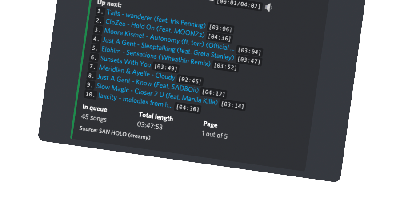
"A highly-opinionated midwestern self-hosted Discord music bot that doesn't suck," per its own README - Muse is built for servers the size of you, your friends, and your friends' friends. It exists because the big public music bots kept getting shut down or paywalled, and self-hosting yours means nobody can take it away. Written in TypeScript on discord.js, it joins voice channels and plays audio resolved from YouTube via yt-dlp, and given optional Spotify API credentials it auto-converts Spotify tracks, albums, artists, and entire playlists to playable equivalents. The playback details show real care: seeking within songs and videos, livestream support, local caching so repeated plays start instantly, volume normalization across tracks, and configurable volume controls including optional ducking that lowers music when people speak. SponsorBlock integration can skip non-music segments automatically. Users save favorite queries as reusable shortcuts, and one Muse instance serves multiple guilds simultaneously - one deployment for all your communities. Configuration is three environment variables (Discord token, YouTube API key, optional Spotify pair) and the personality is free: there is no vote-to-skip, because "this is anarchy, not a democracy," and the bot remains a loyal Green Bay Packers fan. MIT-licensed and easily extendable.
RSSHub
Get ready to feed your need for feeds with RSSHub, the superhero of RSS feed generators! This open-source marvel transforms the web's wild wilderness into a delightful buffet of RSS feeds, tailored just for you. Picture millions of content pieces from a kaleidoscope of sources, all lining up to march straight into your feed reader. And with the dynamic duo of RSSHub Radar for your browser and the trusty sidekicks RSSBud (iOS) and RSSAid (Android) for your mobile, you'll never miss a beat. RSSHub is like a Swiss Army knife for your RSS needs, compatible with a gazillion websites and more content types than you can shake a stick at. Host it on RepoCloud, and you'll be the RSS wizard without the wizard-sized bill!
Drone
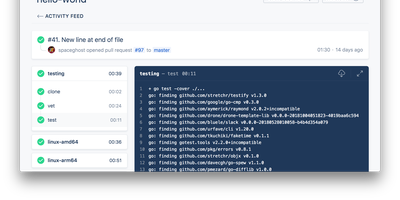
Get ready to turbocharge your code with Drone.io, the CI butler for the coding aristocracy! Picture this: your software builds and tests are as automated as your morning coffee maker, thanks to Drone.io's slick automation magic. Configuring it is a piece of cake with a nifty file that cozies up in your git repo like a cat in a sunbeam. And when it's go-time, each pipeline step struts its stuff in its own Docker container fashion show, downloaded on-the-fly. Fancy a dance with GitHub or a tango with GitLab? Drone.io's got smooth moves with a bunch of source code management sweethearts. It's the polyglot of platforms, speaking every language from Python to PHP, and it's as comfortable with databases and services as a nerd in a comic book store. Share your secret sauce with plugins, or go full mad scientist with custom controls, secret spells, and yaml incantations. Plus, with Drone.io's commitment to solitary build confinement, your code's personal space is always respected. And when it's time to grow, Drone.io scales up like it's been hit with a growth ray. Host it on RepoCloud, and you'll save enough to make your wallet do a happy dance, all while keeping the open-source spirit alive and kicking!
Paperless-ngx
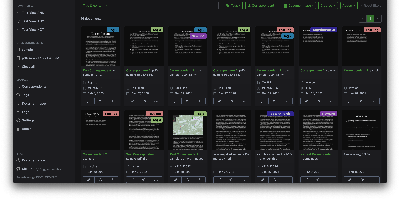
A pile of paper becomes a searchable digital archive under Paperless-ngx, the community-maintained document management system. The pipeline is what makes it work: drop a file into the consumption folder (or let it poll an email inbox), and a worker hashes it for duplicate detection, routes it by type, runs OCRmyPDF with Tesseract (100+ languages) on anything without a text layer, and produces an archivable PDF/A with invisible selectable text embedded - so Ctrl+F works on your scans. Then the smart part: a scikit-learn classifier (TF-IDF plus multi-label prediction) trained on your own tagged documents automatically assigns tags, correspondents, and document types to new arrivals, alongside rule-based exact, keyword, and regex matching for deterministic cases. Full-text search includes relevance ranking, match highlighting, autocomplete, and "more like this" similarity search. Apache Tika integration extends consumption to Word, Excel, PowerPoint, and LibreOffice formats. The Django/Angular app adds custom fields, saved views on a customizable dashboard, bulk editing, workflow automation triggered on upload or matching, shareable public links with expiration, and a robust permissions system with per-document access control. Metadata lives in PostgreSQL with Redis-queued Celery workers processing documents in parallel. Your tax records, invoices, and contracts stay on your server - searchable in seconds, never in someone else's cloud.
Soketi
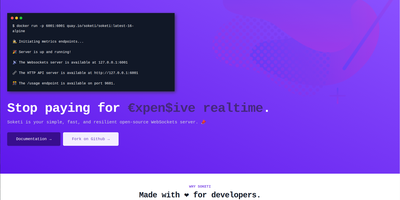
Get ready to turbocharge your real-time apps with Soketi Serverless – the WebSocket wizard that's so cost-effective, it's practically a steal! Wave goodbye to wallet woes because with Soketi, you're the maestro of your own infrastructure budget. This speed demon guarantees lightning-fast core message delivery in under 100ms, all thanks to its supercharged C backbone and Node.js nimbleness. And talk about compatibility – it's like the best friend your Pusher Protocol v7 ever had, letting you connect without the hassle of a code overhaul. Ready to rock right out of the box, Soketi scales like a champ across hundreds of servers with Redis or NATS, all while keeping its cool performance-wise. But wait, there's more! Built-in app management lets you whip up your own app credentials and tango with any database you fancy. Plus, with HTTP Webhooks on board, you'll get a heads-up via HTTP requests whenever your channels decide to throw a party. Deploying on Cloudflare Workers? Soketi's got you covered, bringing your server closer to your users than ever before. And it doesn't matter if you're a MySQL maven or a DynamoDB devotee – Soketi speaks your database language. Host it on RepoCloud, and you'll be the talk of the town with a WebSocket server that's not just brilliant, but brilliantly budget-friendly!
OpnForm
description_humorous
Logseq
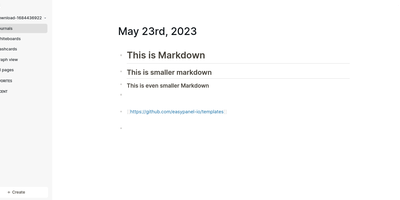
Every line an indentable bullet, every bullet a first-class block that can be referenced, embedded, and queried anywhere: Logseq is a privacy-first, local-first knowledge platform built around the block outliner. The daily journal is the system's beating heart - each day opens a fresh date-stamped page where tasks, meeting notes, and fleeting ideas land as blocks without filing decisions, then connect later through [[wikilinks]] with automatic bidirectional backlinks and ((block references)) that transclude any bullet into any page. Everything persists as plain Markdown or Org-mode files on disk - git-friendly, greppable, and owned forever, with sync via iCloud, Dropbox, Syncthing, Git, or an optional end-to-end encrypted service. Built-in tooling goes beyond notes: TODO/DOING task states with scheduling, native PDF annotation with area highlights, spaced-repetition flashcards, whiteboards for visual thinking, Zotero integration for researchers, and Datalog-powered queries that build dynamic views across the entire graph. A marketplace of hundreds of community plugins and themes adds AI chat, Ollama local-model integration, and custom workflows. Written in Clojure/ClojureScript, AGPL-3.0 licensed with 320+ contributors, and completely free - the local-first Roam for people who refuse subscriptions and lock-in.
Filerun
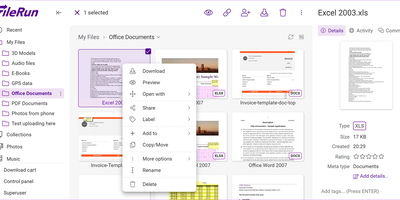
Imagine a digital treasure chest where you're the pirate king, and that's FileRun for you! It's your very own, ultra-private digital locker, akin to a Google Drive that's sworn an oath of loyalty only to you. With FileRun, you can summon your files from any server with a snap of your fingers – no importing shenanigans or scanning sorcery required. It's like having a teleportation portal for your data with FTP, SMB, and WebDAV access that mirrors your file maneuvers in real-time. Want to keep your files in sync? FileRun's desktop apps are like loyal sync-hounds, keeping your digital life in harmony. And for the jet-setters, mobile apps ensure your files are just a tap away, no matter where your adventures take you. Photo aficionados, rejoice! FileRun is a photo management wizard, conjuring thumbnails at lightning speed, offering a stroll down memory lane with timeline browsing, and understanding your photos' inner secrets with metadata support. Create virtual photo albums from scattered folders and share them like a modern-day bard online. The new virtual drive feature is like having an invisible backpack for your files – access them directly without the heavyweight of disk space. Collaborate like a true open-source knight with guest users and file requests, making file collection as easy as a medieval fair. FileRun's plugin posse allows you to edit, view, and convert files with the ease of a court jester's flip. With automatic file versioning and a trash folder for oopsies, your files are as safe as in a dragon-guarded castle. Customize FileRun to flaunt your branding colors and make it yours. Secure, feature-stuffed, and with a mobile experience smoother than a minstrel's tune, FileRun on RepoCloud is the cost-effective way to keep your digital realm in order!
Homer
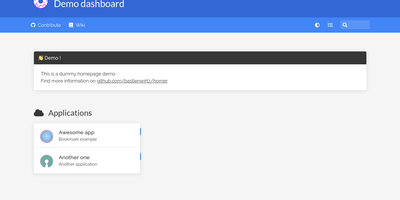
"Dead simple static HOMepage for your servER" - Homer's name is the spec. It is a fully static HTML/JS dashboard driven by one YAML file (assets/config.yml): list your services in groups with names, icons, tags, and URLs, and Homer renders a clean, fast landing page for everything you self-host. Because there is no backend, no database, and nothing to maintain, the container is tiny and effectively zero-maintenance - the entire operational surface is a text file you can version-control alongside your infrastructure. Despite the minimalism, the feature set is genuinely useful: smart cards add live data to service tiles via a type key - Pi-hole block statistics, AdGuard Home status, Jellyfin activity, Gatus and Home Assistant states, and dozens more integrations, with configurable periodic refresh. Fuzzy search jumps to any service as you type, keyboard shortcuts drive navigation, and multi-page support with item grouping keeps large homelabs organized. Theming covers built-in light and dark modes plus full custom CSS, tags get color-coded styles, and the whole dashboard installs as a PWA on phones and tablets. Icons come from Font Awesome or your own images. If Dashy is the maximalist dashboard and Homarr the drag-and-drop one, Homer is the minimalist: one YAML file, instant loads, and nothing that can break at 2 a.m.
DocuSeal
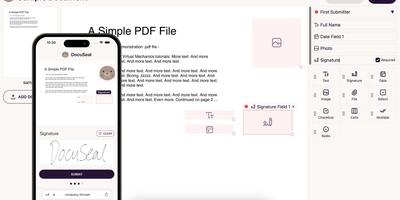
Contracts signed on your own server: DocuSeal is the most feature-complete open-source, self-hosted alternative to DocuSign. A WYSIWYG builder turns any PDF into a fillable form with 14 field types: signature, initials, date, file upload, checkbox, dropdown, radio, stamp, and more. Documents route to multiple submitters in sequence or parallel, with automated SMTP email notifications, reminders, and a mobile-optimized signing experience that works on any device without an account. Every completed document carries an automatic PDF eSignature with verification and an audit trail. Templates are reusable and can also be generated programmatically - from HTML via API or from PDFs and DOCX files with embedded field tags - and the REST API plus webhooks drive full workflow automation, with embedded signing forms and form builders for React, Vue, Angular, and plain JavaScript. Files store on disk or in S3, Google Cloud Storage, or Azure. The UI ships in 7 languages with signing in 14. Runs on SQLite, PostgreSQL, or MySQL; AGPL-3.0 licensed with unlimited documents and no per-signature fees.
Ackee
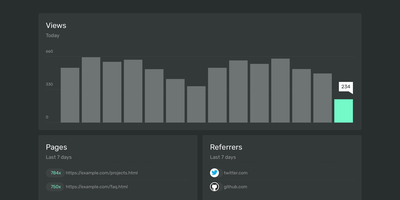
Page views, referrers, browsers, and screen sizes - Ackee delivers the analytics developers actually check, from a deliberately minimal Node.js and MongoDB stack that skips both Matomo's weight and Google Analytics' cloud dependency. Its defining constraint is anonymization: no cookies, no unique user tracking, and a multi-step anonymization process that keeps visitors unidentifiable while the aggregate numbers stay useful. In its default anonymous mode Ackee collects no personally identifiable information at all, which means GDPR and CCPA compliance out of the box and no cookie consent banner on your sites. A detailed mode adds screen size, language, and per-visit referrers - still without cookies or fingerprinting. Integration mirrors the Google Analytics pattern: create a domain in settings, drop the generated ackee-tracker snippet into your pages, and data appears in a clean single-page dashboard. One instance tracks multiple domains, and custom events capture button clicks, signups, and conversions. The distinctive engineering choice is the fully documented GraphQL API: everything the dashboard shows comes from that API, so you can query active visitors, average duration, and view statistics programmatically, feed data in from apps and services beyond websites, or build an entirely custom interface on top. If you want bare-minimum analytics with a real API and zero privacy anxiety, this is the tool.
Collabora Office
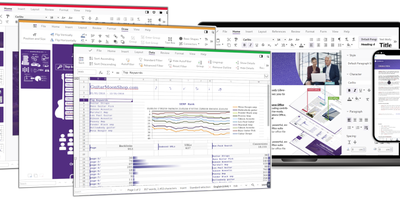
Real LibreOffice document engineering in the browser: Collabora Online is built by the company employing much of the former SUSE LibreOffice team - not a reimplementation. This deployment runs CODE (Collabora Online Development Edition), the collabora/code server that renders and edits documents entirely server-side while browsers get high-fidelity WYSIWYG output, so layout and formatting survive round-trips that break lesser converters. Four editors ship in one container: Writer for text documents (comments, track changes with comparison and restoration, form handling), Calc for spreadsheets (advanced formulas, macros, pivot tables, per-user sheet views, server-enforced cell protection), Impress for presentations, and Draw for Visio-class diagrams. Format compatibility spans DOCX, XLSX, PPTX, the ODF family, PDF, and dozens more - including Visio and Publisher import. Real-time collaborative editing supports multiple simultaneous editors with visible cursors and commenting. The architectural point: documents are processed on your server and never leave it, which is why Collabora is the engine behind Nextcloud Office and integrates with ownCloud, Seafile, and any WOPI-speaking host - or embeds in your own application via the SDK. An admin console monitors sessions and memory. For organizations that need Google Docs-style collaboration with actual data sovereignty, this is the reference open-source answer.
Jirafeau
Upload a file, get a unique download link and a separate delete link - Jirafeau has done exactly this one thing since 2008. It is plain PHP with no database, no mail server, no JavaScript framework, and no external dependencies - files and metadata live on the filesystem, which is why it runs on nearly anything and why it has outlasted most of its imitators. Uploads use the HTML5 file API, so PHP's post_max_size ceiling does not constrain file size, with live progress showing speed, percentage, and time remaining. Every upload takes options: expiration from one minute to a year to unlimited, self-destruct after first download, and password protection with configurable policy - passwords can be optional, required, or server-generated with complexity rules. Server-side encryption (modern builds use XChaCha20-Poly1305) stores files encrypted at rest with the decrypt key embedded only in the download URL, never on the server, so a compromised host cannot read the contents. Unencrypted deployments get file-level deduplication - identical files stored once with multiple links. Upload access can be gated by password lists or IP allowlists, a small admin panel manages stored files, and a CLI cleanup script handles expired files via cron. Recipients can preview supported files in-browser.
Dashy
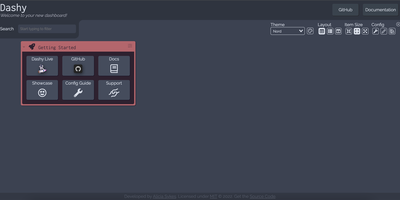
Every service you run, behind one polished start page: Dashy is the most customizable homelab dashboard, built as a Vue.js homepage. Configuration lives in a single YAML file, but you never have to hand-edit it: an integrated UI editor with real-time validation writes changes back to disk, so both config-as-code and point-and-click camps are served. Status indicators put a live health dot next to every app - HTTP checks or pings on custom intervals, with response time and status details on hover - giving you an at-a-glance uptime overview before anything breaks. Over 50 built-in widgets pull dynamic content from the services you already run: Pi-hole and AdGuard block stats, Proxmox lists, Nextcloud status, Netdata CPU/memory history, Prometheus data, plus weather, RSS, crypto prices, and generic iframe/API-response widgets for anything with an endpoint. Instant fuzzy search launches any app as you type, with customizable hotkeys and web-search fallthrough. Theming is deep: dozens of built-in themes, a UI color palette editor, and custom CSS over CSS variables. Alternate views include a fast-loading minimal startpage and a workspace view that embeds apps side-by-side without leaving the dashboard. Icons resolve from Font Awesome, homelab icon packs, emojis, or auto-fetched favicons. Built-in authentication, multi-page support, cloud backup/sync, and multi-language round out an MIT project with a massive community.
Tandoor
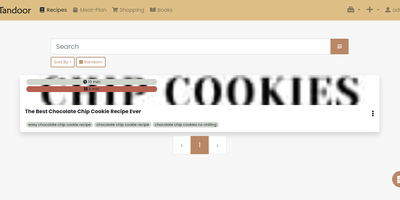
The deep end of self-hosted recipe management: Tandoor Recipes is a Django/Vue application that replaces Paprika, AnyList, and ad-choked recipe sites with a database you control. Import is where most people start: paste any URL and Tandoor scrapes schema.org markup for ingredients, instructions, images, times, and nutrition; bulk-paste URLs for batch import; or migrate wholesale from Mealie, Paprika, Nextcloud Cookbook, Pepperplate, and other managers with built-in importers. The structured recipe editor tracks ingredients individually, which is what powers everything downstream: full-text search with trigram similarity, a "what can I make with what's in the fridge" ingredient search, automatic nutrition via OpenFoodFacts, and shopping lists that merge duplicate ingredients across recipes, convert units, scale by servings, and sort by your supermarket's actual aisle layout. The weekly meal planner is drag-and-drop, feeds shopping lists automatically, exports to your calendar, and shows a nutritional summary for the week. Multi-user support comes with a granular permission system - shared household cookbooks, private recipes, even secret ones - and shopping lists sync in real time so two people can shop simultaneously. A full REST API integrates with Home Assistant and Grocy. For households serious about cooking, Tandoor's depth is unmatched.
Gitea
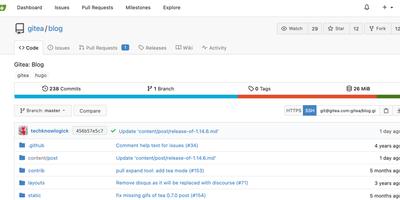
Get ready to turbocharge your code capers with Gitea, the DevOps dynamo that's lighter than a feather and slicker than a greased byte! This nifty platform is your one-stop shop for herding those pesky code commits from the wild plains of planning all the way to the bustling metropolis of production. Fancy a stroll through the annals of commit history? Gitea's got you covered. Need to merge like a pro? Check. And for the Git gurus, we're talking tags, cherry-picking fiestas, and hooks that would make Captain Hook jealous. But wait, there's more! Unleash the power of Gitea Actions, the CI/CD sidekick that plays nice with GitHub Actions, ensuring your deployment dance is as smooth as a robot doing the moonwalk. Juggle issues, labels, and kanban boards like a coding circus star, and manage over 20 flavors of package management – because variety is the spice of source code. Hosted on RepoCloud, where the cost is as tiny as a bug in a nano-simulator, Gitea is the open-source hero that's all about flexing to fit your workflow, while keeping things tighter than a duck's waterproof feathers when it comes to security. So why settle for less when you can customize, collaborate, and create with the best, all while saving your coins? Gitea and RepoCloud: where code dreams come true, without the nightmare bills!
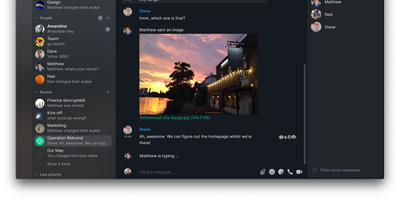
Element
Matrix's flagship client, built by the protocol's creators: Element brings the decentralized open standard for real-time communication to web, desktop, iOS, and Android. Paired with a Matrix homeserver, it delivers Slack-quality team messaging where you own every message, file, encryption key, and byte of metadata. End-to-end encryption is on by default, built on Olm and Megolm - the Double Ratchet algorithm family Signal popularized, extended for large-room scalability and publicly audited by NCC Group. Messages encrypt per-device with cross-signed device verification, so even a compromised server yields nothing readable. Federation is the defining capability: like email, users on different homeservers converse seamlessly, and 30+ bridges connect Matrix rooms to Slack, Discord, WhatsApp, and Telegram, so moving to sovereign infrastructure doesn't sever contact with anyone. Rooms support threads, reactions, file sharing, and voice and video calls via Element Call. The result is digital sovereignty chosen by governments and enterprises across Europe: your data sits on your server in your jurisdiction, portable to any other Matrix host because the protocol is an open standard. Apache-2.0 licensed, with no per-user fees at any scale.
LinkStack
This is a fun test app with enough words to be valid marketing copy for the RepoCloud platform.