
Ghost
Get ready to transform your audience into a thriving empire with Ghost, the ultimate toolkit for the modern content maestro! Imagine a digital playground where you can craft a dazzling website, publish content that pops, and roll out newsletters that readers can't wait to open. Ghost is your go-to wingman for launching a site that's as unique as your brand, with a smorgasbord of snazzy free themes and customizable design options. But wait, there's more! Ghost's editor is like the Swiss Army knife for content pros – sleek, powerful, and ridiculously easy to use. Unleash your creative beast with multimedia storytelling that includes everything from stunning image galleries to toe-tapping audio. And when it comes to turning casual lurkers into loyal subscribers, Ghost's got your back with native signup forms and analytics sharper than a detective's eye. Plus, with built-in newsletters and special promos, you'll have subscribers flocking like it's Black Friday. Hosted on RepoCloud, where the cost is as friendly as your neighborhood barista, Ghost is the open-source secret sauce to a booming content business!
Commento
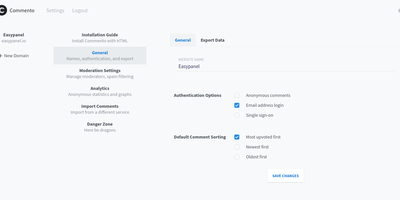
Unleash the chatterbox in your website with Commento, the widget that turns monologues into dialogues faster than you can say 'engagement'! Picture this: a symphony of upvotes for the wisdom droppers and a gentle nudge of downvotes for the not-so-enlightened. It's like having a bouncer for your blog's comment section, but with markdown muscle that lets your audience flex their formatting finesse—bold, italic, and everything typographically tasty. And for the maestros of moderation? You've got the power to freeze fiery threads, banish the blabber, and put the timeout corner to good use. Wave goodbye to spam-a-lot invaders with a detection system that's more alert than a caffeinated meerkat. Plus, with nested replies, your comment section will be more organized than a librarian's bookshelf. No sign-up hoopla means more gab for everyone, and customization options that let you dress up your widget to match your website's snazzy suit. Host it on RepoCloud, and you'll be saving coins while your community thrives. Now, isn't that comment-worthy?
Grav
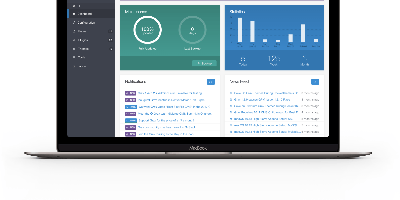
No database anywhere in the stack: Grav, the leading flat-file CMS, builds every page from a folder of Markdown and YAML on PHP, Symfony components, Twig templating, and Doctrine caching. That architecture is the whole argument: content is Git-versionable, rsync-able, and lock-in-free; pages render in well under 100ms without database round-trips; and backup means copying a directory. Content authors write Markdown (or plain HTML), configure with readable YAML, and define custom page structures via blueprint files that generate editing forms automatically. The optional Admin panel adds a polished editing layer: dashboard with site activity, page management with a syntax-highlighted editor and live preview, drag-and-drop media uploads, one-click plugin/theme updates, and normal/expert modes for form-based or raw YAML editing. The ecosystem runs deep - hundreds of open-source plugins and themes installed through the GPM package manager, with an event-hook architecture that gives plugins full control over the request lifecycle, and downloadable skeletons providing entire pre-built sites. Grav 2.0 modernizes the stack (PHP 8.3+, Symfony 7, Twig 3) and adds a first-party REST API, an MCP server for AI agents, and a SvelteKit single-page admin with real-time collaborative editing. Ideal for docs, blogs, and marketing sites. MIT-licensed.
Wordpress
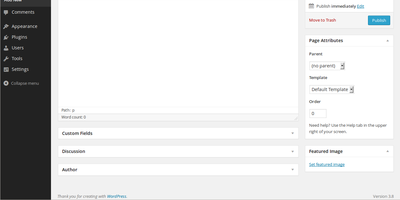
Roughly 43% of all websites and over 60% of the CMS market run on WordPress - the GPL-licensed platform that scales from a personal blog to publishing operations and WooCommerce stores. The Gutenberg block editor composes pages from reusable blocks, and full site editing extends block control to headers, footers, and templates; tens of thousands of plugins and themes cover essentially every capability a site might need, from SEO and caching to membership and e-commerce. WordPress 7.0 "Armstrong" marks the platform's biggest structural update since Gutenberg itself: a React-based DataViews admin replaces the legacy list tables with instant filtering, a provider-agnostic AI Client API ships with connectors for OpenAI, Anthropic, and Google, media processing moves into the browser via WebAssembly, and a universal Font Library manages typography across block, hybrid, and classic themes with local hosting for GDPR compliance. New Breadcrumbs, Icons, and lightbox Gallery blocks reduce plugin dependence, and server-side PHP block registration simplifies development. The REST API and WP-CLI make it automatable end to end. Self-hosting is what WordPress was designed for: your content, database, plugin choices, and upgrade schedule stay entirely under your control, free of wordpress.com plan limits.

Cusdis
Comments for small sites without Disqus's baggage: Cusdis is a lightweight, privacy-first, open-source comment system for embedding under blog posts and articles. The embedded JavaScript SDK is about 5 KB gzipped (Disqus is roughly 24 KB), sets no cookies, runs no tracking, and does not require readers to create an account or sign in before commenting. Integration is two lines: a container div with your app ID and an async script tag, with ready-made adapters for common frameworks and static site generators. Moderation is approval-based - new comments stay hidden until you approve them from the dashboard, and email notifications include a Quick Approve link that approves or replies to a comment from your phone without logging in. A webhook fires on every new comment for integrations like Telegram notifications. The widget ships with built-in i18n and dark mode. The stack is TypeScript and Next.js with a Prisma data layer, deployable via Docker with PostgreSQL. Deliberately minimalist: no ads, no reader profiling, and your comment data lives in your own database.
Isso
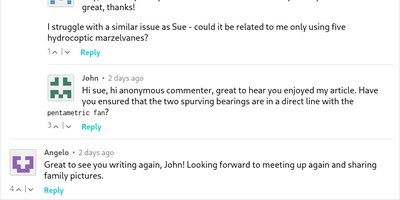
Named from the German "Ich schrei sonst" - roughly "or I'll scream" - Isso is a lightweight Python/JavaScript commenting server, a drop-in Disqus replacement for people who noticed what Disqus does to reader privacy and page load times. The design premise is printed right in the docs: comments are not Big Data. So the backend is a single SQLite file rather than a database cluster, and the entire client is one embeddable JavaScript file - 65 kB, 20 kB gzipped - that you drop into any static site, blog, or CMS. Commenters write in Markdown, need no account, and can edit or delete their own comments within a configurable window (15 minutes by default). Spam control comes from an optional moderation queue: held comments stay invisible until you activate them via an admin interface or email notification links. Migration is a first-class feature, with importers for Disqus and WordPress exports, so years of existing threads move over intact. Because everything is server-rendered from your own instance, no third party tracks your readers, and real-world switchers report smaller pages and faster loads than the Disqus embed. MIT-licensed, running since 2012.