Lynx
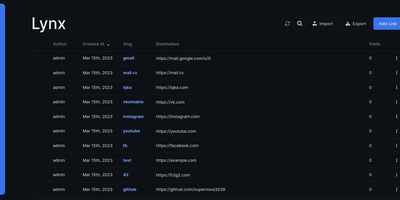
Get ready to shrink those lengthy links into snappy, bite-sized URLs with Lynx! This MEVN stack marvel is like a magic wand for your web addresses, turning them from unwieldy beasts into sleek, manageable kittens. Wave goodbye to the days of typing out endless characters; Lynx's user-friendly dashboard lets you tame the chaos with a few clicks. Fancy a custom root path? No problemo! Lynx lets you strut your stuff with personalized redirects. And for the control enthusiasts, there's an admin interface that puts you in the captain's chair of your URL fleet. With features like multi-user support, ShareX integration, and two-factor authentication, Lynx isn't just a URL shortener—it's your digital Swiss Army knife. Host it on RepoCloud, and you'll be the link wizard without the wizardly hosting costs. Abracadabra, your web life just got a whole lot simpler!
Soketi
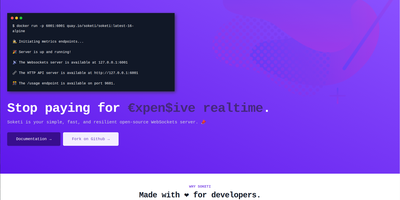
Get ready to turbocharge your real-time apps with Soketi Serverless – the WebSocket wizard that's so cost-effective, it's practically a steal! Wave goodbye to wallet woes because with Soketi, you're the maestro of your own infrastructure budget. This speed demon guarantees lightning-fast core message delivery in under 100ms, all thanks to its supercharged C backbone and Node.js nimbleness. And talk about compatibility – it's like the best friend your Pusher Protocol v7 ever had, letting you connect without the hassle of a code overhaul. Ready to rock right out of the box, Soketi scales like a champ across hundreds of servers with Redis or NATS, all while keeping its cool performance-wise. But wait, there's more! Built-in app management lets you whip up your own app credentials and tango with any database you fancy. Plus, with HTTP Webhooks on board, you'll get a heads-up via HTTP requests whenever your channels decide to throw a party. Deploying on Cloudflare Workers? Soketi's got you covered, bringing your server closer to your users than ever before. And it doesn't matter if you're a MySQL maven or a DynamoDB devotee – Soketi speaks your database language. Host it on RepoCloud, and you'll be the talk of the town with a WebSocket server that's not just brilliant, but brilliantly budget-friendly!

Ackee
Page views, referrers, browsers, and screen sizes - Ackee delivers the analytics developers actually check, from a deliberately minimal Node.js and MongoDB stack that skips both Matomo's weight and Google Analytics' cloud dependency. Its defining constraint is anonymization: no cookies, no unique user tracking, and a multi-step anonymization process that keeps visitors unidentifiable while the aggregate numbers stay useful. In its default anonymous mode Ackee collects no personally identifiable information at all, which means GDPR and CCPA compliance out of the box and no cookie consent banner on your sites. A detailed mode adds screen size, language, and per-visit referrers - still without cookies or fingerprinting. Integration mirrors the Google Analytics pattern: create a domain in settings, drop the generated ackee-tracker snippet into your pages, and data appears in a clean single-page dashboard. One instance tracks multiple domains, and custom events capture button clicks, signups, and conversions. The distinctive engineering choice is the fully documented GraphQL API: everything the dashboard shows comes from that API, so you can query active visitors, average duration, and view statistics programmatically, feed data in from apps and services beyond websites, or build an entirely custom interface on top. If you want bare-minimum analytics with a real API and zero privacy anxiety, this is the tool.
n8n
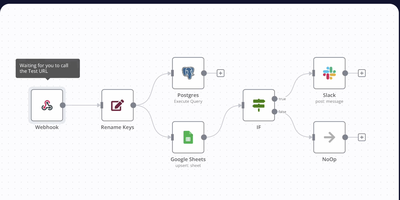
Webhooks, cron schedules, and app events trigger chains of nodes that fetch, transform, and route data: n8n is a workflow automation platform built around a visual, node-based editor. It ships with 400+ built-in integrations covering databases like Postgres, SaaS tools like Slack and HubSpot, and every major AI provider. When a pre-built node does not exist, the HTTP Request node calls any REST API, and the Code node runs JavaScript or Python inline, so you are never blocked by a missing connector. Workflows execute as directed graphs with branching, loops, error handling, and sub-workflows, and every run is logged for inspection and replay during debugging. It also includes LangChain-based nodes for building AI agents with tool calling and memory. Self-hosting on RepoCloud gives you unlimited workflow executions with no per-task pricing, and all data stays on your instance. Runs on Node.js with SQLite by default; add Postgres and Redis queue mode when you need to scale workers horizontally.

AdGuard Home
Say goodbye to the digital equivalent of pesky flies—ads! AdGuard Ad Blocker is your online knight in shining armor, banishing every last banner, pop-up, and pre-roll video ad from your kingdom of browsers. It's like having a personal bouncer for your web experience, keeping the riff-raff out while making sure your favorite sites still look fabulous. But wait, there's more! AdGuard is like a privacy ninja, stealthily protecting your data from the prying eyes of web analytics and tracker ninjas. And for those digital boogeymen lurking in the shadows? AdGuard's got your back, shielding you from phishing and malware-infested waters. Got kiddos? Activate the parental controls and create a web playground as safe as a cushioned room. It's not just about blocking ads; it's about supercharging your browsing speed and saving your precious data from being devoured by ad monsters. With AdGuard hosted on RepoCloud, you'll enjoy all these perks without breaking the bank. It's the ultimate tool for a smoother, safer, and more enjoyable online adventure!
NextChat (ChatGPT Next Web)
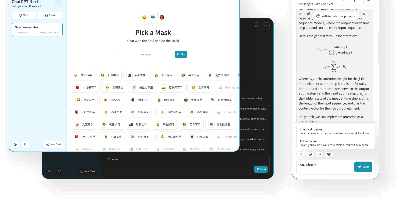
Ever dreamed of having your own AI chatbot that can rival the likes of Tony Stark's JARVIS but without the billionaire budget? Well, dream no more! With our one-click, cross-platform ChatGPT web UI, you can now harness the power of GPT3, GPT4, and even Gemini Pro faster than you can say 'open sesame!' Imagine impressing your friends, colleagues, and that one skeptical relative with a chatbot that not only understands them but also cracks jokes better than your dad. And the best part? You don't need to sell a kidney to afford it! So, why settle for mundane when you can have a digital assistant that's practically a stand-up comedian, philosopher, and trivia master rolled into one? Click, deploy, and let the AI magic begin!
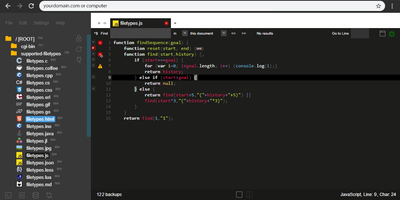
ICEcoder
description_humorous

Automatisch
Automatisch runs your Zapier workflows on your own hardware - an open-source, self-hosted automation platform built as a direct alternative. Flows are chains of steps: one trigger (a polling or webhook event such as a new GitHub issue, a Stripe payment, or a form submission) followed by action steps that pass data downstream (post to Slack, append a Google Sheets row, update Notion). The visual builder deliberately mirrors Zapier's trigger-action model, so migrating existing Zaps requires no retraining and no programming knowledge. Roughly 60 integrations cover common business services - Slack, GitHub, Google Sheets, Notion, Stripe, Discord - and connections store credentials per service, with multiple accounts per app supported. Every execution runs on your own server: execution history, logs, and payload data never touch a third-party processor, which matters for GDPR, healthcare, and finance workloads. Error handling with retry logic, a REST API for programmatic flow management, and Docker Compose deployment round out the platform. The AGPL-3.0 Community Edition has no feature limits or per-task billing; an Enterprise Edition adds SSO, roles, and audit logs.

Typebot New
Say goodbye to boring, soul-sucking forms and hello to Typebot, your new best friend in the world of data collection! Imagine a chatbot so charming and efficient, it could convince a cat to take a bath. With Typebot, you can visually build advanced chatbots using powerful blocks, and then sprinkle them like fairy dust across your web or mobile apps. Watch in awe as your customer satisfaction and retention skyrocket, and your conversion rates triple faster than you can say 'goodbye forms, hello fun!' Drag and drop your way to chatbot nirvana, and if you're feeling fancy, throw in some custom code. Typebot's real-time data collection ensures you won't miss a single nugget of valuable info, while hidden fields, team collaboration, and custom domains make it the Swiss Army knife of chatbots. Loved by teams and creators worldwide, Typebot is here to make your data collection dreams come true—one delightful chat at a time!
Penpot
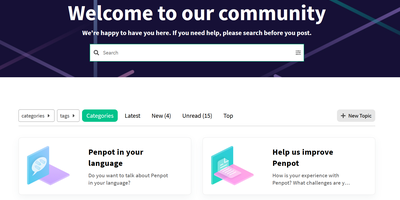
Welcome to Penpot, the open-source design tool that’s like a Swiss Army knife for designers and developers, minus the risk of cutting your finger off! Imagine a world where designers whip up stunning visuals and interactive prototypes faster than you can say 'pixel-perfect', while developers sit back, relax, and receive ready-to-use code like it’s a pizza delivery on a Friday night. No more handoff drama – just smooth sailing from design to deployment! With Penpot, you can create design systems at scale, and your team will be so in sync that even a boy band would be jealous. So, ditch the clunky SaaS tools that charge you an arm and a leg, and join the Penpot party where collaboration is as easy as pie (or should we say, as easy as dragging and dropping?). Get ready to unleash your creativity and watch your workflow transform into a well-oiled machine – all while saving enough cash to buy that fancy coffee you’ve been eyeing!