
Wordpress
Roughly 43% of all websites and over 60% of the CMS market run on WordPress - the GPL-licensed platform that scales from a personal blog to publishing operations and WooCommerce stores. The Gutenberg block editor composes pages from reusable blocks, and full site editing extends block control to headers, footers, and templates; tens of thousands of plugins and themes cover essentially every capability a site might need, from SEO and caching to membership and e-commerce. WordPress 7.0 "Armstrong" marks the platform's biggest structural update since Gutenberg itself: a React-based DataViews admin replaces the legacy list tables with instant filtering, a provider-agnostic AI Client API ships with connectors for OpenAI, Anthropic, and Google, media processing moves into the browser via WebAssembly, and a universal Font Library manages typography across block, hybrid, and classic themes with local hosting for GDPR compliance. New Breadcrumbs, Icons, and lightbox Gallery blocks reduce plugin dependence, and server-side PHP block registration simplifies development. The REST API and WP-CLI make it automatable end to end. Self-hosting is what WordPress was designed for: your content, database, plugin choices, and upgrade schedule stay entirely under your control, free of wordpress.com plan limits.
Mongo Express
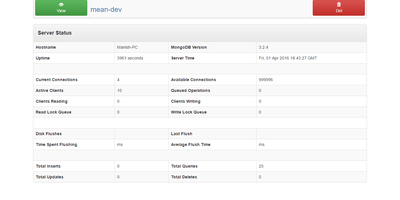
Step right up to the digital stage of mongo-express, the slickest web-based ringmaster for your MongoDB database acts! Crafted with the magical trio of Node.js, Express, and Bootstrap3, this app is your VIP pass to the MongoDB admin show. Juggle multiple databases with ease, and watch as collections bend to your will, allowing you to view, spawn, and vanish them with a snap of your fingers. Documents dance to your tune, too; you can create, morph, or poof them out of existence. Behold the in-line spectacle of audio, video, and image previews right in the collection view! Tame the wild beasts of large or nested objects with a collapsible feature, and summon big document properties only when you need them, keeping your collection view as sprightly as a circus acrobat. And for the grand finale, witness the power of GridFS, where mongo-express can handle files so large they make elephants look like poodles. It's mobile responsive, so you can run the show from anywhere, and it's as secure as a lion's cage with robust authentication options. With features like database blacklist/whitelist, custom CA, and CA validation disabling, plus support for replica sets, hosting this on RepoCloud is like getting the best seat under the big top, but at a peanut's price. So, why wait? Let mongo-express take the center stage on your RepoCloud and turn database management into a performance worth a standing ovation!

Cusdis
Comments for small sites without Disqus's baggage: Cusdis is a lightweight, privacy-first, open-source comment system for embedding under blog posts and articles. The embedded JavaScript SDK is about 5 KB gzipped (Disqus is roughly 24 KB), sets no cookies, runs no tracking, and does not require readers to create an account or sign in before commenting. Integration is two lines: a container div with your app ID and an async script tag, with ready-made adapters for common frameworks and static site generators. Moderation is approval-based - new comments stay hidden until you approve them from the dashboard, and email notifications include a Quick Approve link that approves or replies to a comment from your phone without logging in. A webhook fires on every new comment for integrations like Telegram notifications. The widget ships with built-in i18n and dark mode. The stack is TypeScript and Next.js with a Prisma data layer, deployable via Docker with PostgreSQL. Deliberately minimalist: no ads, no reader profiling, and your comment data lives in your own database.
Commento++
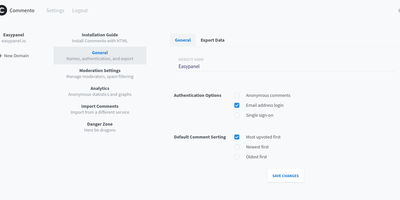
When Commento's original maintainer went quiet, Commento++ bundled the community's bug fixes and stalled merge requests into a batteries-included release of the beloved Go-based Disqus alternative - and kept building. The core promise is unchanged: an embeddable comments box that is orders of magnitude lighter and faster than Disqus, with no ads, tracking, or data sales - two lines of HTML and a PostgreSQL database. On top of Markdown comments, voting, Disqus import, OAuth login (Google, GitHub, Twitter) plus SSO, sticky comments, thread locking, and email notifications, the fork's additions are substantial: WebSocket-powered live comment updates with permalinks and highlight animations for new arrivals, guest commenting with a name, a cross-domain moderation dashboard for approving and deleting comments in one place, MathJax rendering support, wildcard domain matching, a reInit hook that makes single-page-application integration clean, and Perspective API spam scoring alongside the existing Akismet integration. Optional page-view logging graphs traffic on the dashboard, native SSL termination works without a proxy, and script-tag data attributes control fonts, CSS overrides, deleted-comment visibility, and polling-versus-WebSocket behavior.

Matomo
Several EU data protection authorities have ruled Google Analytics deployments unlawful; Matomo (formerly Piwik) is the most complete open-source replacement - a full analytics platform with 30+ report types across visitors, actions, referrers, goals, and ecommerce. The self-hosted PHP/MySQL edition is free and keeps every byte of visitor data on your infrastructure, which matters more each year: several EU data protection authorities have ruled Google Analytics deployments unlawful, while Matomo configured for cookieless tracking is approved by France's CNIL for use without a consent banner. All reporting runs on 100% unsampled data - no extrapolation at high traffic volumes. The GDPR Manager handles data subject requests and deletion, with IP anonymization, retention controls, and Do Not Track support built in. A dedicated importer pulls your historical Google Analytics data so years of trends survive the migration. Core analytics cover campaigns, custom variables and dimensions, entry/exit pages, downloads, site search, and full ecommerce tracking with a comprehensive HTTP API for reporting and ingestion. Premium plugins extend the platform into Hotjar-class behavioral tooling - click and scroll heatmaps, session recordings, conversion funnels, form analytics, A/B testing - plus a tag manager and SAML SSO. For teams that need GA-equivalent depth with actual data ownership, Matomo is the realistic drop-in replacement.

Isso
Named from the German "Ich schrei sonst" - roughly "or I'll scream" - Isso is a lightweight Python/JavaScript commenting server, a drop-in Disqus replacement for people who noticed what Disqus does to reader privacy and page load times. The design premise is printed right in the docs: comments are not Big Data. So the backend is a single SQLite file rather than a database cluster, and the entire client is one embeddable JavaScript file - 65 kB, 20 kB gzipped - that you drop into any static site, blog, or CMS. Commenters write in Markdown, need no account, and can edit or delete their own comments within a configurable window (15 minutes by default). Spam control comes from an optional moderation queue: held comments stay invisible until you activate them via an admin interface or email notification links. Migration is a first-class feature, with importers for Disqus and WordPress exports, so years of existing threads move over intact. Because everything is server-rendered from your own instance, no third party tracks your readers, and real-world switchers report smaller pages and faster loads than the Disqus embed. MIT-licensed, running since 2012.
OpenUI
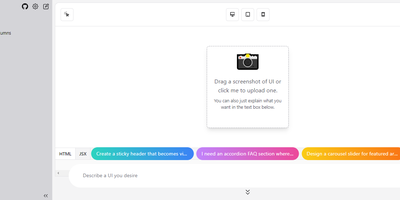
Describe a component in natural language and watch it render: OpenUI, from Weights & Biases, is an open alternative to Vercel's v0. Type a prompt like "a dark-themed dashboard with a sidebar and charts" and the LLM renders working HTML with Tailwind styling live in the browser. You then iterate conversationally, asking for changes until the design is right, and convert the result to React, Svelte, or Web Components for use in a real project. The backend is Python with LiteLLM routing, so it works with OpenAI, Anthropic, Gemini, Groq, and Mistral API keys, or fully offline against local Ollama models, including vision models like LLaVA that can generate UI from screenshot input - feed a screenshot and the model reproduces or riffs on an existing interface. Generated markup is inspectable at any point, with light and dark mode toggles, theme selection, and responsive previews across device sizes. The practical effect is compressing the mockup-review-revise loop from hours to minutes: a described layout renders in seconds and iterates through follow-up prompts, and because output converts to real framework code, prototypes feed directly into production codebases instead of staying trapped in a design tool. Self-hosting keeps unreleased product interfaces and prompts on your own server, and LiteLLM routing lets you pick the model per task - a cheap fast model for rough drafts, a stronger one for final passes, or free local models for unlimited experimentation.

Plausible
Built as a direct rejection of the adtech model, Plausible is the best-known privacy-first web analytics tool - lightweight, cookie-free, and open-source. It sets no cookies and stores no personal data: unique visitors are counted via a hash of IP plus User-Agent that rotates every 24 hours and is never stored raw, so no consent banner is required and GDPR compliance is structural rather than contractual. The tracking script is under 1 KB - orders of magnitude lighter than GA - and the dashboard is a deliberate contrast to GA4's sprawl: one fast-loading page with visitors, sources, top pages, countries, devices, and UTM breakdowns, filterable by any dimension. Custom events and goals track signups and clicks, Google Search Console integration pulls in search queries, scheduled email reports keep stakeholders updated, and the Stats API (v2) plus CSV export feed data anywhere. This is the AGPL-licensed Community Edition, the same Elixir codebase that powers Plausible's cloud service, running as three containers: the web app, PostgreSQL for accounts, and ClickHouse for event storage - which means self-hosters get direct SQL access to raw analytics data the cloud version never exposes. Traffic data stays entirely on your server, with no visitor caps or per-pageview pricing.
Roundcube
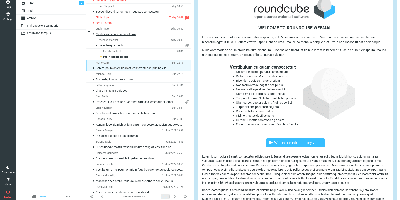
Two decades of continuous development made Roundcube the standard-bearer of open-source webmail - a PHP IMAP client that gives any mail server a polished, application-like interface in the browser. It connects to whatever IMAP/SMTP stack you run - Dovecot, Postfix, a hosted mailbox - and delivers the full desktop-client experience: drag-and-drop message management, threaded conversation views, full MIME and HTML mail handling, find-as-you-type address book with groups and LDAP connectors, multiple sender identities, full-text search, and spell checking in dozens of languages. The default Elastic skin is genuinely responsive, working as well on a phone as a desktop, and the entire UI is skinnable. The plugin API is where deployments get shaped: managesieve exposes server-side filter management in the UI, enigma brings PGP encryption and signing via GnuPG, markasjunk trains spam filters, zipdownload batches attachments, password lets users change credentials, and attachment_reminder catches the classic forgotten-attachment email - among hundreds of community plugins. Built-in caching keeps large mailboxes fast, IMAP ACLs and shared folders support team setups, and XSS protection is engineered into the rendering pipeline. It scales from a single personal mailbox to unlimited users, backed by MySQL, MariaDB, PostgreSQL, or SQLite. GPL-licensed with regular security releases.

Thumbor
Born at Brazilian media giant Globo.com, Thumbor answers imaging CDNs like Imgix and Cloudinary with an HTTP service where every image variant is just a URL. Ask for /300x200/smart/your-image.jpg and Thumbor fetches the original, crops and resizes on demand, and caches the result - one source file, unlimited renditions, no batch pre-generation pipeline. The "smart" in the URL is the signature feature: OpenCV-based face detection finds people in the frame and crops around them (no more thumbnails with severed heads), and when no faces exist, feature detection finds visually important corners and computes a weighted center of mass as the focal point. Beyond cropping, a chainable filter pipeline handles brightness, contrast, grayscale, blur, red-eye removal, rounded corners, rotation, watermarks, and format conversion with quality control - applied in order via URL segments. All common image formats work out of the box, and every layer is pluggable: loaders (HTTP, local, S3), storages and result storages (local, S3, Ceph, and community backends), engines, optimizers, filters, and even custom detectors, with the awesome-thumbor list cataloging the ecosystem. URL signing prevents abuse of your processing capacity. Integrations exist for Django, Rails, Node, WordPress, and most frameworks. MIT-licensed, battle- tested for over a decade.

Chromium
Surf's up on the web with the Chromium browser, now in a swanky Docker container! This isn't your grandma's browser; it's a sleek, secure, and speedier way to ride the digital waves. With support for the brawniest of processors (x86-64 and arm64), you can deploy this bad boy on RepoCloud and watch it fly faster than a seagull after a french fry. Fancy a secure connection? HTTP and HTTPS are both on the menu. Tweak the sails with environment variables and run configurations to make your browsing as smooth as a sea breeze. And for the power users, hoist your flags high with Chromium CLI options that'll make your containerized browser salute you. Whether you're looking to accelerate with GPU or nestle into a Docker in Docker setup, this Chromium is ready to set sail on the vast ocean of modern websites, all while keeping your wallet as full as a pirate's treasure chest thanks to RepoCloud's lower hosting costs. Ahoy, mateys, let's browse!

Screenshot To Code
description_humorous
Oxigen
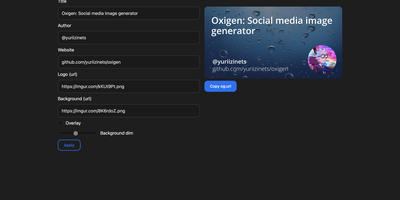
The social preview cards shown when links hit Twitter, LinkedIn, Slack, or Discord, generated on the fly: Oxigen is a small Go service for dynamic Open Graph images, no designer required per page. Instead of exporting static images per page, you compose a card once and drive it with parameters: title, author, website, logo, background image, and background dimming all arrive as URL query arguments, so your og:image meta tag simply points at the Oxigen endpoint with the page's own values substituted in. Every blog post, product page, and doc gets a branded, correctly sized preview generated on the fly. A built-in web UI covers interactive composition - tweak the text and imagery, watch the preview update, copy the resulting URL - while the same rendering path serves programmatic API use from static site generators, CMS templates, or build pipelines. Rendering is pure Go using the gg 2D graphics library, freetype fonts, and the imaging package, built on the kyoto framework by that project's author. Deployment is one stateless container on port 80 with no database and no external dependencies, so instances scale and restart freely.
Shynet
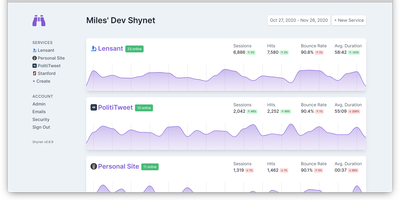
Get ready to send those old-school analytics tools packing, because Shynet is here to revolutionize your data game! This open-source analytics maestro is like a privacy-loving ninja, delivering the lowdown on your website's traffic without creeping on individual users' digital footprints. Shynet's all about the big picture, serving up aggregated insights and trendsetting data that help you get chummy with your website's user dynamics. With features that are hotter than a server room in July, including real-time stats, session recon, and a nifty primary key integration, Shynet's got your back whether you're tracking clicks or counting conversions. And for those of you riding the single-page app wave, fear not! Shynet's got the chops to keep up with your page-hopping users, ensuring your data's as accurate as a Swiss watch. Fancy managing a digital empire? Shynet lets you set up multiple services, each with its own secret agent-style tracking script. Plus, with an API slicker than a greased otter, you can tap into your dashboard's brain from anywhere, anytime. So whether you're a mom-and-pop shop with big dreams, a code whisperer, or a data detective, Shynet's your go-to for making smart, informed website decisions. And hosting it on RepoCloud? That's like having your own digital butler, serving up top-notch hosting without burning a hole in your wallet. So why wait? Give your website the analytics hero it deserves, and let Shynet and RepoCloud be your dynamic duo!
MeTube
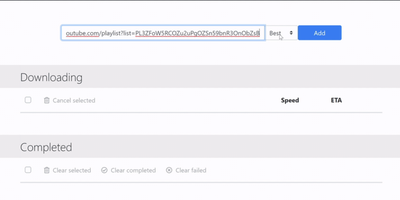
Introducing MeTube: the browser's new best friend for video aficionados who prefer a click to a command line! Imagine a world where the mystical powers of youtube-dl are harnessed in a sleek, web-based chariot, ready to whisk away your favorite videos from YouTube and a cornucopia of other video realms, all with the ease of a single click. Fancy downloading the whole 'Cooking with a Twist' playlist for your next culinary adventure? MeTube's got your back, with playlist powers that let you snag series faster than you can say 'Bon Appétit!' Customize your video vaulting experience with a smorgasbord of settings, from picking the perfect pantry (directory) for your files to separating the wheat (audio) from the chaff (video), and even tailoring the tapestry of your filenames. And when the lights go down, MeTube's dark mode turns your video quest into a cozy, eye-friendly escapade. All this, wrapped up in a Docker container so portable, you can deploy it faster than you can spell 'containerization'. And let's not forget, hosting on RepoCloud means you're saving more dough than a budget bakery, all while supporting the open-source soiree. Get ready to click, download, and dazzle with MeTube on RepoCloud!
Sshwifty
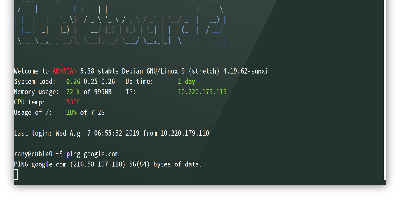
Get ready to teleport your terminal experience straight into your browser with Sshwifty, the web-based wizard that conjures up SSH and Telnet connections with just a click! Wave goodbye to clunky clients and say hello to smooth access from any web-savvy device. Park this magical creature on your own digital lawn (a.k.a. your computer or server) and watch it transform into the Gandalf of gateways, offering a customizable portal to your digital dominions. With Sshwifty, you can summon a fleet of servers, craft presets for your favorite digital destinations, and even cast a security spell to limit travel to known realms only. Plus, with TLS enchantments and Socks5 proxy pathways, your connections are not just swift, they're Fort Knox-secure. Whether you're diving into distant data centers or just hopping over to your home hub, Sshwifty is your trusty sidekick in the quest for seamless, sorcery-level server management. And with RepoCloud's wallet-friendly hosting, you'll have more gold in your pouch for other quests. Abracadabra, your terminal is now omnipresent!

Ampache
Get ready to amp up your audio experience with Ampache! Imagine a jukebox that never closes, right in your browser. This nifty web-based app is your personal DJ, spinning tracks and videos on demand, wherever you may roam. Picture this: your entire music library, now obediently waiting for your click, ready to serenade you through the simplest of web interfaces. Fancy a bit of musical matchmaking? Ampache's got you covered, syncing up local and remote catalogs to craft a harmonious blend that's music to your ears. And when it comes to streaming, Ampache is like that friend who knows all your favorite songs, streaming them to your chosen player, or even serenading you directly on the web page with a snazzy HTML5 player. This open-source maestro is all about freedom and flexibility, playing nice with almost any device that can hum along to the internet. So, whether you're on your phone, tablet, or kicking back in front of the TV, Ampache is your go-to for a symphony of streaming. And the best part? Hosting it on RepoCloud won't hit a sour note with your wallet. It's like having a backstage pass to your music collection without the VIP price tag!

Nango
The integrations your SaaS product offers its own users - that is what Nango, an open-source product-integrations platform, exists to build. It solves the repetitive infrastructure work behind every third-party API connection: OAuth flows, API key handling, token refresh, encrypted credential storage, rate-limit backoff, retries, and multi-tenant connection management. It ships pre-built auth configurations for 800+ APIs. Your users connect their accounts through an embeddable, white-label Connect UI, and your backend then reads or writes data through Nango's proxy, SDKs, or REST API without ever touching raw credentials. Integration logic is written as TypeScript functions covering actions, scheduled data syncs, and webhook processing - all running on one runtime with retries, checkpointing, and per-connection logs built in. Syncs pull records incrementally on a schedule, one-way or two-way, which suits RAG pipelines, search indexing, and keeping local copies of external data current. Selected actions can also be exposed as tool schemas or through a built-in MCP server, so AI agents operate on user-connected accounts without ever handling provider credentials. Auth support spans OAuth 2.0, OAuth 1.0a, API keys, basic auth, and JWT, and observability - logs, metrics, failure detection, and a reconnect flow for expired credentials - is scoped per customer connection for easier support debugging. Works with any backend language. Self-hosting on RepoCloud keeps all customer credentials and synced data on infrastructure you control, which matters for data residency and compliance requirements.