YAO
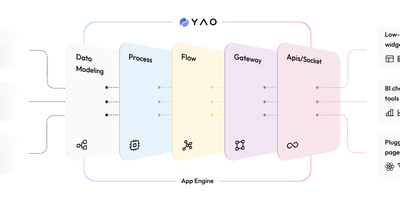
Get ready to unleash the beast of codeless creation with YAO – the Swiss Army knife of app engines that turns your grand ideas into web wonders faster than you can say 'deploy'! Whether you're crafting the next AI masterpiece, rigging up smart devices, or turbocharging connected cars, YAO's got your back. Picture this: a digital playground where databases dance to your tune without writing a single line of code, and interfaces are as easy to whip up as a peanut butter sandwich. IoT enthusiasts, edge computing aficionados, and industrial internet innovators – rejoice! YAO feels right at home on ARM devices, too. But wait, there's more! Business Intelligence just got a YAO-sized upgrade, offering you a treasure trove of functions to explore. Data flows like a river, and with YAO's built-in processes, you can navigate any data deluge. Fancy a bit of customization? The GRPC-based plug-in system is your gateway to endless possibilities with Nodejs, Python, and more. And let's talk security – YAO's like a digital Fort Knox, with permission layers so fine-grained, you'll need a microscope to see them. All this, hosted on RepoCloud, where the cost is as tiny as the footprint of a codeless app. So why settle for the cloud when you can reach for the stars with YAO on RepoCloud?
Hammond
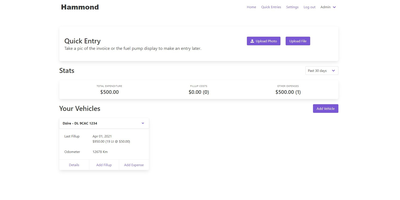
When Clarkson, the once-popular fuel logger, stopped receiving updates, Hammond stepped in as its logical successor - a self-hosted vehicle expense tracker. Written in Go with a Vue.js interface and SQLite storage - a single lightweight container, no external database - it tracks every cost your vehicles generate: fuel fill-ups with cost, volume, and odometer readings; maintenance and repairs; and arbitrary other expenses, each attachable with photos and documents stored against the vehicle. The multi-user, multi-vehicle design is what sets it apart from phone apps: a household or small business adds all its vehicles and all its drivers, shares vehicles across users, and every fill-up lands in one ledger no matter who was driving. The Quick Entries feature respects how expenses actually happen - snap a photo of the receipt or pump screen at the gas station, then complete the structured entry later when you have a minute. Reporting works at both the vehicle level (cost per distance, fuel economy trends) and across the whole fleet. Migration matters here: importers for Clarkson, Fuelly, and Drivvo bring years of fill-up history along, so switching does not mean starting your data over.