Jirafeau
Upload a file, get a unique download link and a separate delete link - Jirafeau has done exactly this one thing since 2008. It is plain PHP with no database, no mail server, no JavaScript framework, and no external dependencies - files and metadata live on the filesystem, which is why it runs on nearly anything and why it has outlasted most of its imitators. Uploads use the HTML5 file API, so PHP's post_max_size ceiling does not constrain file size, with live progress showing speed, percentage, and time remaining. Every upload takes options: expiration from one minute to a year to unlimited, self-destruct after first download, and password protection with configurable policy - passwords can be optional, required, or server-generated with complexity rules. Server-side encryption (modern builds use XChaCha20-Poly1305) stores files encrypted at rest with the decrypt key embedded only in the download URL, never on the server, so a compromised host cannot read the contents. Unencrypted deployments get file-level deduplication - identical files stored once with multiple links. Upload access can be gated by password lists or IP allowlists, a small admin panel manages stored files, and a CLI cleanup script handles expired files via cron. Recipients can preview supported files in-browser.
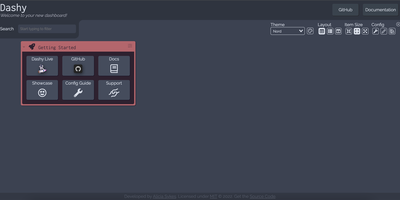
Dashy
Every service you run, behind one polished start page: Dashy is the most customizable homelab dashboard, built as a Vue.js homepage. Configuration lives in a single YAML file, but you never have to hand-edit it: an integrated UI editor with real-time validation writes changes back to disk, so both config-as-code and point-and-click camps are served. Status indicators put a live health dot next to every app - HTTP checks or pings on custom intervals, with response time and status details on hover - giving you an at-a-glance uptime overview before anything breaks. Over 50 built-in widgets pull dynamic content from the services you already run: Pi-hole and AdGuard block stats, Proxmox lists, Nextcloud status, Netdata CPU/memory history, Prometheus data, plus weather, RSS, crypto prices, and generic iframe/API-response widgets for anything with an endpoint. Instant fuzzy search launches any app as you type, with customizable hotkeys and web-search fallthrough. Theming is deep: dozens of built-in themes, a UI color palette editor, and custom CSS over CSS variables. Alternate views include a fast-loading minimal startpage and a workspace view that embeds apps side-by-side without leaving the dashboard. Icons resolve from Font Awesome, homelab icon packs, emojis, or auto-fetched favicons. Built-in authentication, multi-page support, cloud backup/sync, and multi-language round out an MIT project with a massive community.

Tandoor
The deep end of self-hosted recipe management: Tandoor Recipes is a Django/Vue application that replaces Paprika, AnyList, and ad-choked recipe sites with a database you control. Import is where most people start: paste any URL and Tandoor scrapes schema.org markup for ingredients, instructions, images, times, and nutrition; bulk-paste URLs for batch import; or migrate wholesale from Mealie, Paprika, Nextcloud Cookbook, Pepperplate, and other managers with built-in importers. The structured recipe editor tracks ingredients individually, which is what powers everything downstream: full-text search with trigram similarity, a "what can I make with what's in the fridge" ingredient search, automatic nutrition via OpenFoodFacts, and shopping lists that merge duplicate ingredients across recipes, convert units, scale by servings, and sort by your supermarket's actual aisle layout. The weekly meal planner is drag-and-drop, feeds shopping lists automatically, exports to your calendar, and shows a nutritional summary for the week. Multi-user support comes with a granular permission system - shared household cookbooks, private recipes, even secret ones - and shopping lists sync in real time so two people can shop simultaneously. A full REST API integrates with Home Assistant and Grocy. For households serious about cooking, Tandoor's depth is unmatched.
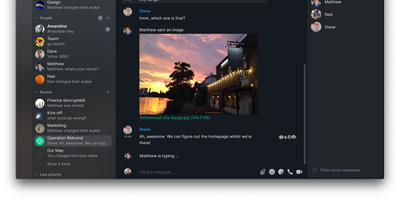
Element
Matrix's flagship client, built by the protocol's creators: Element brings the decentralized open standard for real-time communication to web, desktop, iOS, and Android. Paired with a Matrix homeserver, it delivers Slack-quality team messaging where you own every message, file, encryption key, and byte of metadata. End-to-end encryption is on by default, built on Olm and Megolm - the Double Ratchet algorithm family Signal popularized, extended for large-room scalability and publicly audited by NCC Group. Messages encrypt per-device with cross-signed device verification, so even a compromised server yields nothing readable. Federation is the defining capability: like email, users on different homeservers converse seamlessly, and 30+ bridges connect Matrix rooms to Slack, Discord, WhatsApp, and Telegram, so moving to sovereign infrastructure doesn't sever contact with anyone. Rooms support threads, reactions, file sharing, and voice and video calls via Element Call. The result is digital sovereignty chosen by governments and enterprises across Europe: your data sits on your server in your jurisdiction, portable to any other Matrix host because the protocol is an open standard. Apache-2.0 licensed, with no per-user fees at any scale.
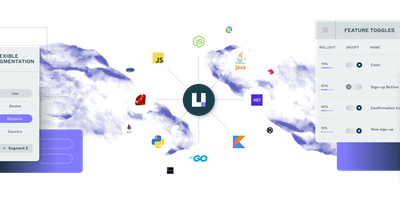
Unleash
Deployment decoupled from release: Unleash, the most popular open-source feature management platform on GitHub, is a Node.js server backed by PostgreSQL. Ship code dark, then control who sees it through activation strategies: gradual percentage rollouts, targeting by user ID, IP, hostname, or application name, custom constraints against your own context fields, and scheduled or time-limited releases. Strategies stack - a flag activates if any strategy matches - and strategy variants layer A/B versions on top of the on/off decision. Each flag carries per-environment configurations, so a feature can run at 100% in staging while canarying at 5% in production. Backend SDKs (Node.js, Java, Go, Python, Ruby, .NET, PHP, Rust, and more) fetch configuration and evaluate flags locally, so a flag check adds zero network latency to request paths; frontend SDKs for React, Vue, Svelte, iOS, Android, and Flutter evaluate through a proxy layer. Flag hygiene is built in: flags are typed (release, experiment, operational, kill-switch, permission) with expected lifetimes, and Unleash marks overdue flags as potentially stale and surfaces unknown flags your SDKs request but that don't exist. Self-hosting via Docker keeps flag data, targeting rules, and evaluation infrastructure entirely on your side.

Hammond
When Clarkson, the once-popular fuel logger, stopped receiving updates, Hammond stepped in as its logical successor - a self-hosted vehicle expense tracker. Written in Go with a Vue.js interface and SQLite storage - a single lightweight container, no external database - it tracks every cost your vehicles generate: fuel fill-ups with cost, volume, and odometer readings; maintenance and repairs; and arbitrary other expenses, each attachable with photos and documents stored against the vehicle. The multi-user, multi-vehicle design is what sets it apart from phone apps: a household or small business adds all its vehicles and all its drivers, shares vehicles across users, and every fill-up lands in one ledger no matter who was driving. The Quick Entries feature respects how expenses actually happen - snap a photo of the receipt or pump screen at the gas station, then complete the structured entry later when you have a minute. Reporting works at both the vehicle level (cost per distance, fuel economy trends) and across the whole fleet. Migration matters here: importers for Clarkson, Fuelly, and Drivvo bring years of fill-up history along, so switching does not mean starting your data over.