Filerun
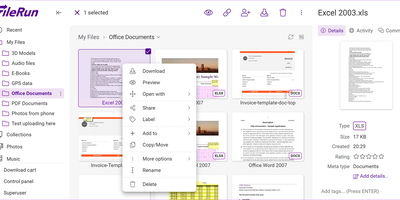
Imagine a digital treasure chest where you're the pirate king, and that's FileRun for you! It's your very own, ultra-private digital locker, akin to a Google Drive that's sworn an oath of loyalty only to you. With FileRun, you can summon your files from any server with a snap of your fingers – no importing shenanigans or scanning sorcery required. It's like having a teleportation portal for your data with FTP, SMB, and WebDAV access that mirrors your file maneuvers in real-time. Want to keep your files in sync? FileRun's desktop apps are like loyal sync-hounds, keeping your digital life in harmony. And for the jet-setters, mobile apps ensure your files are just a tap away, no matter where your adventures take you. Photo aficionados, rejoice! FileRun is a photo management wizard, conjuring thumbnails at lightning speed, offering a stroll down memory lane with timeline browsing, and understanding your photos' inner secrets with metadata support. Create virtual photo albums from scattered folders and share them like a modern-day bard online. The new virtual drive feature is like having an invisible backpack for your files – access them directly without the heavyweight of disk space. Collaborate like a true open-source knight with guest users and file requests, making file collection as easy as a medieval fair. FileRun's plugin posse allows you to edit, view, and convert files with the ease of a court jester's flip. With automatic file versioning and a trash folder for oopsies, your files are as safe as in a dragon-guarded castle. Customize FileRun to flaunt your branding colors and make it yours. Secure, feature-stuffed, and with a mobile experience smoother than a minstrel's tune, FileRun on RepoCloud is the cost-effective way to keep your digital realm in order!
Ackee
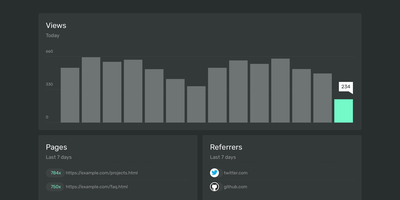
Page views, referrers, browsers, and screen sizes - Ackee delivers the analytics developers actually check, from a deliberately minimal Node.js and MongoDB stack that skips both Matomo's weight and Google Analytics' cloud dependency. Its defining constraint is anonymization: no cookies, no unique user tracking, and a multi-step anonymization process that keeps visitors unidentifiable while the aggregate numbers stay useful. In its default anonymous mode Ackee collects no personally identifiable information at all, which means GDPR and CCPA compliance out of the box and no cookie consent banner on your sites. A detailed mode adds screen size, language, and per-visit referrers - still without cookies or fingerprinting. Integration mirrors the Google Analytics pattern: create a domain in settings, drop the generated ackee-tracker snippet into your pages, and data appears in a clean single-page dashboard. One instance tracks multiple domains, and custom events capture button clicks, signups, and conversions. The distinctive engineering choice is the fully documented GraphQL API: everything the dashboard shows comes from that API, so you can query active visitors, average duration, and view statistics programmatically, feed data in from apps and services beyond websites, or build an entirely custom interface on top. If you want bare-minimum analytics with a real API and zero privacy anxiety, this is the tool.
Collabora Office
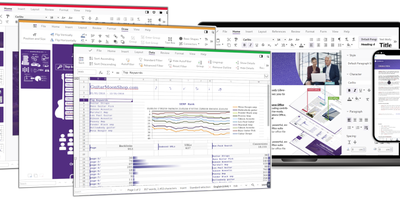
Real LibreOffice document engineering in the browser: Collabora Online is built by the company employing much of the former SUSE LibreOffice team - not a reimplementation. This deployment runs CODE (Collabora Online Development Edition), the collabora/code server that renders and edits documents entirely server-side while browsers get high-fidelity WYSIWYG output, so layout and formatting survive round-trips that break lesser converters. Four editors ship in one container: Writer for text documents (comments, track changes with comparison and restoration, form handling), Calc for spreadsheets (advanced formulas, macros, pivot tables, per-user sheet views, server-enforced cell protection), Impress for presentations, and Draw for Visio-class diagrams. Format compatibility spans DOCX, XLSX, PPTX, the ODF family, PDF, and dozens more - including Visio and Publisher import. Real-time collaborative editing supports multiple simultaneous editors with visible cursors and commenting. The architectural point: documents are processed on your server and never leave it, which is why Collabora is the engine behind Nextcloud Office and integrates with ownCloud, Seafile, and any WOPI-speaking host - or embeds in your own application via the SDK. An admin console monitors sessions and memory. For organizations that need Google Docs-style collaboration with actual data sovereignty, this is the reference open-source answer.
Jirafeau
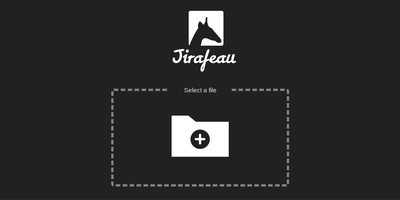
Upload a file, get a unique download link and a separate delete link - Jirafeau has done exactly this one thing since 2008. It is plain PHP with no database, no mail server, no JavaScript framework, and no external dependencies - files and metadata live on the filesystem, which is why it runs on nearly anything and why it has outlasted most of its imitators. Uploads use the HTML5 file API, so PHP's post_max_size ceiling does not constrain file size, with live progress showing speed, percentage, and time remaining. Every upload takes options: expiration from one minute to a year to unlimited, self-destruct after first download, and password protection with configurable policy - passwords can be optional, required, or server-generated with complexity rules. Server-side encryption (modern builds use XChaCha20-Poly1305) stores files encrypted at rest with the decrypt key embedded only in the download URL, never on the server, so a compromised host cannot read the contents. Unencrypted deployments get file-level deduplication - identical files stored once with multiple links. Upload access can be gated by password lists or IP allowlists, a small admin panel manages stored files, and a CLI cleanup script handles expired files via cron. Recipients can preview supported files in-browser.
PhotoPrism
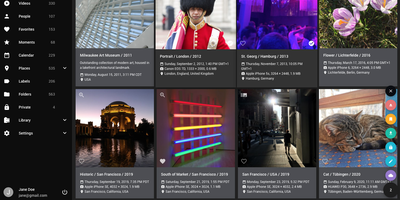
Get ready to give your photo collection a dose of AI smarts with PhotoPrism, the snazzy, decentralized dazzler of the image world! This app is like a ninja in the night, silently tagging and sorting your snapshots without so much as a hiccup in your day-to-day. Whether you're a homebody with a penchant for privacy or a cloud-surfing digital nomad, PhotoPrism's got your back. Wave goodbye to the headache of RAW files, the clones of duplicate images, and the babel of video formats. With its slick search sorcery, you can pinpoint that one photo of Aunt Mabel's surprise birthday party in a snap. Plus, with glossy world maps, you can take a stroll down memory lane, but with GPS precision. Fancy a bit of magic? Just hover over those Live Photos and watch them... well, live! And let's not forget the facial recognition – it's like having a butler who knows your guests by sight, only it's your photos. PhotoPrism is the Fort Knox of photo apps, guarding your precious memories with an ironclad promise of privacy. Host it on RepoCloud, and you'll be saving more than just memories; you'll be saving some serious coin, too!

Immich
With over 110,000 GitHub stars and one of the fastest-growing open-source communities in the self-hosted space, Immich delivers a Google Photos-grade experience entirely on your own hardware. The platform handles automatic background backup from Android and iOS devices, deduplication, and support for RAW formats, LivePhotos, and MotionPhotos. Its machine learning pipeline runs facial recognition and clustering locally on your server, enabling you to group photos by person without sending a single image to the cloud. CLIP-based semantic search lets you find images by describing their content in natural language, while metadata-driven search covers EXIF data, dates, and locations. The web interface built with SvelteKit provides a responsive timeline view, albums, shared albums with configurable permissions, public sharing links with optional passwords and expiry dates, partner sharing for family libraries, and a global map plotting photos by GPS coordinates. Administrative features include multi-user support with per-user storage quotas, OAuth integration, API key management, and a user-defined storage structure for organizing files on disk. The architecture uses PostgreSQL for metadata, Redis with BullMQ for background job queues handling thumbnail generation, video transcoding, and smart search indexing, and exposes over 400 REST API endpoints documented via OpenAPI with auto-generated SDKs for web, mobile, and CLI clients. Running on a dedicated VPS on RepoCloud with guaranteed CPU, RAM, and SSD, full root SSH access, and a browser serial console. AGPL-3.0 licensed.
AdGuard Home
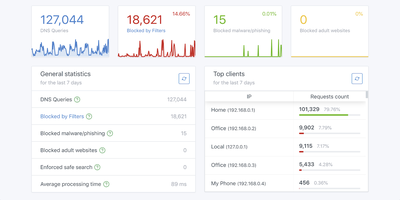
Say goodbye to the digital equivalent of pesky flies—ads! AdGuard Ad Blocker is your online knight in shining armor, banishing every last banner, pop-up, and pre-roll video ad from your kingdom of browsers. It's like having a personal bouncer for your web experience, keeping the riff-raff out while making sure your favorite sites still look fabulous. But wait, there's more! AdGuard is like a privacy ninja, stealthily protecting your data from the prying eyes of web analytics and tracker ninjas. And for those digital boogeymen lurking in the shadows? AdGuard's got your back, shielding you from phishing and malware-infested waters. Got kiddos? Activate the parental controls and create a web playground as safe as a cushioned room. It's not just about blocking ads; it's about supercharging your browsing speed and saving your precious data from being devoured by ad monsters. With AdGuard hosted on RepoCloud, you'll enjoy all these perks without breaking the bank. It's the ultimate tool for a smoother, safer, and more enjoyable online adventure!
Jellyfin
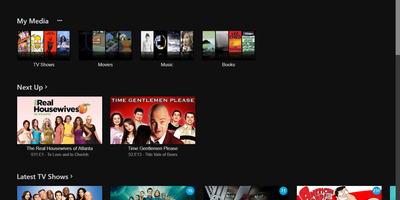
Unleash the kraken of your media collection with Jellyfin! This open-source maestro of media turns your server into a personal streaming powerhouse. Picture this: your entire cinematic universe, TV binges, concert halls, and even your digital bookshelf, all at the tips of your fingers, ready to beam to any gadget you own. Jellyfin is like a Swiss Army knife for your media – it slices, dices, and serves up live TV and DVR, so you can catch the latest episode or save it for a rainy day. And with SyncPlay, you can synchronize your watch parties across the globe, because who doesn't love a good movie with friends? Available on all the cool kid platforms, Jellyfin ensures you're never more than a click away from your media munchies. Plus, with a GNU GPL license, it's more free than a bird – modify, remix, and share to your heart's content. And the cherry on top? Jellyfin is a privacy ninja, dodging trackers and keeping your data out of the clutches of the digital overlords. Host it on RepoCloud, and you'll be saving coins faster than a video game plumber, all while enjoying the open-source camaraderie!