Commento
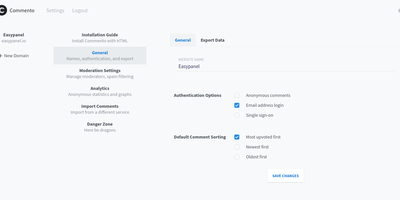
Unleash the chatterbox in your website with Commento, the widget that turns monologues into dialogues faster than you can say 'engagement'! Picture this: a symphony of upvotes for the wisdom droppers and a gentle nudge of downvotes for the not-so-enlightened. It's like having a bouncer for your blog's comment section, but with markdown muscle that lets your audience flex their formatting finesse—bold, italic, and everything typographically tasty. And for the maestros of moderation? You've got the power to freeze fiery threads, banish the blabber, and put the timeout corner to good use. Wave goodbye to spam-a-lot invaders with a detection system that's more alert than a caffeinated meerkat. Plus, with nested replies, your comment section will be more organized than a librarian's bookshelf. No sign-up hoopla means more gab for everyone, and customization options that let you dress up your widget to match your website's snazzy suit. Host it on RepoCloud, and you'll be saving coins while your community thrives. Now, isn't that comment-worthy?
Coral
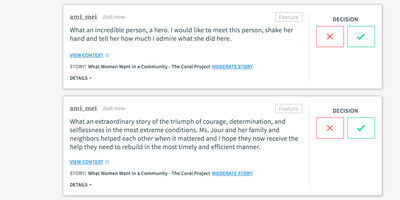
Comment sections at the Washington Post, the Wall Street Journal, and newsrooms across 30 countries run on Coral (also known as Talk) - the platform built by journalists' technologists, started under the Mozilla Foundation and now stewarded by Vox Media as an Apache-2.0 project serving 23 languages. Its founding premise is that online comments are broken and moderation is the fix. Moderators get a full queue system - reported comments, system-held pending comments, and configurable pre-moderation - backed by AI toxicity scoring that warns commenters before posting and holds high-scoring comments for review, Akismet spam detection, banned and suspect word lists, and automatic repeat-offender handling that pre-moderates users whose rejection rate crosses a threshold. Readers get features designed for healthier conversation: journalist badges in threads, muting of annoying voices, notifications, instant new-comment alerts, and timeouts rather than just bans. For publishers the economics are the point - no ads, no trackers, no hidden pixels anywhere in the code, full ownership of audience data, and GDPR compliance beyond requirements. Integration is one embedded script; SSO connects existing registration, and a GraphQL API supports customization and extension.