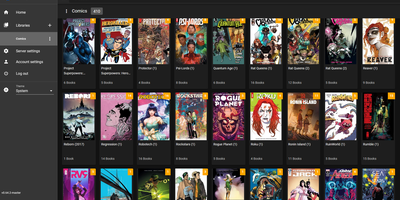
Komga
What Jellyfin is for video, Komga is for comics, manga, BDs, magazines, and eBooks: point it at folders of CBZ, CBR, CBT, PDF, and EPUB files and it becomes a proper library with cover art, embedded metadata import, and per-user reading progress. The responsive web reader handles multiple reading modes - left-to-right for western comics, right-to-left for manga, webtoon scrolling - while collections and read lists organize crossovers and story arcs, with ComicRack .cbl read list import for existing curation. Its openness is the real differentiator: OPDS v1.2 and v2.0 feeds serve virtually every reader app (Panels, Moon+ Reader, Mihon/Tachiyomi, KyBook), with OpenSearch and page-streaming extensions so mobile apps fetch pages on demand instead of whole archives. E-ink support is built in, not bolted on - Kobo devices sync directly against Komga instead of Kobo's servers, with two-way read progress, on-the-fly KEPUB conversion via Kepubify, and optional proxying so official Kobo purchases still work; KOReader sync covers everything else. Multi-user management brings per-library access control, age restrictions, and label restrictions for family setups. Housekeeping tools detect duplicate files and duplicate pages, and a REST API feeds a healthy ecosystem of community scripts. Runs from a single Docker container with embedded SQLite.
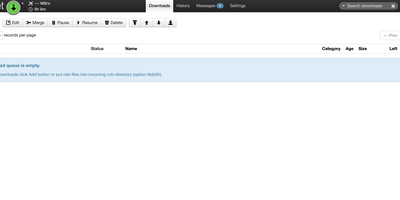
Nzbget
Written in optimized C++ where competitors use Python or Java, NZBGet saturates fast connections while idling on CPU and RAM - which is why the performance-obsessed Usenet downloader has long been the client of choice for NAS boxes, Raspberry Pis, and routers as much as full servers. The engineering shows in the recovery pipeline. Instead of shelling out to par2cmdline, NZBGet integrates the par2 source directly and exploits its knowledge of exactly which articles failed - quick par-verification checks only what needs checking, and its own multicore repair implementation runs 2-3x faster than the external tool on the same hardware. Fast par-rename deobfuscates scrambled filenames in seconds without a full verification pass, and rar-rename recovers names for multivolume archives even when no par2 files exist. DirectWrite assembles articles straight into sparse destination files, skipping temporary-file churn entirely, with an article cache and queue-pausing options to eliminate disk contention. Automation is complete: a remote web interface, full JSON-RPC API, RSS feeds with duplicate detection, scheduling and prioritization, and an extension manager for Python and Bash scripts triggered by download events. Sonarr, Radarr, and every major indexer integrate natively.
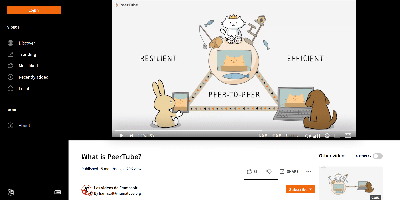
PeerTube
The fediverse's answer to YouTube comes from French non-profit Framasoft: PeerTube is a TypeScript/Angular video platform where hundreds of independently operated instances federate over ActivityPub into one network. Videos you publish are discoverable across the whole video fediverse, and viewers can follow your channels from Mastodon or any ActivityPub platform - or plain RSS - without needing an account on your instance. The namesake innovation attacks video hosting's core cost problem: alongside HLS delivery, an optional WebRTC-based P2P layer lets concurrent viewers' browsers share video segments with each other, so a video going viral distributes its own bandwidth demand instead of crushing your server; instance redundancy extends this by letting friendly instances cache each other's videos. Livestreaming is first-class - stream via OBS or any RTMP software, host permanent streams, enable replays, and interact through live chat. Creators get channels, playlists, analytics, built-in video editing (trim, watermark), and an embeddable player for any website. There are no ads, no data mining, and no recommendation algorithm engineered for watch-time - the project's explicit design stance. Admins control federation policy, P2P settings, and theming; a plugin system extends the rest. AGPL-licensed, 300+ contributors, in active development since 2015.
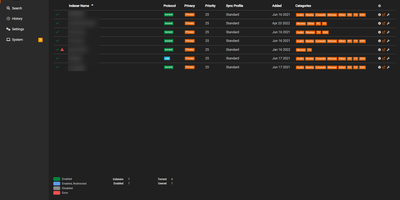
Prowlarr
Configure each indexer once, not five times: Prowlarr is the indexer hub of the *arr stack, removing the most tedious duplication in a media automation setup. Instead of configuring the same torrent trackers and Usenet indexers separately in Sonarr, Radarr, Lidarr, Readarr, and Mylar3, you add each one once in Prowlarr and it syncs them to every connected app automatically, complete with category mappings; with Full Sync enabled, adding or removing an indexer propagates everywhere, and a tracker URL change is a one-place fix. Coverage is the deepest available: 500+ torrent trackers with definitions added constantly, 24 native Usenet indexers, generic Newznab and Torznab support for anything else, and custom Cardigann YML definitions with JSON and XML parsing for obscure sources. Built on the same .NET/React base as its siblings, it also earns a place as a search tool in its own right: unified manual search queries every indexer simultaneously at a category level, and you can push multiple releases straight to your download clients without touching Sonarr or Radarr. Health checks and status notifications flag failing indexers, per-indexer statistics track success rates and response times so you can cull unreliable sources, and per-indexer proxy support (SOCKS4/5, HTTP, FlareSolverr) handles trackers behind Cloudflare.
Sonarr
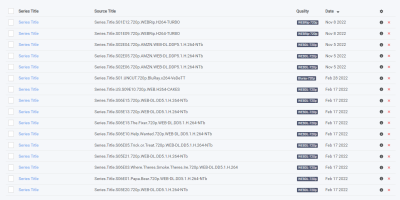
Add a series once, set a quality profile, and everything downstream is automated: Sonarr is the smart PVR for Usenet and BitTorrent users. It monitors RSS feeds from your indexers, detects new episodes the moment they release, sends matching grabs to SABnzbd, NZBGet, qBittorrent, Deluge, or another download client, then renames files with fully configurable templates, sorts them into consistent folder structures, and notifies Plex, Kodi, or Jellyfin to update the library. Quality profiles define what's acceptable (HDTV, WEB-DL, Blu-ray, up to 4K) and an upgrade cutoff - when a better release appears, Sonarr replaces the existing file automatically, stepping from HDTV to WEB-DL to Blu-ray until the cutoff is met. Custom formats add weighted scoring for finer-grained release selection, with community-maintained TRaSH Guides presets as the widely accepted defaults. Failed downloads are handled without intervention: Sonarr retries with another release, and manual search shows every candidate with the reasons any was rejected. It scans existing libraries for missing episodes, fully supports specials, multi-episode files, and daily and anime series types, and a calendar view shows upcoming episodes across every tracked show. Runs on Linux, Windows, macOS, and Raspberry Pi, and pairs naturally with Prowlarr for centralized indexer management.
Substreamer
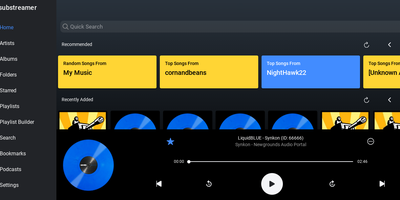
A free, polished web client for Subsonic-compatible music servers: Substreamer is the browser-based frontend you point at your existing streaming backend to play your own library from anywhere. It speaks the Subsonic API (v1.13 and higher), which makes it compatible with the whole ecosystem that has grown around that protocol: the original Subsonic server, its forks Airsonic and Madsonic, and modern implementations like Navidrome and Ampache. That decoupling is the point - your music files, transcoding, and library indexing live on whichever server you prefer, while Substreamer provides the listening experience: browse by artist, album, and genre, build and manage playlists, search your collection, and stream on demand. This RepoCloud deployment runs the containerized web edition, so the same interface is available from any browser without installing a native app, and it pairs with the Substreamer mobile apps that made the client popular. For anyone assembling a self-hosted Spotify replacement - typically Navidrome for the backend plus a good client - Substreamer fills the client half with a clean, familiar player UI. Because it is a stateless client, the container is lightweight and low-maintenance: connect it to your server's URL and credentials, and your entire collection is streaming in minutes, with no subscription and no catalog that can disappear.

Thumbor
Born at Brazilian media giant Globo.com, Thumbor answers imaging CDNs like Imgix and Cloudinary with an HTTP service where every image variant is just a URL. Ask for /300x200/smart/your-image.jpg and Thumbor fetches the original, crops and resizes on demand, and caches the result - one source file, unlimited renditions, no batch pre-generation pipeline. The "smart" in the URL is the signature feature: OpenCV-based face detection finds people in the frame and crops around them (no more thumbnails with severed heads), and when no faces exist, feature detection finds visually important corners and computes a weighted center of mass as the focal point. Beyond cropping, a chainable filter pipeline handles brightness, contrast, grayscale, blur, red-eye removal, rounded corners, rotation, watermarks, and format conversion with quality control - applied in order via URL segments. All common image formats work out of the box, and every layer is pluggable: loaders (HTTP, local, S3), storages and result storages (local, S3, Ceph, and community backends), engines, optimizers, filters, and even custom detectors, with the awesome-thumbor list cataloging the ecosystem. URL signing prevents abuse of your processing capacity. Integrations exist for Django, Rails, Node, WordPress, and most frameworks. MIT-licensed, battle- tested for over a decade.
Wizarr
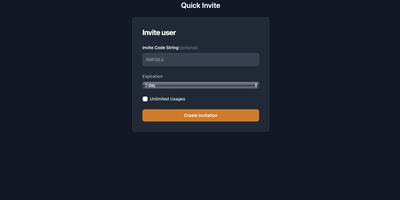
Getting non-technical friends and family onto a media server is its most tedious chore - Wizarr solves it. Instead of manually creating accounts, dictating server addresses, and explaining which app to install, you send one invite link. When the recipient clicks it, Wizarr creates their account on your server automatically - Plex, Jellyfin, Emby, Audiobookshelf, Komga, Kavita, and Romm are all supported - then walks them through a mobile-first, app-like onboarding wizard: download the right client, sign in, and learn how to request movies through your Overseerr or Ombi instance, with an optional Discord server invite along the way. Invitations are genuinely manageable: set expiration dates, usage limits, passphrases, library-scoped access tiers, and time-limited memberships that end access automatically. The wizard itself is fully customizable - Markdown-based steps managed from the admin UI, organized into pre-invite and post-invite phases (terms of service before joining, app setup after), reorderable bundles assignable to specific invitation types, and combined flows for invites spanning multiple servers. Multi-server and multi-admin support manages several backends from one dashboard, SSO support is plug-and-play, and a REST API with OpenAPI/Swagger documentation covers automation. A Flask/HTMX app in a single Docker container.
Restreamer
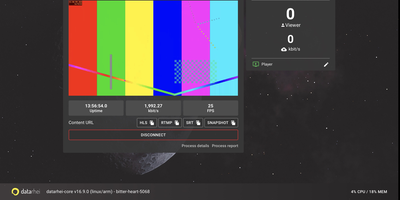
Point OBS or a hardware encoder at Restreamer's built-in RTMP or SRT ingest and it serves your website while rebroadcasting to YouTube Live, Twitch, Facebook, Vimeo, TikTok, LinkedIn, PeerTube, and anything else that accepts RTMP, SRT, or HLS - a complete self-hosted live-streaming server from datarhei. That multistreaming normally costs a monthly Restream.io subscription; here it's one FFmpeg process per destination on your own hardware. The web UI is genuinely approachable, with a wizard that walks beginners through camera setup, while professionals get the full surface: multiple audio/video inputs (USB, RTSP network cameras, virtual devices), codec and processing settings, separate audio muxing, and hardware acceleration via Nvidia CUDA, Intel VAAPI, or Raspberry Pi. Serving your own audience is first-class - a built-in Video.js player embeds in your site, a ready-made publication website streams without any embedding work, HLS chunk sizes are tunable, and automatic Let's Encrypt handles HTTPS. Viewer and bandwidth monitoring with limits keeps traffic costs predictable, and it's GDPR-friendly: no third-party provider, no audience data stored. A fully Swagger-documented REST API drives automation. SRT support keeps latency under a second.
Jellyseerr
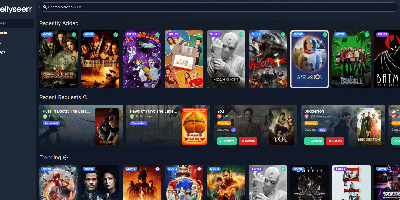
Browse trending titles, search anything, request it in two clicks: Jellyseerr gives Jellyfin, Emby, and Plex users a beautiful storefront for the media library. Born as the Overseerr fork that added Jellyfin and Emby support (the projects have since unified as Seerr), it handles the full request lifecycle - users authenticate with their existing media-server accounts, pick individual seasons or movies in a clean interface, and admins approve or decline from a simple queue, including on mobile. Approved requests flow straight to Sonarr and Radarr, which handle acquisition automatically, with support for separate 4K server instances. Regular library scans keep availability accurate, so users see instantly what already exists instead of requesting duplicates. A granular permission system controls who can request what - auto-approval for trusted users, quotas and limits elsewhere - and override rules adjust request routing by user, tag, or other conditions. Watchlist and blocklist functions curate discovery, notifications reach email, Discord, Telegram, Slack, Pushover, and Pushbullet, and both PostgreSQL and SQLite are supported. Localized into many languages, it turns "can you add this movie?" texts into a self-service system that runs itself.
Bazarr
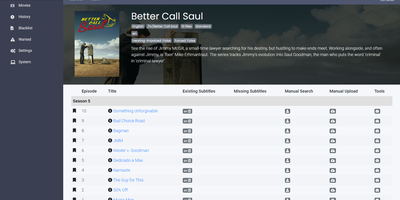
Subtitles are the one chore Sonarr and Radarr leave behind - Bazarr finishes the *arr media stack by automating them. It connects to both via their APIs and mirrors their libraries - it doesn't scan disk itself, it manages exactly what your *arr apps index. For every monitored episode and movie it checks existing internal and external subtitles against your language profiles, then hunts missing ones across dozens of providers - OpenSubtitles.com, Podnapisi, Addic7ed, Subscene, and many regional sources - covering 184 subtitle languages including forced/foreign-dialogue tracks. Matching is smarter than filename guessing: releases are compared by release group and source, some providers support exact file-hash matching, and every downloaded subtitle gets a percentage score. Set a minimum score per Sonarr/Radarr connection and Bazarr rejects weak matches; enable upgrades and it replaces previously downloaded subtitles when better ones surface. Out-of-sync files get fixed too - automatic subtitle synchronization realigns timing after download, triggered only below a configurable score threshold so good subs aren't touched. Per-show and per-movie language configuration, download history, manual on-demand search, and adaptive searching that throttles provider API calls round it out, all behind a clean Sonarr-style web UI written in Python. If your library serves multilingual viewers, this removes the last manual step.

AllTube
Get ready to turbocharge your video snagging experience with AllTube Download, the swiss army knife for video aficionados! Imagine a world where YouTube videos bow down to your command, and with a few clicks, they're chilling on your server, waiting for your next binge-watching session. AllTube Download is the maestro that orchestrates this magic, offering a snazzy HTML GUI that makes the mighty youtube-dl command-line tool as friendly as a kitten. Customize it to your heart's content, and for the tech-savvy, there's a nifty JSON API that spills the beans on video deets in neat, digestible data nuggets. Hosting it on RepoCloud? That's like putting rocket boosters on a bicycle – faster, smoother, and way more fun, not to mention kinder to your wallet than those high-flying cloud hosts. So, if you're in the business of hoarding videos like a digital dragon, AllTube Download on RepoCloud is your treasure trove!
Owncast
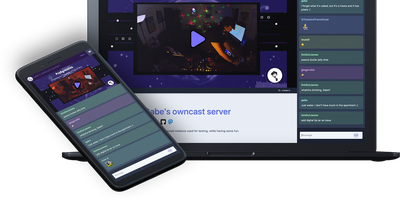
Twitch and YouTube Live, replaced by infrastructure you control: Owncast is a self-hosted live streaming and chat server. Point OBS, Streamlabs, or any RTMP-capable broadcaster at the server's ingest port, and Owncast transcodes the feed with FFmpeg into HLS with multiple quality variants, playing it in a built-in web page with a real-time chat beside it. Chat supports anonymous participation, custom emotes, and moderation tools - message removal, user bans and suspensions - with optional authentication via IndieAuth or a Fediverse account. ActivityPub integration puts the stream on the Fediverse: viewers on Mastodon and compatible services can follow a channel and get notified the moment it goes live. Video delivery can come straight off the server or offload HLS segments to S3-compatible object storage so a modest VPS handles thousands of concurrent viewers while only managing ingest and chat. The backend is a single Go binary with a React frontend - no accounts platform, no database server, no dependency stack - and the player embeds in any website. MIT-licensed, with roughly 9k GitHub stars, zero platform fees, and no algorithm or takedown policy between you and your audience.
MeTube
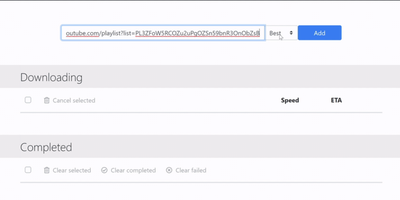
Introducing MeTube: the browser's new best friend for video aficionados who prefer a click to a command line! Imagine a world where the mystical powers of youtube-dl are harnessed in a sleek, web-based chariot, ready to whisk away your favorite videos from YouTube and a cornucopia of other video realms, all with the ease of a single click. Fancy downloading the whole 'Cooking with a Twist' playlist for your next culinary adventure? MeTube's got your back, with playlist powers that let you snag series faster than you can say 'Bon Appétit!' Customize your video vaulting experience with a smorgasbord of settings, from picking the perfect pantry (directory) for your files to separating the wheat (audio) from the chaff (video), and even tailoring the tapestry of your filenames. And when the lights go down, MeTube's dark mode turns your video quest into a cozy, eye-friendly escapade. All this, wrapped up in a Docker container so portable, you can deploy it faster than you can spell 'containerization'. And let's not forget, hosting on RepoCloud means you're saving more dough than a budget bakery, all while supporting the open-source soiree. Get ready to click, download, and dazzle with MeTube on RepoCloud!
Ampache
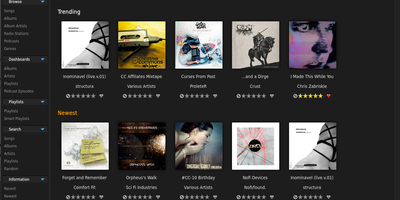
Get ready to amp up your audio experience with Ampache! Imagine a jukebox that never closes, right in your browser. This nifty web-based app is your personal DJ, spinning tracks and videos on demand, wherever you may roam. Picture this: your entire music library, now obediently waiting for your click, ready to serenade you through the simplest of web interfaces. Fancy a bit of musical matchmaking? Ampache's got you covered, syncing up local and remote catalogs to craft a harmonious blend that's music to your ears. And when it comes to streaming, Ampache is like that friend who knows all your favorite songs, streaming them to your chosen player, or even serenading you directly on the web page with a snazzy HTML5 player. This open-source maestro is all about freedom and flexibility, playing nice with almost any device that can hum along to the internet. So, whether you're on your phone, tablet, or kicking back in front of the TV, Ampache is your go-to for a symphony of streaming. And the best part? Hosting it on RepoCloud won't hit a sour note with your wallet. It's like having a backstage pass to your music collection without the VIP price tag!
SimpleTorrent
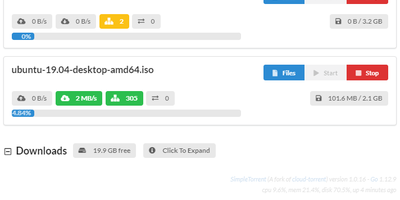
Get ready to turbocharge your torrenting experience with SimpleTorrent, the self-hosted torrent maestro that lets you kick back while your torrents do the hustle. Crafted with the magic of Go (golang), this nifty app transforms your server into a torrent-fetching powerhouse, snagging files and lining them up for your streaming pleasure or HTTP retrieval. Fancy a bit of control? You got it! Pick and choose individual files, command an external app to celebrate task completion, and enforce a seeding etiquette to say 'stop' when you've shared enough. But wait, there's more! Throttle those speeds to avoid hogging the bandwidth and dive into the nitty-gritty of transfer stats with a web UI that's slicker than a greased otter. Real-time updates? Check. Mobile-friendly? You bet. A content server that's faster than a caffeinated cheetah? Absolutely. And with IPv6 readiness, a fresh torrent engine from anacrolix/torrent, and extra goodies like a torrent watcher, K8s/docker health-checks, bonus trackers, and a magnet protocol handler, SimpleTorrent hosted on RepoCloud is like having your very own torrent butler – all at a price that won't plunder your coin purse!

Photoview
Snap-happy shutterbugs, rejoice! Photoview is like a personal butler for your pixels, smartly sorting your snapshots and vids into a swanky digital gallery. Glide through gigabytes of glossy high-res memories with the grace of a gazelle. It's like having a psychic librarian who knows exactly where every photo and video is shelved, thanks to its magical sync with your file system. Wave goodbye to manual updates; this clever curation companion refreshes your collection as you add new moments to your montage. Fancy a bit of privacy? No problemo! Each user gets their own secret stash of media, locked down tighter than a drum with usernames and passwords. Want to flaunt your latest landscape shot or adorable kitten video? Share away with links that are as public or as hush-hush as you like. Photoview's got a knack for nosing out EXIF metadata, so you can see the 'who, what, when, and where' of every image, and even pin them to a map like a globetrotting detective. On the move? The iOS mobile version lets you peek at your portfolio on-the-fly. From RAW riddles to video voodoo, Photoview handles it all, dishing out thumbnails and web-optimized videos with the ease of a master chef. All this, hosted on RepoCloud, where the cost is as tiny as the thumbnails it creates, but the value is as vast as your ever-growing gallery of life's moments.