Directus
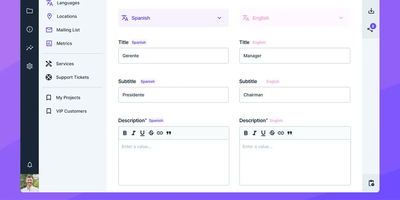
Say hello to Directus, the open-source genie that magically turns any SQL database into a snazzy API and a slick no-code playground. It's like a Swiss Army knife for your data, playing nice with any SQL database you throw at it, so you can keep your precious data right where it is—no moving vans required. With Directus, you get a REST and GraphQL API superhighway built atop your database, making your data dance at your fingertips. And the Directus App? It's like a VIP lounge for your team, where they can schmooze with data in style, managing and visualizing it without breaking a sweat. Whether you're crafting a Backend-as-a-Service masterpiece, spinning up a Headless CMS, building the ultimate internal toolset, or diving into Data Management & Analytics, Directus is your go-to wingman. Plus, with RepoCloud hosting, you'll be saving more coins than a video game plumber, all while enjoying the freedom of open-source camaraderie. Get ready to connect, design, and control like a data wizard, because with Directus and RepoCloud, the digital world is your oyster!
EverShop
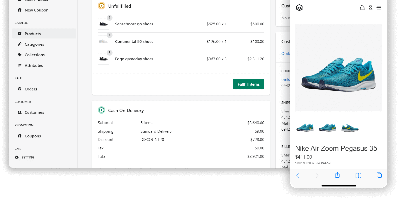
Magento's extensibility without PHP, Shopify's polish without the platform tax: EverShop is the TypeScript-first e-commerce platform built on that promise. Architected as a modular monolith on Node.js, it organizes every piece of business logic - catalog, checkout, customers, your custom extensions - into modules that plug in without touching core code, extended through a disciplined set of mechanisms: registry processors for transforming data across modules, hooks that wrap function calls, async event subscribers (product created, order placed), and route middleware. The storefront and the fully-featured admin panel are both React with server-side rendering and hydration, giving fast first paint and SEO-friendly pages, while a typed GraphQL API (plus REST endpoints) serves exactly the data each view needs - the same API that powers headless and PWA builds. Standard commerce is covered: product management with variants and attributes, category navigation, cart and checkout, order and customer management, coupons, and a theme system built on React components and Tailwind for deep storefront customization. PostgreSQL is the default database, deployment is Docker-friendly with near-zero configuration, and the GPL-3.0 license means the entire stack - types, resolvers, and checkout flow included - is yours to read and modify.
Hasura
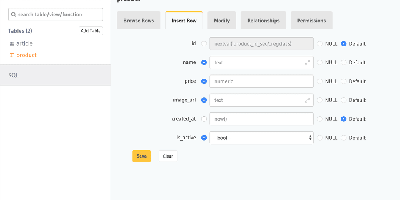
A PostgreSQL database becomes a production-grade GraphQL API the moment Hasura GraphQL Engine points at it: track tables and relationships - existing schemas included - and full query, mutation, and subscription types appear with where, order_by, limit, offset, and on_conflict arguments, no resolvers or boilerplate written. Its Haskell core compiles GraphQL to efficient SQL, and any query becomes a real-time live query with a single keyword, powering dashboards and collaborative UIs over standard GraphQL subscriptions. Authorization is where Hasura earns its enterprise reputation: role-based access control with row- and column-level permission policies driven by session variables from JWTs, auth webhooks, or headers - each role effectively sees its own GraphQL schema containing only what it may touch, integrating cleanly with Auth0, Firebase, or homegrown auth. Event triggers fire webhooks on inserts, updates, and deletes for asynchronous business logic; Actions extend the schema with custom REST handlers; remote schema stitching merges external GraphQL services into one endpoint; and auto-generated REST endpoints serve clients that skip GraphQL. A browser console handles data modeling and API exploration, the CLI manages migrations and metadata as code, and deployment is a single stateless Docker container beside Postgres.
Twenty
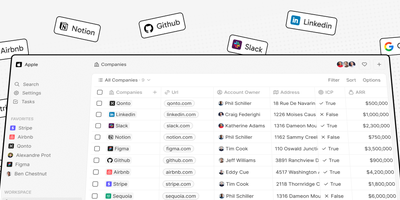
Salesforce's core workflow, open-source and on your own server: Twenty is a modern CRM built as exactly that alternative. It ships the standard CRM objects out of the box: people, companies, opportunities, notes, and tasks, displayed in table and kanban views with drag-and-drop and real-time updates. Its defining technical feature is a metadata-driven data model: you define custom objects and fields in the UI, and the backend regenerates its GraphQL schema at runtime, so a new object gets working queries, mutations, filters, and sorting within seconds, with no migrations to run - adapting the CRM to your sales process never requires code changes. A REST API is auto-generated from the same schema, GraphQL subscriptions push real-time updates, and webhooks fire on record changes for external integration. A visual workflow builder automates actions like notifications and field updates, TypeScript-based apps extend the platform with custom logic and frontend components, and email and calendar sync pulls Gmail messages and meetings onto contact timelines so communication history sits next to the record. The stack is NestJS with TypeORM, PostgreSQL, Redis, and BullMQ on the backend, React with Jotai on the frontend. Self-hosting on RepoCloud means unlimited users with no per-seat licensing - the pricing model that penalizes growing teams on commercial CRMs - and your pipeline, contacts, and deal history live in your own PostgreSQL database rather than a vendor's.
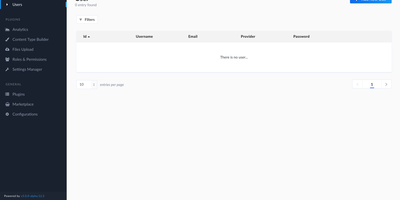
Strapi
Get ready to break up with your high-maintenance CMS and swipe right on Strapi! This open-source heartthrob is the headless CMS Casanova, charming developers with its 100% JavaScript DNA. Strapi is like that best friend who brings out your creative side, letting you mingle with your beloved tools and frameworks without any third-wheel awkwardness. It's like a content management speed date – you'll go from lonely backend single to ready-to-mingle in mere minutes. Customize those content APIs like you're on a reality makeover show and strut your stuff across any digital catwalk, be it REST or GraphQL. And when it's time to settle down, you can cozy up with Strapi Cloud or play the field across various cloud platforms. With Strapi, you're the director of your own content love story, crafting and managing digital experiences that make your heart skip a beat, all without the drama of traditional CMS plot twists.