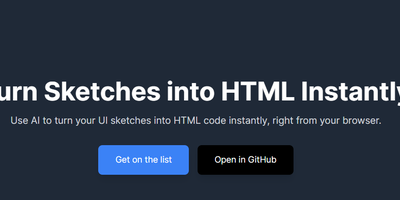
draw-a-ui
Ever wished you could just doodle your dream website on a napkin and have it magically appear on the internet? Well, put down that napkin and pick up tldraw! This wizardry of an app lets you sketch out your wireframe like a true artist (or a toddler with a crayon, no judgment here) and then sends it off to GPT-4-Vision, which somehow understands your masterpiece and returns a shiny, fully functional HTML file with Tailwind CSS. It's like having a web developer genie in a bottle, minus the three-wish limit and the awkward small talk. So go ahead, draw your wildest web dreams and watch them come to life, no coding required. Just don't forget to sign your artwork!
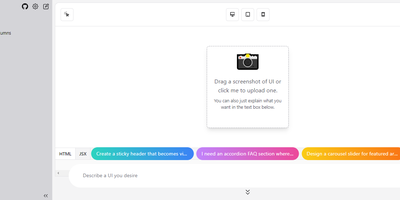
OpenUI
Describe a component in natural language and watch it render: OpenUI, from Weights & Biases, is an open alternative to Vercel's v0. Type a prompt like "a dark-themed dashboard with a sidebar and charts" and the LLM renders working HTML with Tailwind styling live in the browser. You then iterate conversationally, asking for changes until the design is right, and convert the result to React, Svelte, or Web Components for use in a real project. The backend is Python with LiteLLM routing, so it works with OpenAI, Anthropic, Gemini, Groq, and Mistral API keys, or fully offline against local Ollama models, including vision models like LLaVA that can generate UI from screenshot input - feed a screenshot and the model reproduces or riffs on an existing interface. Generated markup is inspectable at any point, with light and dark mode toggles, theme selection, and responsive previews across device sizes. The practical effect is compressing the mockup-review-revise loop from hours to minutes: a described layout renders in seconds and iterates through follow-up prompts, and because output converts to real framework code, prototypes feed directly into production codebases instead of staying trapped in a design tool. Self-hosting keeps unreleased product interfaces and prompts on your own server, and LiteLLM routing lets you pick the model per task - a cheap fast model for rough drafts, a stronger one for final passes, or free local models for unlimited experimentation.
Screenshot To Code
description_humorous