PocketBase
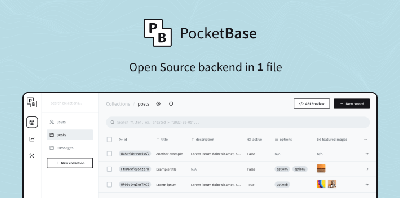
An entire backend in a single Go executable: PocketBase embeds SQLite with realtime subscriptions, authentication and user management, file storage, and an admin dashboard, all behind a REST-ish API. SQLite runs in WAL mode, which outperforms client-server databases for the read-heavy workloads typical of small and mid-sized apps. Authentication supports email/password, one-time passwords, and 15+ OAuth2 providers including Google, Apple, and GitHub, with stateless tokens. Clients subscribe to record changes over server-sent events, and official JavaScript and Dart SDKs cover web, mobile, and Flutter frontends. Collections, rules, and API access permissions are managed visually in the admin UI. When you need custom logic, extend it with JavaScript hooks running in the embedded JS VM of the prebuilt binary, or import PocketBase as a Go library and compile custom business logic into your own single-file backend. File storage attaches uploads to records with thumbnail generation for images and optional S3-compatible external storage. All state lives in one pb_data directory, so backup is a directory copy and upgrade is replacing a binary - one of the lowest-maintenance backends you can run. The contrast with Firebase is the point: where usage-based pricing scales with reads, writes, and bandwidth, PocketBase runs the entire backend at flat hosting cost, and the data is a plain SQLite file you can copy anywhere. MIT-licensed.
Soketi
Get ready to turbocharge your real-time apps with Soketi Serverless – the WebSocket wizard that's so cost-effective, it's practically a steal! Wave goodbye to wallet woes because with Soketi, you're the maestro of your own infrastructure budget. This speed demon guarantees lightning-fast core message delivery in under 100ms, all thanks to its supercharged C backbone and Node.js nimbleness. And talk about compatibility – it's like the best friend your Pusher Protocol v7 ever had, letting you connect without the hassle of a code overhaul. Ready to rock right out of the box, Soketi scales like a champ across hundreds of servers with Redis or NATS, all while keeping its cool performance-wise. But wait, there's more! Built-in app management lets you whip up your own app credentials and tango with any database you fancy. Plus, with HTTP Webhooks on board, you'll get a heads-up via HTTP requests whenever your channels decide to throw a party. Deploying on Cloudflare Workers? Soketi's got you covered, bringing your server closer to your users than ever before. And it doesn't matter if you're a MySQL maven or a DynamoDB devotee – Soketi speaks your database language. Host it on RepoCloud, and you'll be the talk of the town with a WebSocket server that's not just brilliant, but brilliantly budget-friendly!