Teable
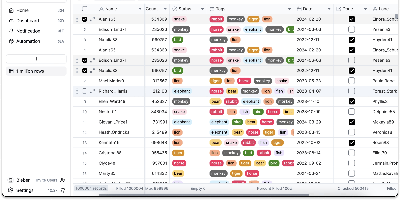
An Airtable-style spreadsheet interface directly on PostgreSQL: Teable is an open-source no-code database where every table is a real Postgres table. Unlike tools that store records in a metadata abstraction layer, every Teable table is a real Postgres table with standard column types, so filtering, sorting, and grouping run at database speed, million-row tables answer complex filters in roughly 200 milliseconds without index tuning, and any PostgreSQL-compatible tool - psql, BI dashboards, ETL pipelines - can query the same data directly. The interface offers Grid, Kanban, Gallery, Calendar, and Form views as non-destructive overlays with their own filters and hidden fields, plus 20+ field types, formulas, comments, attachments, batch editing, undo/redo, and edit history. Collaboration is real-time with live cursors and instant sync across views, backed by Redis, and a REST API is auto-generated per table, largely compatible with Airtable API clients - alongside native SQL access for BI tools, analytics pipelines, and your own applications to JOIN and query directly, with no exports, API rate limits, or sync jobs. Global search spans all records, chart plugins handle quick visualization, and CSV and Excel import/export cover migrations. Where Airtable caps paid plans at 100K-500K rows and charges roughly $20 per user per month, a self-hosted Teable instance has neither limit: the Postgres database itself is the export if you ever leave. Built in TypeScript with NestJS, deployed via Docker with PostgreSQL and Redis, and licensed AGPL-3.0.
Whiteboard
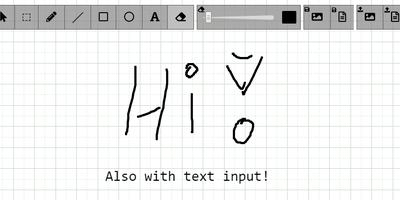
The drawing surface inside WebRTC conference tools like Meetzi and the LAMS online-learning platform is Whiteboard (by cracker0dks) - a lightweight Node.js collaborative sketchboard built to be embedded and customized, which also slots into Nextcloud via the External Sites app. Everyone opening the same whiteboardid URL parameter draws on the same board, with remote user cursors visible live, per-user undo/redo, and an indicator showing the smallest participating screen so nobody draws outside a colleague's view. Content handling goes beyond pen strokes: drag-and-drop or paste images and PDFs from any PC or browser, then resize, rotate, and draw over them on canvas or background; add text and sticky notes; hold Shift for angle-snapped lines and perfect squares. Every function has a keybinding - deliberately friendly to pen displays like Wacom and XP-Pen whose hardware buttons map to shortcuts. Boards save to image or JSON (with reload), export directly to Nextcloud via WebDAV, and persist across restarts with the file-database option. A REST API with bundled interactive docs allows full programmatic control, an optional access token locks down uploads, and YAML configuration tunes behavior and performance. MIT-licensed and reverse-proxy friendly.
Gogs
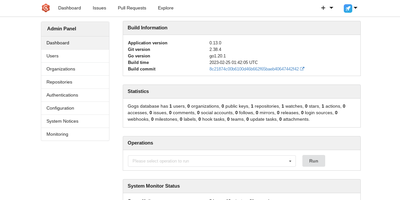
Embark on a journey to Git enlightenment with Gogs, the self-hosted Git guru that's as easy to set up as a lemonade stand in your front yard. This nifty app is like the Swiss Army knife of Git services - simple, robust, and ready to extend its toolkit whenever you need it. Crafted with the magic of Go, Gogs is the chameleon of the software world, blending seamlessly into Linux, macOS, Windows, and even those adorable ARM-based gizmos like the Raspberry Pi. It's so lightweight, you'll forget it's there, but it packs a punch with features like a snazzy user dashboard, versatile repository access, and top-notch management for your coding collectives. And the cherry on top? It's as free as your grandma's homemade cookies, with all the open-source goodness you can eat, served under the generous MIT License. Host it on RepoCloud, and you'll be the cool kid on the block with change to spare from your cloud hosting piggy bank!
Wekan
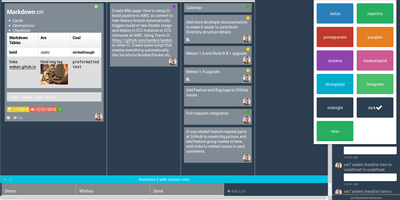
Embark on a task-taming adventure with WeKan, the open-source superhero of Kanban apps! Picture this: a digital playground where your projects transform into vibrant boards, each a realm of 'To Do', 'Doing', and 'Done' columns. Populate these realms with task cards—mighty little champions complete with titles, epic descriptions, and countdowns to their due dates. WeKan's lists are like the stages of a quest, guiding you through the workflow with the ease of a wizard's spell. Customize your quest log with a kaleidoscope of colors and fields to capture the lore of each task. Each card is a quest in itself, a scroll of information that moves with you from one stage to the next. And fear not, for WeKan is a fortress of privacy, with self-hosting shields, access control spells, and an open-source code grimoire for the ultimate security enchantment. Hosted on RepoCloud, your data stays as safe as treasure in a dragon's lair, but without the fiery breath and at a cost that would make even a dwarf smile. So why wait? Let WeKan be your guide in the quest for peak productivity!
Cryptpad
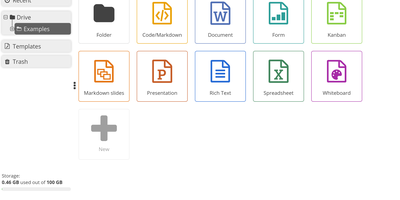
Get ready to collaborate like a super-spy with CryptPad, the open-source office suite that's as secure as a vault in Fort Knox! Wave goodbye to prying eyes because with end-to-end encryption, your secrets are safer than a squirrel's nut stash. Dive into a smorgasbord of applications and cook up projects with your pals or professional partners in real-time. Planning an epic adventure or plotting world domination in a client meeting? CryptPad's got you covered. And the best part? You can jump straight into the action without the hassle of sign-ups or downloads. It's not just an editor; it's your encrypted command center for all things teamwork. Host it on RepoCloud, and you'll be saving more than just your data – you'll be saving dough, too!
Ploi Roadmap
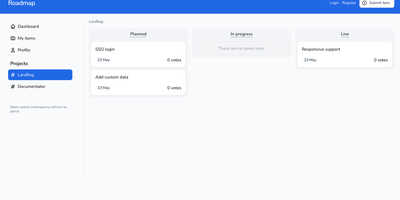
Embark on a journey of organizational enlightenment with Roadmap, the open-source sherpa for your roadmapping escapades. Picture a wonderland where your roadmapping canvas is as customizable as your coffee order – extra foam, no lid, with a dash of user mentions and upvote sprinkles to sweeten the deal. Imagine a world where slugs aren't just garden critters but auto-magical breadcrumbs leading to your project's success. Behold the Filament admin panel, a command center so sleek, it makes mission control look like a game of Pong. And let's not forget the role system – as easy as pie with a slice for the admin, a dollop for the employee, and a crumb for the user. Want to waltz into your roadmap with the grace of a single sign-on? OAuth 2's got your back, with a red carpet rollout featuring your brand's signature color. And for the GitHub gladiators, wield the power to tether repositories to projects and juggle issues without breaking a sweat, all from the throne of your admin panel. Built with the muscle of PHP and the backbone of a database, Roadmap is your ticket to a less costly, more cloud-nine experience on RepoCloud. So why settle for the cloud when you can have the entire sky?
AFFiNE
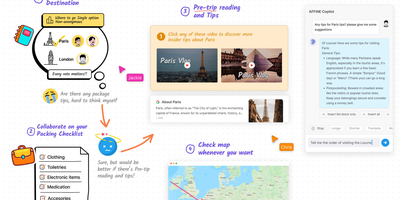
Gaining over 71,000 GitHub stars as one of the fastest-rising knowledge management platforms, AFFiNE merges the document editing capabilities of Notion, the infinite canvas of Miro, and the structured data of Airtable into a single cohesive workspace. The block-based editor built on the custom BlockSuite framework supports rich text, code blocks, embeds, tables, kanban boards, and database views with drag-and-drop composition. The whiteboard mode provides an infinite canvas where users can freely mix documents, sticky notes, shapes, connectors, and hand-drawn elements, enabling visual thinking alongside structured note-taking. Real-time collaboration allows multiple users to edit documents and whiteboards simultaneously with cursor presence, comment threads, and version history. The local-first architecture stores all data on your device by default using CRDT-based synchronization, ensuring offline access and data sovereignty, with optional cloud sync for cross-device availability. Workspaces organize content into hierarchical page trees with full-text search, favorites, tags, and trash management. The platform supports Markdown import and export, PDF export, and HTML export for interoperability. AI features powered by configurable LLM providers enable writing assistance, summarization, translation, and content generation directly within documents. The theming system supports light and dark modes with customizable accent colors. Running on a dedicated VPS on RepoCloud with guaranteed CPU, RAM, and SSD, full root SSH access, and a browser serial console. Licensed under MIT with an open-source self-hosted edition.