Answer
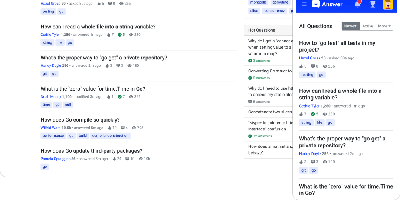
Run a Stack Overflow of your own: Apache Answer brings the question-and-answer format in-house, maintained under the Apache Software Foundation with an Apache-2.0 license. You use it to run a community forum, product help center, or internal knowledge base where content lives as questions and answers rather than wiki pages. It ships the mechanics that make that format work: voting, accepted answers, a reputation system with privilege levels, tagging, full-text search with filters, revision history on every edit, and admin/moderator/user roles. Content is written in Markdown with real-time preview and code syntax highlighting. A plugin system covers OAuth login (Google, GitHub), S3 storage, external search backends like Algolia, and Akismet anti-spam, and a REST API exposes platform data for integration. The backend is Go, the frontend React, and it runs against SQLite, MySQL, or PostgreSQL. Self-hosting replaces per-seat tools like Stack Overflow for Teams with a flat-cost instance where you own all the content.
Planka
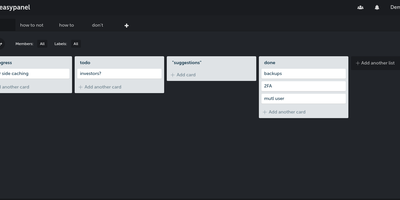
Trello's board model on your own server: Planka is an open-source Kanban project management tool. Boards organize into projects with lists, cards, labels, due dates, checklists, file attachments, and per-card stopwatch time tracking, all managed through drag-and-drop. Updates propagate over WebSockets, so a teammate moving a card or adding a comment appears instantly for everyone without a refresh - a genuine differentiator among self-hosted boards. Card descriptions use a full Markdown editor, custom fields adapt cards to your workflow, and views switch between Kanban, grid, and list layouts. Authentication supports OpenID Connect single sign-on with Google, Azure AD, Okta, or any OIDC provider - a feature Trello reserves for enterprise plans - and notifications reach 100+ channels including Slack, Discord, Telegram, and SMTP via Apprise. A REST API with 50+ webhook events supports custom integrations, and one-click board import eases migration. Built with React and Node.js on PostgreSQL, translated into 35+ languages, deployed via Docker.
Baserow
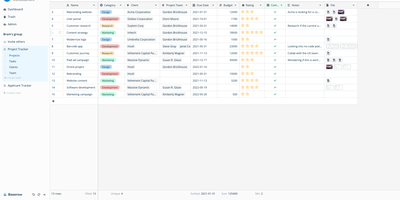
Airtable's spreadsheet-database model, self-hostable and open-source: that is Baserow. It presents data in a spreadsheet-style grid, but underneath each table is a real relational structure with typed fields, links between tables, filters, sorts, and multiple views (grid, gallery, form, kanban, calendar). Beyond the database core, it includes an application builder for composing pages and portals on your data, workflow automations, and dashboards. Everything is API-first: each table exposes a REST endpoint with token auth and webhooks, so it plugs directly into n8n, Zapier, or custom scripts. The stack is Django (Python) on the backend, Vue.js on the frontend, PostgreSQL for storage, with Redis for async tasks. Core features are MIT-licensed; premium features are a paid add-on. The self-hosted version has no row, storage, or API request limits - Airtable's per-base record caps and monthly API quotas simply don't exist here, and capacity is bounded only by your PostgreSQL database and disk. Existing Airtable bases, CSVs, and Excel files import directly with structure preserved, so migration doesn't start from a blank slate, and both the backend and frontend support plugins for custom field types and integrations without forking the core. For non-technical teammates the interface behaves like a spreadsheet; for engineers, the data model is the API.
Bookstack
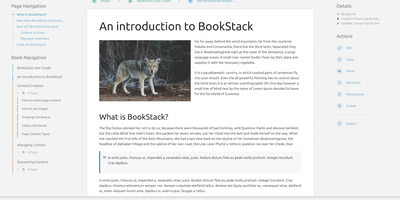
Most wikis die of flat page-and-tag sprawl; BookStack's defining decision is enforced structure - an MIT-licensed PHP/Laravel platform (over MySQL) where content lives in a hierarchy of shelves, books, chapters, and pages, the way a physical library works. A shelf maps to a department, a book to "Engineering Runbooks," a chapter to "Database Procedures," a page to the actual document. That opinionation removes the "where does this go?" friction and keeps knowledge bases tidy as they grow. Editing works both ways: a clean WYSIWYG editor for most users, a Markdown editor with live preview for those who prefer it - switchable per page. Full-text search spans all books or scopes to one, with direct links to individual paragraphs, and include tags let you embed one page's content inside another so shared blocks update everywhere at once. Every edit creates a diffable, revertible revision. Page templates standardize recurring formats, tags add cross-cutting categorization, and built-in diagrams.net integration draws architecture diagrams in place. Authentication covers email/password plus OIDC, SAML2, LDAP, and social login; a full role and permission system locks content down per shelf, book, or page. Pages and books export to PDF, HTML, plain text, and Markdown, a REST API automates content, and the whole thing runs happily on the cheapest VPS you can find.
Documize
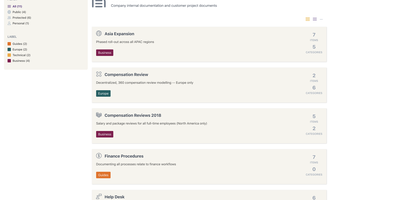
Enterprise documentation discipline without enterprise infrastructure: Documize Community is the Confluence alternative built on exactly that trade. The entire platform - Go backend, Ember.js frontend - compiles to a single executable binary for Linux, Windows, and macOS with zero runtime dependencies: no Elasticsearch, no Redis, no JVM. Point it at PostgreSQL, MySQL, MariaDB, Percona, or Microsoft SQL Server (rare in open source, decisive in Microsoft shops), and schema migrations run on launch with native full-text search on whichever engine you chose. Content organization rejects nested-folder sprawl for Spaces, categories, and labels, and the section-based composable editor mixes rich text, Markdown, code blocks, PDFs, diagrams, and embedded Jira or Trello content in one document, with reusable blocks and templates so teams start from standards rather than blank pages. It deliberately unifies internal team docs and customer-facing documentation in one system with granular space-, document-, and action-level permissions deciding who sees what. Where wikis stop, Documize continues: content approval workflows (draft, review, approve, publish), version management, lifecycle control, feedback capture, PDF export, analytics showing what gets read and ignored, activity streams, and audit logs. Keycloak, LDAP, and SSO integrate for enterprise auth. AGPL-licensed.
Excalidraw
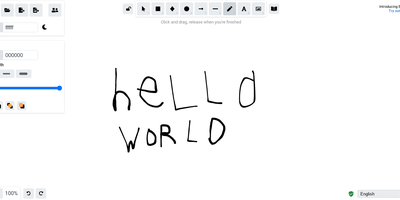
Half the architecture sketches on the internet trace back to Excalidraw - the MIT-licensed virtual whiteboard whose hand-drawn aesthetic made technical diagramming feel approachable, at roughly 85,000 GitHub stars. The infinite canvas offers rectangles, ellipses, diamonds, arrows with smart binding and labels, free-draw, text, images, and an eraser, with full undo/redo, zoom, dark mode, and keyboard-first ergonomics. Community shape libraries add thousands of pre-built elements - AWS architecture icons, flowchart stencils, UI wireframe kits - and everything exports to PNG, SVG, the clipboard, or the open .excalidraw JSON format that keeps drawings diffable and portable. Live collaboration works on a share-a-link model with live cursors and a laser pointer for presenting, and it is end-to-end encrypted by design: the room key travels in the URL hash, which never reaches the server, so the WebSocket relay only ever sees ciphertext. The architecture is remarkably light - the app is a static bundle served by Nginx, drawings persist locally in the browser, and the stateless excalidraw-room relay handles multiplayer - so a self-hosted deployment gives unlimited boards and collaborators with near-zero resource cost, replacing per-editor whiteboard subscriptions.
Focalboard
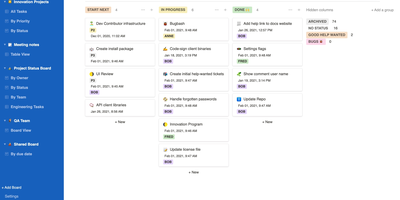
From the Mattermost team comes Focalboard, an open-source, MIT-licensed project board tool - a self-hosted alternative to Trello, Asana, and Notion databases, written in Go with a React frontend. Every board renders the same card data four ways: Kanban with drag-and-drop columns, a spreadsheet-style table, an image-forward gallery, and a calendar. Cards carry unlimited custom properties - dates, dropdowns, checkboxes, people, URLs - and boards can be grouped, filtered, and sorted by any property combination, with unlimited saved filtered views for quick access. Built-in templates cover the common workflows (meeting agendas, content calendars, project tasks, roadmaps, sprint planning), or you can build fully custom boards from scratch. Collaboration is real: card comments with @mentions, per-board permissions for teams or individuals, file attachments stored on your own infrastructure, and archiving with backup snapshots. Migration tooling imports existing boards from Trello (JSON export), Asana, and Notion, so switching does not mean starting over. It ships in 20+ languages and runs as a lightweight multi-user personal server. Worth knowing before deploying: Mattermost has shifted primary development to the integrated Mattermost Boards plugin, so the standalone edition is community-maintained - stable and functional, but evolving slowly. For teams wanting a free, private Trello without per-user fees, it remains a solid pick.
Kanboard
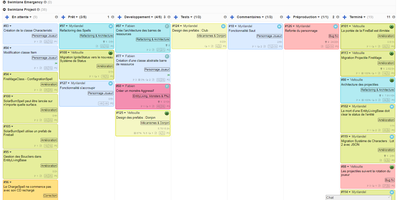
"Less is more" is Kanboard's stated philosophy, and the free, MIT-licensed PHP application lives it: drag tasks between customizable columns, enforce work-in-progress limits per column, and slice boards horizontally with swimlanes for releases, teams, or priorities. Tasks carry what matters - colors, categories, subtasks with time estimates, Markdown descriptions, comments, attachments, internal links, and due dates - and move or duplicate across projects in one click. A concise query language filters any board dynamically (assignee, category, due date, description), and saved filters become custom views. The automatic-actions engine kills repetitive triage: on events like column moves or task creation, Kanboard reassigns, recolors, recategorizes, or closes tasks by rule. Around the board sit a calendar, per-project analytics (cumulative flow, lead and cycle time), Gantt view, and time tracking. Authentication spans LDAP/Active Directory, Google, GitHub, GitLab, and reverse-proxy headers; a JSON-RPC API, webhooks for creating tasks from external systems, and a CLI cover integration. A large community plugin catalog adds what core deliberately omits. With no external dependencies, it runs happily on anything from a Raspberry Pi up - translated into 30+ languages.
Mattermost
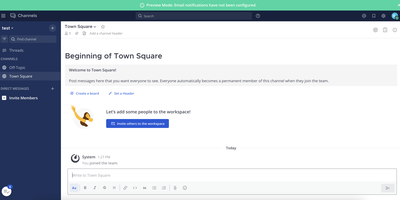
Teams that cannot send messages through someone else's cloud run Mattermost - the open-core, self-hosted alternative to Slack. It provides public and private channels, threaded discussions, unlimited search history, file sharing with previews, one-to-one audio calls, and screen sharing, with desktop clients for Windows, macOS, and Linux plus iOS and Android apps. Messages support full Markdown, which suits engineering conversations with code blocks and logs. Playbooks turn repeatable processes such as incident response and release management into checklist-driven workflows with automated triggers and retrospectives. Integration is a core strength: prebuilt connectors for GitHub, GitLab, Jira, ServiceNow, and PagerDuty, plus webhooks, slash commands, bots, a REST API, and a plugin marketplace with 700+ entries - together making it a working surface for ChatOps rather than just a chat room. Playbooks add keyword and event triggers, task assignment, status broadcasting, and post-incident retrospectives, so operational knowledge is not trapped in individuals' heads. The server is a single Go binary backed by PostgreSQL, with React clients, released monthly under MIT license and deployable fully air-gapped - which is why governments and defense organizations run it inside closed networks, and why the same control applies to any team with confidentiality requirements. The compiled Team Edition is free for unlimited users with no message history cutoff, so costs stay flat as the team grows.
NocoDB
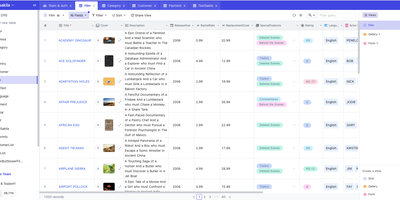
Any existing relational database becomes a collaborative, Airtable-style smart spreadsheet under NocoDB. It connects to PostgreSQL, MySQL, MariaDB, SQL Server, or SQLite, introspects the schema - tables, relationships, indexes - and renders it as interactive Grid, Gallery, Kanban, Calendar, and Form views without migrating a single row. Your business data stays in your database; NocoDB keeps only its own metadata (view configs, permissions, webhooks) in a separate store. Every connected table automatically gets REST APIs with Swagger documentation, effectively turning legacy databases into modern backends. The spreadsheet layer adds 20+ field types including formulas, lookups, rollups, links, attachments, and currency, plus sorting, filtering, grouping, and multi-field editing. Views can be locked or shared publicly with password protection, role-based access control scopes permissions per user, and webhooks plus CSV, Excel, and Airtable import round out integration. An ERD view visualizes the schema. Built with Node.js and Vue, deployed via Docker, handling millions of rows.
Dokuwiki
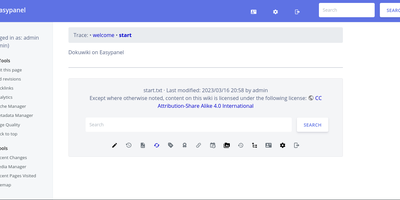
Unleash the power of collective knowledge with DokuWiki, the open-source wiki wizard that's as easy to use as a peanut butter sandwich (minus the sticky fingers). No database? No problem! DokuWiki's got you covered with its sleek syntax that's as clean as your grandpa's Sunday hat. It's the apple of the eye for admins everywhere, thanks to its no-sweat maintenance, backup simplicity, and plug-and-play integration. Lockdown your secrets or share your smarts with DokuWiki's built-in Fort Knox-like access controls and authentication magic. Whether you're building a digital library of Alexandria or just jotting down your world-changing ideas, DokuWiki's plugin treasure trove transforms it from a mere wiki into your digital Swiss Army knife. Collaborate like a band of merry scribes, with swift updates and a historical archive of every brainwave and typo. Ideal for everything from a corporate brain bank to your personal idea dump, a how-to guide, a team's digital war room, or even an intranet that doesn't make you yawn. And with RepoCloud hosting, you'll be saving more dough than a budget bakery, all while customizing your DokuWiki experience from newbie-friendly tweaks to crafting your own digital extensions. So why wait? Make DokuWiki your go-to for shared wisdom without the heavyweight price tag!
Rallly
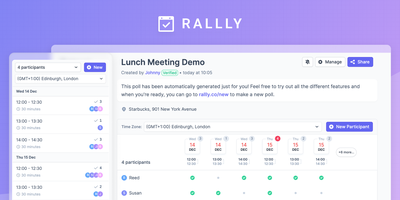
What Doodle did before ads and paywalls took over: Rallly (three L's) lets you propose a few dates, share a link, and watch an availability grid fill in - no email threads, no forced accounts, no "$6.95/month to remove ads." The availability grid makes the winning slot obvious at a glance, comments on each poll keep the "I can do Tuesday if we start late" discussion attached to the decision instead of buried in chat, and email notifications fire as votes and comments arrive. When consensus lands, finalize the winning option and everyone gets notified. The stack is modern TypeScript - Next.js, tRPC, Prisma over PostgreSQL, Tailwind - with a clean, genuinely mobile-friendly UI, dark mode, and community translations in 10+ languages. Self-hosting means unlimited polls and unlimited participants with meeting data on your server rather than a scheduling SaaS. It pairs naturally with Cal.com: Rallly answers "which time works for everyone?", Cal.com handles "book a slot on my calendar." AGPL-licensed.
Vaultwarden
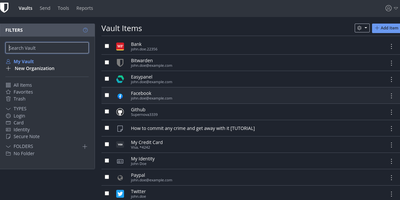
The Bitwarden server, reimplemented in Rust: Vaultwarden (formerly bitwarden_rs) is the unofficial lightweight edition. It speaks the same wire protocol as the official server, so every official Bitwarden client - browser extensions, iOS, Android, desktop, and the bw CLI - connects without modification, while the server itself runs as a single container against SQLite (or MySQL/MariaDB/PostgreSQL) instead of the official multi-container stack that wants gigabytes of RAM. Features Bitwarden gates behind paid tiers ship free: organizations with collections, groups, member roles, and policies; TOTP code storage; file attachments; Bitwarden Send; Emergency Access; event logs; and admin password reset. Two-factor options cover authenticator apps, email, FIDO2 WebAuthn, YubiKey, and Duo, and OIDC-based SSO landed natively in v1.35.0. Zero-knowledge encryption is unchanged - vault data is encrypted client-side and the master password never reaches the server. Attachments and Sends store on local disk or S3-compatible backends, an admin panel manages users and server settings, and backup is copying one data directory. Suited to individuals and teams up to roughly 50 users.
Weblate
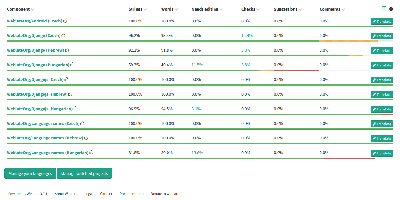
Over 2,500 open-source projects and companies in more than 165 countries localize with Weblate - the libre continuous localization platform and the standard self-hosted answer to Crowdin and Lokalise. Its defining trait is that translations live in the same version control as your code: Weblate talks directly to Git and Mercurial, pulls new source strings automatically via webhooks, and pushes finished translations back either as direct commits or as pull/merge requests on GitHub, GitLab, Gitea, Bitbucket, Azure DevOps, Gerrit, or Pagure. Every translator is properly credited in the commit history. For translators, it is a full computer-aided translation tool: translation memory, glossaries, customizable quality checks that catch placeholder and formatting mistakes, propagation of identical strings across components, and automatic suggestions from machine translation services - DeepL, Amazon Translate, LibreTranslate, and others, with per-service priorities and support for custom Python engines. It handles the format zoo (gettext PO, JSON, YAML, Android XML, iOS strings, and dozens more) and supports crowdsourced workflows with granular access control, workspaces, two-factor authentication, and reviewer approval steps. A REST API, CLI client, and add-on system automate everything else. Built on Python/Django, GPL-licensed, with no per-string or per-seat pricing when self-hosted.

WBO
A Node.js server, a large shared canvas, and a URL - WBO (Whiteboard Ophir) is collaborative whiteboarding reduced to its essence. There are no accounts and no setup - to collaborate, you send someone the board's link, and every stroke appears for all connected users in real time over WebSockets, with cursor positions shared so you can see where collaborators are working. Board state persists automatically and continuously, so a diagram drawn in today's lesson is still there next week at the same URL. Boards come in three flavors: a public free-for-all, private boards with random unguessable names, and named boards with custom URLs shared by anyone who knows the name. The tools cover teaching and brainstorming needs - pencil, straight lines, rectangles, ellipses, text annotations, eraser, a full color palette with brush sizes - and boards export as SVG or PNG. Despite the simplicity, the server is production-minded: JWT authentication gates board access with granular capabilities (open, edit, and clear as separate permissions), rate limiting caps per-client message volume, reverse-proxy and subpath deployment are supported, and OpenTelemetry provides metrics, logs, and traces. It works on tablets and touch devices, speaks multiple languages, and consumes minimal resources. AGPL-licensed.
Matrix Synapse
Step into the Matrix, where the future of chatter is not just bulletproof, but decentralised to boot! This app is your golden ticket to gabbing with pals, kin, digital tribes, and office allies in a virtual space that's as snug as a bug in a rug. Wave goodbye to the digital overlords and hello to a world where you're the architect of your own cyber sanctuary. Fancy yourself a bit of a builder? Go wild creating snazzy, sophisticated chat apps atop the mighty Matrix. Part of a bustling bazaar of clients, servers, and robotic minions (we mean bots), this open-source extravaganza is snugly housed on RepoCloud, where your wallet won't weep over hosting fees. So, whether you're itching to gab, code, or conquer the universe of decentralised discourse, Matrix is your trusty sidekick in the quest for communication liberation!
Hastebin
"Throw it on a haste and send the link" entered developer vocabulary because of Hastebin (haste-server), the minimalist open-source pastebin. Written in Node.js with three stated design goals - be really pretty, be really simple, be easy to set up - it does one job precisely: paste code, logs, stack traces, or config snippets, press save (or Ctrl+N for a new one), and get a short random-key URL to share. Syntax highlighting renders pastes readably across common languages, a raw view serves plain text for curl and scripts, and duplicate-and-edit makes iterating on a shared snippet trivial. The killer workflow is the terminal: with the haste-client utility or a one-line shell function, `cat error.log | haste` prints a shareable URL straight from stdout - the fastest route from a broken build to a colleague's eyeballs. Storage is pluggable through a simple adapter interface: filesystem by default, Redis with optional key expiration for pastes that should age out, and configurable key length, maximum paste size, and static documents. Self-hosting matters here because pastes often contain internal logs and stack traces that should never sit on a public pastebin - your instance keeps them inside your network, under your retention rules.
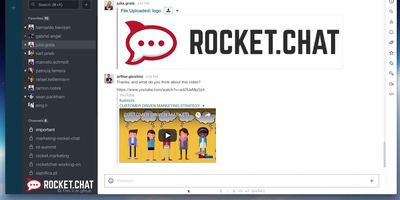
Rocket.Chat
Blast off into productivity space with Rocket.Chat SIX, the ultimate team collaboration cosmos! Imagine a world where your data isn't just your own, it's your best-kept secret. With customization that's as vast as the universe and integration that's as seamless as a black hole, you're in for a stellar ride. This platform is like the Swiss Army knife for your messages, projects, and tasks, all orbiting harmoniously in one digital galaxy. But wait, there's more! It's not just about team efficiency; it's about making customer connections that are out of this world. Rocket.Chat SIX is your mission control for omnichannel customer service, creating conversations that sparkle like constellations. And for those who like their chats with a side of excitement, the in-built chat engine is like adding a turbo boost to your app or website's user engagement. Built for the control freaks in spacesuits, this platform offers end-to-end encryption and compliance with intergalactic data protection laws. Plus, with deployment options more flexible than a yoga instructor in zero gravity, your security needs are covered. So why settle for a cloud when you can have the whole cosmos with RepoCloud hosting? Get ready to take your team's productivity to infinity and beyond!