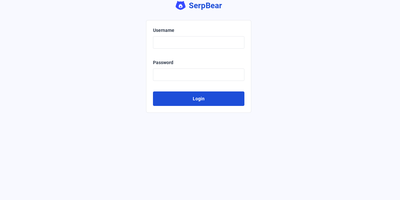
SerpBear
Unlimited domains, unlimited keywords, daily Google position checks with stored history and trend charts: SerpBear is an open-source search engine rank tracker. Retrieval works through your choice of third-party SERP APIs - ScrapingAnt, ScrapingRobot, SerpApi, SearchApi, HasData - or your own proxy IP pool, and a flexible scrape-strategy system (Basic, Custom, or Smart, set globally or per domain) works around Google's removal of the 100-results-per-page parameter by choosing how many pages to check per keyword. Google Search Console integration adds real visit counts, impressions, and click-through rates per tracked keyword and surfaces top-performing pages and countries; Google Ads integration supplies monthly search volumes and auto-generates keyword ideas from your site's content. Email notifications report position changes daily, weekly, or monthly, a built-in REST API feeds dashboards and reporting tools, and data exports to CSV. Built with Next.js on SQLite, deployed via Docker, installable as a PWA on mobile - with no per-keyword or monthly SaaS fees.
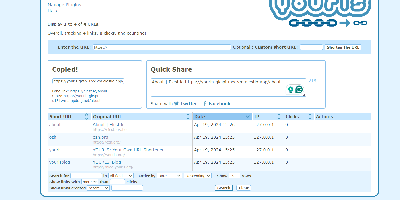
YOURLS
Ever wanted to shorten your URLs without feeling like you just handed over your life savings to a corporate giant? Enter YOURLS, the self-hosted URL shortener that lets you take control of your links like a boss! With a sleek interface that’s easier to navigate than your grandma’s Facebook page, you can create and manage short URLs while keeping your branding intact. Plus, it’s got plugins galore—because who doesn’t love a little extra functionality? And let’s not forget the detailed analytics that’ll make you feel like a data scientist, tracking clicks like a hawk on a mission. Accessible on ports 8080 and 8081, YOURLS is like the Swiss Army knife of URL shortening, but without the risk of cutting yourself. So why let the big guys take your links hostage when you can self-host your own? Deploy YOURLS today and give your URLs the makeover they deserve, all while saving enough cash to treat yourself to that fancy coffee you’ve been eyeing!
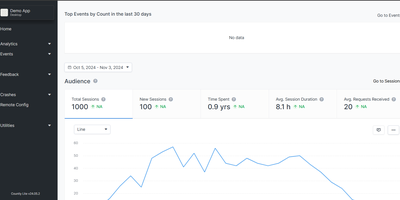
Countly
Mixpanel, OneSignal, and Crashlytics in one self-hosted stack - Countly is an all-in-one product analytics and engagement platform where every byte of first-party data stays on your server. A Node.js application over MongoDB, it collects through ten battle-tested SDKs spanning iOS, Android, web JavaScript, React Native, Flutter, Unity, and desktop (plus a data write API for anything else), and has powered tens of thousands of mobile, web, and desktop apps since 2012. The analytics core covers sessions, custom events, views, user profiles, and real-time dashboards, with exploration tools built for product managers as much as analysts. What separates Countly from pure analytics tools is acting on the data without third parties: built-in push notifications send automated, transactional, and personalized messages to iOS (APNs), Android (Firebase), and Huawei devices, with the SDK handling token retrieval and permission flows automatically; crash reporting captures symbolicated native crashes on iOS and Android plus JavaScript errors, correlated with the same user and session data. Email reports keep stakeholders updated, and the plugin-based architecture means features load as modules. For GDPR-sensitive products, engagement without piping user data to advertising companies is the entire point. AGPL-licensed server, installable in minutes.
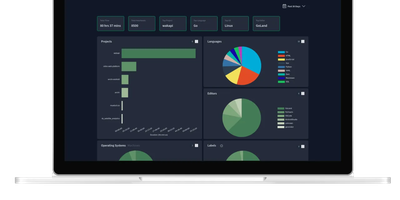
Wakapi
Its author, a student and WakaTime fan, didn't want to pay $9/month for data about his own keystrokes - so Wakapi was born, a self-hosted, WakaTime-compatible backend for coding statistics. The compatibility is the killer design decision: the official WakaTime plugins for VS Code, JetBrains IDEs, Vim, and dozens of other editors work unmodified - just point the plugin's API URL at your Wakapi instance with your personal key, and heartbeats flow to your server instead of a third party's. Duration inference matches WakaTime's own algorithm, with a configurable timeout (10 minutes by default). From that stream Wakapi builds statistics and plots across projects, languages, editors, hosts, and operating systems, plus the fun extras: public leaderboards (optionally login-gated, with configurable aggregation windows), badges for GitHub readmes, and weekly email reports. A REST API serves your data programmatically, Prometheus export feeds your existing Grafana, and a WakaTime relay mode can mirror heartbeats to both services during migration - with one-click import of historical WakaTime data. Written in Go, it is lightning fast and light enough for the smallest instance, storing to SQLite, PostgreSQL, or MySQL, with configurable data retention for GDPR peace of mind. Deliberately smaller than WakaTime, deliberately yours.
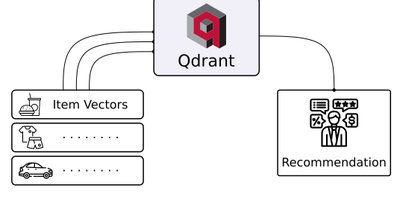
Qdrant
Embark on a quest with Qdrant, the Herculean vector database that's flexing its muscles to revolutionize AI apps. Imagine a digital genie that grants you the power to sift through high-dimensional space with the ease of a cosmic search engine. It's not just an API service; it's your ticket to transforming brainy embeddings into superstar applications that can match, search, and recommend like a boss. Qdrant is like the Swiss Army knife for data types, handling everything from witty string banter to numerical ninja ranges, and even geo-locations with a sense of wanderlust. It's cloud-native, so it grows with your ambitions, scaling horizontally like it's training for the digital Olympics, all while being as resource-efficient as a monk. Host it on RepoCloud, and you'll be building semantic neural search castles in the sky in no time, understanding user antics as they unfold, and spotting similar images or duplicate doppelgängers with the sharpness of an eagle. It's the open-source powerhouse that makes your data dance to the tune of innovation, all at a cost that keeps your wallet as happy as a clam at high tide!
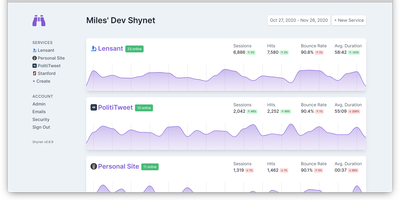
Shynet
Get ready to send those old-school analytics tools packing, because Shynet is here to revolutionize your data game! This open-source analytics maestro is like a privacy-loving ninja, delivering the lowdown on your website's traffic without creeping on individual users' digital footprints. Shynet's all about the big picture, serving up aggregated insights and trendsetting data that help you get chummy with your website's user dynamics. With features that are hotter than a server room in July, including real-time stats, session recon, and a nifty primary key integration, Shynet's got your back whether you're tracking clicks or counting conversions. And for those of you riding the single-page app wave, fear not! Shynet's got the chops to keep up with your page-hopping users, ensuring your data's as accurate as a Swiss watch. Fancy managing a digital empire? Shynet lets you set up multiple services, each with its own secret agent-style tracking script. Plus, with an API slicker than a greased otter, you can tap into your dashboard's brain from anywhere, anytime. So whether you're a mom-and-pop shop with big dreams, a code whisperer, or a data detective, Shynet's your go-to for making smart, informed website decisions. And hosting it on RepoCloud? That's like having your own digital butler, serving up top-notch hosting without burning a hole in your wallet. So why wait? Give your website the analytics hero it deserves, and let Shynet and RepoCloud be your dynamic duo!
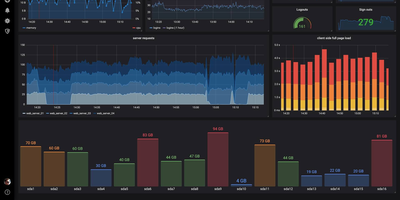
Grafana
The de facto dashboard of observability: Grafana is the open-source frontend that turns the data stores you already run into interactive graphs. It does not store metrics itself; it connects to the data stores you already run and turns their contents into interactive dashboards. Supported sources number over 150 via plugins: Prometheus, Loki, Tempo, InfluxDB, Elasticsearch, MySQL, PostgreSQL, Microsoft SQL Server, AWS CloudWatch, Azure Monitor, Google Cloud Monitoring, and many more. Dashboards are built from a large library of panel types (time series, heatmaps, tables, gauges, logs) with template variables for reusable, parameterized views. Unified alerting evaluates rules against any connected data source, not just Prometheus, and routes notifications to Slack, PagerDuty, email, and other channels with grouping and silencing - unlike Prometheus Alertmanager, a single rule can combine a Loki log pattern, a PostgreSQL query result, and a CloudWatch metric. Dashboards serialize to JSON and data sources configure via provisioning files, so the entire observability setup can live in Git and deploy repeatably across environments. Explore mode adds ad-hoc querying outside dashboards, with split view for correlating a metric spike against the matching log lines, and access control spans organizations, teams, folder permissions, and OAuth, LDAP, and SAML integration. Written in Go and TypeScript, AGPL-licensed. Self-hosting gives you unlimited users, dashboards, and queries at flat hosting cost, without Grafana Cloud's usage-based pricing.
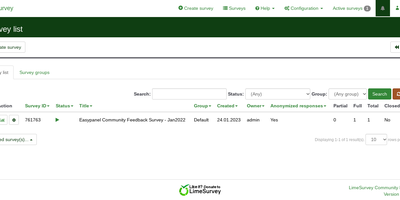
Limesurvey
Step right up to the survey fiesta with LimeSurvey, the undisputed heavyweight champion of the survey world! This zesty platform is your golden ticket to survey nirvana, where you can whip up everything from a breezy poll to a brain-busting questionnaire with more twists and turns than a telenovela. Perfect for the curious student, the savvy professional, or the enterprise with questions galore, LimeSurvey is the Swiss Army knife of feedback tools – and it won't cost you a dime! Wave goodbye to the yawn-inducing forms of yesteryear and say 'Hola!' to a world where conditional logic dances the salsa with complex validation rules. And for the scholarly crowd, LimeSurvey rolls out the red carpet, offering a treasure trove of open-source goodies that'll make research institutes and universities do the academic conga. With templates so user-friendly they practically hold your hand, and a customer service squad ready to leap to your aid, LimeSurvey hosted on RepoCloud is the piñata of possibilities – just waiting for you to take a swing!

OpnForm
description_humorous