Open Source App Cloud Marketplace
Deploy, host, and scale with one click, at half the cost. Then customize with AI agents.
Blender
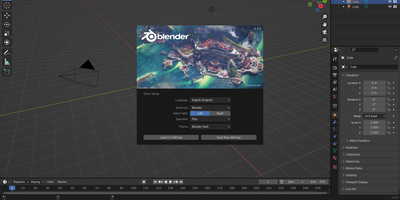
Whip up a 3D masterpiece, animate your own indie flick, or craft virtual worlds that defy reality with Blender – the all-in-one, open-source 3D graphics wizard! This app is like a Swiss Army knife for your digital artistry needs, from 3D modeling to rendering faster than you can say 'Pixar'. Hosted on RepoCloud, it's like having a personal art studio in the cloud, minus the splattered paint. With a user-friendly desktop GUI, you'll feel like a digital Picasso in no time. Blender is souped-up with hardware acceleration, making your desktop experience smoother than a well-oiled robot. While it doesn't roll out the red carpet for GPU rendering straight away, it's still a party on multiple architectures. Just a heads-up for the Arm aficionados: it's best to avoid /dev/dri for now – Blender's a bit picky with the OpenGL ES version there. But hey, that's just a small bump on the road to 3D glory!
Dashdot
description_humorous
Coolify
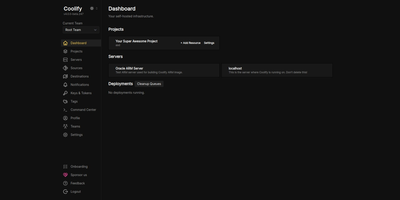
Any SSH-accessible Linux box - VPS, bare metal, Raspberry Pi, EC2 - becomes a Heroku-like deployment environment under Coolify, an open-source, self-hostable platform-as-a-service. Connect a GitHub, GitLab, Bitbucket, or Gitea repository and every push builds and deploys automatically via Nixpacks, a Dockerfile, or Docker Compose, with Traefik reverse proxying, automatic Let's Encrypt certificates, and per-branch preview deployments with their own URLs. Databases - PostgreSQL, MySQL, MariaDB, MongoDB, Redis - provision in a few clicks, and a catalog of 280+ one-click service templates covers WordPress, n8n, Grafana, MinIO, Plausible, and more, replacing an afternoon of Compose YAML with a two-minute operation. One dashboard manages multiple servers, with Docker Swarm available for clustering. Backups go to any S3-compatible storage with one-click restore, a browser terminal gives real-time server access, and a full API supports CI/CD integration. All configuration lives on your own servers, so resources keep running even without Coolify. Apache 2.0 licensed.
Trilium Notes
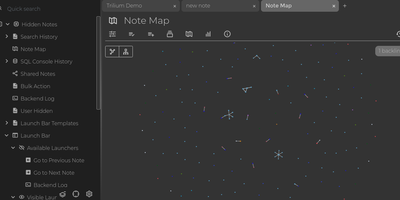
For people whose notes number in the tens of thousands, Trilium Notes is the hierarchical note-taking application built specifically for large personal knowledge bases - actively maintained as TriliumNext. Notes arrange into arbitrarily deep trees where every note is both content and container, and cloning lets a single note live in multiple places at once - bash notes belong under both Linux and Scripting, and Trilium refuses to make you choose. A WYSIWYG editor handles rich text, tables, math, and syntax-highlighted code blocks with Markdown-style shortcuts, while dedicated note types cover Excalidraw sketches, mind maps, geo maps with GPX tracks, relation maps that visualize connections between notes, and tables with typed columns. The attribute system is the power layer: labels attach queryable metadata (#year=1999, #author), relations create named links between notes, and both inherit down the tree - feeding full-text search, saved queries, and scripting. Scripting is Trilium's deepest differentiator: JavaScript code notes run on events like note changes or hourly schedules, build custom widgets, and add server-side logic, turning the knowledge base into a programmable platform. Protected notes encrypt sensitive content, note hoisting focuses on subtrees, and the self-hosted server syncs desktop clients across devices.
Cryptpad
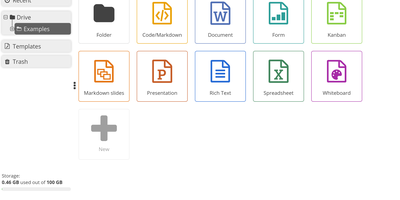
Get ready to collaborate like a super-spy with CryptPad, the open-source office suite that's as secure as a vault in Fort Knox! Wave goodbye to prying eyes because with end-to-end encryption, your secrets are safer than a squirrel's nut stash. Dive into a smorgasbord of applications and cook up projects with your pals or professional partners in real-time. Planning an epic adventure or plotting world domination in a client meeting? CryptPad's got you covered. And the best part? You can jump straight into the action without the hassle of sign-ups or downloads. It's not just an editor; it's your encrypted command center for all things teamwork. Host it on RepoCloud, and you'll be saving more than just your data – you'll be saving dough, too!

Barrage
Get ready to unleash a torrent of fun with Barrage, the sleek and chic Deluge WebUI app that's as mobile as you are! This app is like the Swiss Army knife for your torrents, with a design so responsive it'll make your smartphone blush. Whether you're lounging on the beach or commuting on the bus, Barrage lets you add torrents faster than you can say 'magnet link'. Fancy a bit of sorting and filtering action? You got it! Want to play the puppet master with your upload and download speeds? All the power is at your fingertips. And when it comes to prioritizing files or tweaking torrent settings, Barrage is as accommodating as RepoCloud's hosting prices. Deploy it with Docker and watch your torrent troubles sail away into the sunset. It's the smarter, cost-effective way to manage your torrents on the go, courtesy of RepoCloud's hosting magic!

Ploi Roadmap
Embark on a journey of organizational enlightenment with Roadmap, the open-source sherpa for your roadmapping escapades. Picture a wonderland where your roadmapping canvas is as customizable as your coffee order – extra foam, no lid, with a dash of user mentions and upvote sprinkles to sweeten the deal. Imagine a world where slugs aren't just garden critters but auto-magical breadcrumbs leading to your project's success. Behold the Filament admin panel, a command center so sleek, it makes mission control look like a game of Pong. And let's not forget the role system – as easy as pie with a slice for the admin, a dollop for the employee, and a crumb for the user. Want to waltz into your roadmap with the grace of a single sign-on? OAuth 2's got your back, with a red carpet rollout featuring your brand's signature color. And for the GitHub gladiators, wield the power to tether repositories to projects and juggle issues without breaking a sweat, all from the throne of your admin panel. Built with the muscle of PHP and the backbone of a database, Roadmap is your ticket to a less costly, more cloud-nine experience on RepoCloud. So why settle for the cloud when you can have the entire sky?
Sshwifty
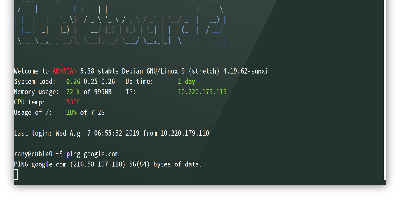
Get ready to teleport your terminal experience straight into your browser with Sshwifty, the web-based wizard that conjures up SSH and Telnet connections with just a click! Wave goodbye to clunky clients and say hello to smooth access from any web-savvy device. Park this magical creature on your own digital lawn (a.k.a. your computer or server) and watch it transform into the Gandalf of gateways, offering a customizable portal to your digital dominions. With Sshwifty, you can summon a fleet of servers, craft presets for your favorite digital destinations, and even cast a security spell to limit travel to known realms only. Plus, with TLS enchantments and Socks5 proxy pathways, your connections are not just swift, they're Fort Knox-secure. Whether you're diving into distant data centers or just hopping over to your home hub, Sshwifty is your trusty sidekick in the quest for seamless, sorcery-level server management. And with RepoCloud's wallet-friendly hosting, you'll have more gold in your pouch for other quests. Abracadabra, your terminal is now omnipresent!
Chatwoot
description_humorous

Mastodon
Embark on a social media odyssey with Mastodon, where you're the captain of your own digital destiny! Wave goodbye to pesky algorithms and intrusive ads, and say hello to a home feed that's as personalized as your coffee order. Whether you're sharing the latest earworm, your cinematic masterpiece, a gallery of your cat's antics, or stirring the pot with a spicy poll, Mastodon lets your creativity run wild. This decentralized, open-source gem is like a social media potluck – each server brings its own flavor, but together, they create a feast of global connections. Mastodon champions your digital autonomy, shunning ad overlords and profile pimps. It's built on the sturdy foundations of open web protocols, so it plays nice with any other platform that speaks ActivityPub. With Mastodon hosted on RepoCloud, you're not just building a social network; you're crafting a social sanctuary that mirrors your unique vibe, all while saving your wallet from the cloud hosting giants. Get ready to moderate, curate, and celebrate your online world with Mastodon on RepoCloud!

Jellyseerr
Browse trending titles, search anything, request it in two clicks: Jellyseerr gives Jellyfin, Emby, and Plex users a beautiful storefront for the media library. Born as the Overseerr fork that added Jellyfin and Emby support (the projects have since unified as Seerr), it handles the full request lifecycle - users authenticate with their existing media-server accounts, pick individual seasons or movies in a clean interface, and admins approve or decline from a simple queue, including on mobile. Approved requests flow straight to Sonarr and Radarr, which handle acquisition automatically, with support for separate 4K server instances. Regular library scans keep availability accurate, so users see instantly what already exists instead of requesting duplicates. A granular permission system controls who can request what - auto-approval for trusted users, quotas and limits elsewhere - and override rules adjust request routing by user, tag, or other conditions. Watchlist and blocklist functions curate discovery, notifications reach email, Discord, Telegram, Slack, Pushover, and Pushbullet, and both PostgreSQL and SQLite are supported. Localized into many languages, it turns "can you add this movie?" texts into a self-service system that runs itself.
Kutt
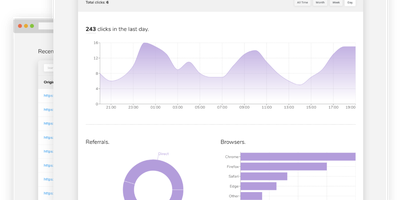
Built for self-hosting from the ground up, Kutt is a modern, MIT-licensed URL shortener: zero-configuration setup, no build step, and SQLite, PostgreSQL, or MySQL with optional Redis caching. Links carry real management features - custom slugs from a configurable alphabet (confusable characters like 0/O and l/1 omitted by default), password protection, descriptions, expiration times, and the ability to edit a destination URL without changing the short link already in circulation. Custom domains make branded short links first-class: add as many as you like and serve each under your own name instead of a third-party's. Private, per-link statistics track clicks, browsers, operating systems, and countries without logging visitor IPs or sensitive data. An admin page manages users and links instance-wide, and two environment flags (DISALLOW_REGISTRATION, DISALLOW_ANONYMOUS_LINKS) lock the instance down for private use; OpenID Connect login integrates with an existing identity provider. Automation runs through a documented REST API - create, list, delete, and pull stats - plus Chrome and Firefox extensions and ShareX compatibility for shortening from anywhere. Built with Node.js and React, deployed in one Docker container, it replaces Bitly with something you own: your domain, your analytics, and links that never die with a vendor.
AdGuard Home
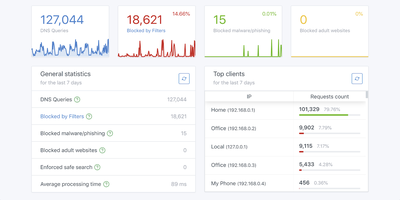
Say goodbye to the digital equivalent of pesky flies—ads! AdGuard Ad Blocker is your online knight in shining armor, banishing every last banner, pop-up, and pre-roll video ad from your kingdom of browsers. It's like having a personal bouncer for your web experience, keeping the riff-raff out while making sure your favorite sites still look fabulous. But wait, there's more! AdGuard is like a privacy ninja, stealthily protecting your data from the prying eyes of web analytics and tracker ninjas. And for those digital boogeymen lurking in the shadows? AdGuard's got your back, shielding you from phishing and malware-infested waters. Got kiddos? Activate the parental controls and create a web playground as safe as a cushioned room. It's not just about blocking ads; it's about supercharging your browsing speed and saving your precious data from being devoured by ad monsters. With AdGuard hosted on RepoCloud, you'll enjoy all these perks without breaking the bank. It's the ultimate tool for a smoother, safer, and more enjoyable online adventure!

Immich
With over 110,000 GitHub stars and one of the fastest-growing open-source communities in the self-hosted space, Immich delivers a Google Photos-grade experience entirely on your own hardware. The platform handles automatic background backup from Android and iOS devices, deduplication, and support for RAW formats, LivePhotos, and MotionPhotos. Its machine learning pipeline runs facial recognition and clustering locally on your server, enabling you to group photos by person without sending a single image to the cloud. CLIP-based semantic search lets you find images by describing their content in natural language, while metadata-driven search covers EXIF data, dates, and locations. The web interface built with SvelteKit provides a responsive timeline view, albums, shared albums with configurable permissions, public sharing links with optional passwords and expiry dates, partner sharing for family libraries, and a global map plotting photos by GPS coordinates. Administrative features include multi-user support with per-user storage quotas, OAuth integration, API key management, and a user-defined storage structure for organizing files on disk. The architecture uses PostgreSQL for metadata, Redis with BullMQ for background job queues handling thumbnail generation, video transcoding, and smart search indexing, and exposes over 400 REST API endpoints documented via OpenAPI with auto-generated SDKs for web, mobile, and CLI clients. Running on a dedicated VPS on RepoCloud with guaranteed CPU, RAM, and SSD, full root SSH access, and a browser serial console. AGPL-3.0 licensed.

Hammond
When Clarkson, the once-popular fuel logger, stopped receiving updates, Hammond stepped in as its logical successor - a self-hosted vehicle expense tracker. Written in Go with a Vue.js interface and SQLite storage - a single lightweight container, no external database - it tracks every cost your vehicles generate: fuel fill-ups with cost, volume, and odometer readings; maintenance and repairs; and arbitrary other expenses, each attachable with photos and documents stored against the vehicle. The multi-user, multi-vehicle design is what sets it apart from phone apps: a household or small business adds all its vehicles and all its drivers, shares vehicles across users, and every fill-up lands in one ledger no matter who was driving. The Quick Entries feature respects how expenses actually happen - snap a photo of the receipt or pump screen at the gas station, then complete the structured entry later when you have a minute. Reporting works at both the vehicle level (cost per distance, fuel economy trends) and across the whole fleet. Migration matters here: importers for Clarkson, Fuelly, and Drivvo bring years of fill-up history along, so switching does not mean starting your data over.
phpMyAdmin
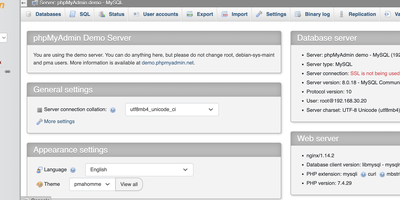
Since 1998, phpMyAdmin has been the standard web interface for MySQL and MariaDB - the tool millions of developers, DBAs, and hosting companies reach for when a database needs inspecting, fixing, or migrating. Written in PHP, it covers effectively the entire administration surface: create, browse, alter, and drop databases, tables, views, columns, and indexes; insert and edit rows through a tabular editor; manage user accounts and granular privileges; and maintain stored procedures, triggers, and events - all without touching a command line. The SQL editor executes arbitrary queries with syntax highlighting, autocompletion, history, and bookmarkable statements, including batch queries. Import/export is a migration workhorse: read SQL, CSV, XML, and OpenDocument spreadsheets in; write out to SQL dumps, CSV, JSON, XML, PDF, Word, LaTeX, and more - the fastest path for moving a WordPress database or handing a schema to a colleague. The Designer view renders your schema as an interactive ER diagram with drag-and-drop relationship editing, and data transformations display BLOBs as images or download links inline. Server maintenance views surface configuration suggestions. Multi-server support, dark mode, and translations into 72 languages round out a tool that earns its ubiquity. GPL-licensed.

Typesense
Get ready to turbocharge your search experience with Typesense, the search engine that laughs in the face of typos and serves up results faster than you can say 'instantaneous'! This open-source marvel is the cool cousin of Algolia and the more approachable neighbor of ElasticSearch. With its built-in typo tolerance, Typesense is like that forgiving friend who understands what you mean, even when you text 'tacos' as 'tcoas'. Zipping through queries with the speed of a caffeinated cheetah, it boasts a response time that's quicker than a hiccup (<50ms, to be precise). Tailor your search like a bespoke suit, sort results like a card shark, and refine like a master sommelier with faceting and filtering. It's got more grouping and federating tricks than a magician's convention, and it knows the lay of the land with geo-search capabilities. Plus, with API key generation, it's the perfect wingman for multi-tenant app shindigs. Easy to set up and scale, Typesense is your golden ticket to search nirvana, and with RepoCloud's wallet-friendly hosting, you'll be the toast of the open-source town!
Unleash
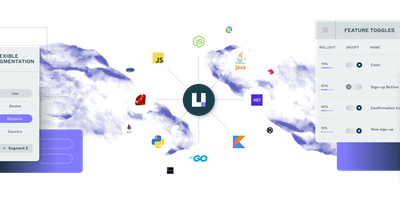
Deployment decoupled from release: Unleash, the most popular open-source feature management platform on GitHub, is a Node.js server backed by PostgreSQL. Ship code dark, then control who sees it through activation strategies: gradual percentage rollouts, targeting by user ID, IP, hostname, or application name, custom constraints against your own context fields, and scheduled or time-limited releases. Strategies stack - a flag activates if any strategy matches - and strategy variants layer A/B versions on top of the on/off decision. Each flag carries per-environment configurations, so a feature can run at 100% in staging while canarying at 5% in production. Backend SDKs (Node.js, Java, Go, Python, Ruby, .NET, PHP, Rust, and more) fetch configuration and evaluate flags locally, so a flag check adds zero network latency to request paths; frontend SDKs for React, Vue, Svelte, iOS, Android, and Flutter evaluate through a proxy layer. Flag hygiene is built in: flags are typed (release, experiment, operational, kill-switch, permission) with expected lifetimes, and Unleash marks overdue flags as potentially stale and surfaces unknown flags your SDKs request but that don't exist. Self-hosting via Docker keeps flag data, targeting rules, and evaluation infrastructure entirely on your side.